TGViewer
Channel Public Channel
Science in telegram

Science in telegram

@science

Science that matters: AI, space, biotech, physics, future tech — explained sharply
Subscribers
120K
Photos
796
Videos
414
Links
2.9K

Showing posts older than #4066 · Back to latest

Older Posts 15 shown
Post #4065 21.2K
🔋 Ultrasound Tech Charges Implants Without Surgery

South Korean researchers have developed an ultrasound-based wireless charging system for medical implants like pacemakers — fully recharging in under 2 hours with no surgery required.

Using a new dual-layer piezoelectric module, the device captures nearly all ultrasonic energy, even what was previously lost. Tests showed a 140 mAh battery charged in 1h40min through 3 cm of water, and a 60 mAh battery in 1h20min through 30 mm of tissue.

🌐 Read more on TechXplore
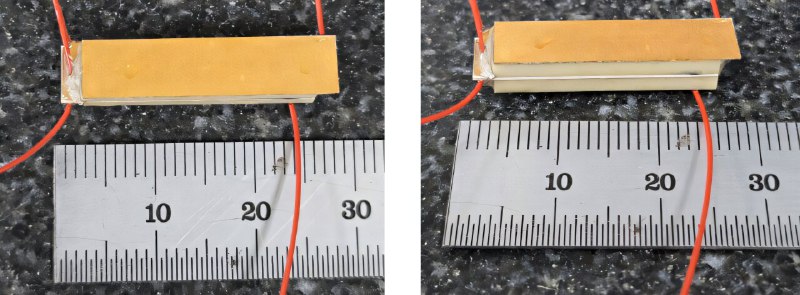
Tech Xplore Ultrasound-based wireless charging technology for implantable medical devices A research team led by Professor Jinho Chang from the Department of Electrical Engineering and Computer Science at DGIST has developed an "ultrasound-based wireless charging technology" capable of rapidly ...
  • 👍 56
  • ⚡ 21
  • 🔥 15
  • 👀 14
  • 🕊 13
Post #4063 22.9K
Star link

“On the weekend, I was able to photograph Starlink satellites in the near Moscow region. The position of the sun above the horizon allowed me to capture them… “
@funscience #starlink

https://t.me/funscience/7640
Telegram Fun Science На выходных днем смог заснять спутники от Starlink в ближнем Подмосковье. Положение солнца над горизонтом позволило их выхватить… @funscience #starlink
  • 🔥 34
  • 👀 29
  • 👍 25
  • 🕊 15
  • ⚡ 13
Post #4061 30.1K
  • 😁 155
  • 👀 51
  • 🔥 36
  • 🕊 23
  • ⚡ 19
Post #4060 28.8K

This post (sticker, poll or similar) has no web preview. Open in Telegram

  • ⚡ 109
  • 🔥 58
  • 👍 47
  • 👀 25
  • 🕊 23
  • 😁 20
Post #4057 30.3K
🧠 Human Mini‑Brains Flying a Virtual Butterfly!

Scientists have connected tiny lab‑grown brain organoids to a simulator — and they can pilot a virtual butterfly in real time!
These living neurons fire when the butterfly appears, steering its movements without traditional software.
It’s a glimpse into the future of biohybrid AI, where biology and computing merge. 🚀
The Register Lab-grown human brain cells drive virtual butterfly in simulation Could organoid-driven computing be the future of AI power?
  • 👀 56
  • 🔥 28
  • 👍 21
  • 🕊 18
  • ⚡ 16
  • 😁 1
Post #4056 25.5K
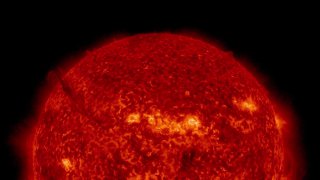
A Giant “Canyon” on the Sun!

On July 15, the Sun unleashed a spectacular coronal mass ejection, creating a plasma structure that looked like a massive rift stretching 400,000 kilometers — about the same distance from Earth to the Moon! 🌕
An incredible phenomenon in our cosmic neighborhood!

#Sun #Astronomy #Space #Science
  • 🔥 59
  • 👍 25
  • 👀 23
  • 😁 17
  • ⚡ 11
  • 🕊 11
Post #4053 31.6K
China’s $6000 Humanoid Robot by Unitree

Chinese startup Unitree Robotics has just unveiled its humanoid robot R1, priced at only $5,900 — a true game-changer in the world of robotics! 🤖

Weighing just 25 kg, R1 features 26 joints and a multimodal AI system capable of recognizing both voices and images.

Unitree already controls 60–69% of the global market for quadruped robots, with production costs up to 75% lower than industry giants like Boston Dynamics.

The launch of R1 comes just as Shanghai hosts one of the world’s largest AI forums, gathering top tech minds from around the globe.

Robots are becoming more affordable than smartphones. Soon, having a personal robotic assistant at home might be the new normal!

#Unitree #robots #China

@science
  • 👍 34
  • 🔥 31
  • 👀 18
  • ⚡ 11
  • 🕊 11
  • 😁 10
Post #4052 21.5K

This post (sticker, poll or similar) has no web preview. Open in Telegram

  • 😁 28
  • 👍 19
  • 👀 19
  • 🔥 17
  • 🕊 9
Post #4051 23.8K
Google DeepMind and Ancient Inscriptions

DeepMind has unveiled a new AI system called Aeneas that can decipher partially-erased Latin inscriptions carved into stone — and even determine their approximate date and origin.

Trained on a dataset of 150,000 inscriptions from across the Roman Empire — spanning from Britain to Iraq — Aeneas not only reconstructs missing text but also identifies historical parallels.

In trials with 23 historians, Aeneas helped generate new research ideas in 90% of cases. Among its notable successes is the analysis of the famous Monumentum Ancyranum in Ankara.

The open-source code is now available at predictingthepast.com and is already being integrated into educational programs in Belgium.

Archaeologists may soon swap their shovels for laptops — and let Latin speak once again! 🏛️

#DeepMind #Aeneas #Epigraphy

@science
  • 👍 59
  • 👀 23
  • ⚡ 15
  • 🔥 11
  • 🕊 11
Post #4050 23K
A Once-in-a-Lifetime Solar Eclipse — August 2, 2027

On August 2, 2027, the world will witness a spectacular celestial event — a total solar eclipse lasting up to 6 minutes and 23 seconds. This will be the longest eclipse visible from land since 1991, and no longer one will occur until 2114! 🌒

The reason for this unusually long eclipse lies in the Moon’s position: it will be at perigee, its closest point to Earth. This allows the Moon to completely cover the Sun, revealing the breathtaking solar corona.

The path of totality will begin over the eastern Atlantic Ocean and sweep across southern Spain, Portugal, and Gibraltar. It will then pass through North Africa, including Morocco, Algeria, Tunisia, and Egypt — with the maximum duration expected in Luxor.

From there, the eclipse will cross Saudi Arabia, including Mecca and Jeddah, before continuing over Yemen and the Horn of Africa. Even regions outside the path of totality will experience a partial eclipse.

A truly rare and magnificent event — don’t miss it!

@science
  • 👍 66
  • 👀 27
  • 🔥 22
  • ⚡ 15
  • 😁 14
Post #4049 19.1K
  • 👀 37
  • 👍 15
  • 😁 11
  • ⚡ 9
  • 🔥 7
Post #4041 30.1K
The First Image of Mars: Where Art Meets Science 🎨🔭

The story of the first close-up images of Mars is a perfect blend of ingenuity, patience — and a surprising amount of creativity.

In 1965, NASA’s Mariner 4 spacecraft sent back the first photos of Mars from space. But each image, made up of just 200×200 pixels, took about 8 hours to transmit across 215 million kilometers via the Deep Space Network in South Africa, Australia, and California. The data then reached the Jet Propulsion Laboratory (JPL) in Southern California.

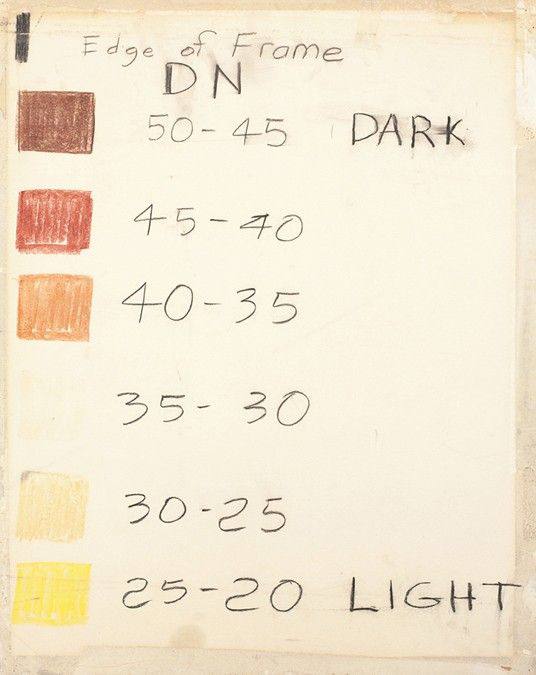
Each pixel came as a number between 0 (white) and 63 (black), printed out by a teletype in long rows of digits. But computers were slow, and the engineers were eager to see Mars.

So they improvised.

Engineers cut the number printouts into strips and pinned them on the wall in the right sequence. Then Richard Grumm, a NASA engineer, bought some pastels, created a color key, and began hand-shading the numbers into grayscale, simulating the Martian surface. The result? A hand-drawn digital image, completed faster than any computer could have managed at the time.

“It was faster to draw it by hand than wait for the computer,” recalled Mariner 4 systems manager John Casani.

It took 10 days to fully transmit and process all 22 images. But that very first handmade version remains preserved — a genuine fusion of science and art — now proudly displayed at JPL, not far from where Mariner 4 itself was built.

🪐 A human touch on the path to the stars.

#Mars #SpaceHistory #NASA #ArtAndScience
@science
  • 🔥 74
  • 👍 52
  • 👀 46
  • 😁 43
  • ⚡ 38
  • 🕊 30
Older posts →
Threads Profile ViewerView any public Threads profile without an account.Open ThreadLook →Writing with AI? Make it sound human.Metric37 rewrites AI drafts so they read naturally. Free AI detector, 1,500 words free.Try Metric37 →