TGViewer
Channel Public Channel
Python Projects & Free Books

Python Projects & Free Books

@pythonfreebootcamp

Python Interview Projects & Free Courses

Admin: @Coderfun
Subscribers
40.7K
Photos
655
Videos
1
Links
301

Showing posts older than #1342 Β· Back to latest

Older Posts 14 shown
Post #1341 5.44K
Here is the list of few projects (found on kaggle). They cover Basics of Python, Advanced Statistics, Supervised Learning (Regression and Classification problems) & Data Science

Please also check the discussions and notebook submissions for different approaches and solution after you tried yourself.

1. Basic python and statistics

Pima Indians :- https://www.kaggle.com/uciml/pima-indians-diabetes-database
Cardio Goodness fit :- https://www.kaggle.com/saurav9786/cardiogoodfitness
Automobile :- https://www.kaggle.com/toramky/automobile-dataset

2. Advanced Statistics

Game of Thrones:-https://www.kaggle.com/mylesoneill/game-of-thrones
World University Ranking:-https://www.kaggle.com/mylesoneill/world-university-rankings
IMDB Movie Dataset:- https://www.kaggle.com/carolzhangdc/imdb-5000-movie-dataset

3. Supervised Learning

a) Regression Problems

How much did it rain :- https://www.kaggle.com/c/how-much-did-it-rain-ii/overview
Inventory Demand:- https://www.kaggle.com/c/grupo-bimbo-inventory-demand
Property Inspection predictiion:- https://www.kaggle.com/c/liberty-mutual-group-property-inspection-prediction
Restaurant Revenue prediction:- https://www.kaggle.com/c/restaurant-revenue-prediction/data
IMDB Box office Prediction:-https://www.kaggle.com/c/tmdb-box-office-prediction/overview

b) Classification problems

Employee Access challenge :- https://www.kaggle.com/c/amazon-employee-access-challenge/overview
Titanic :- https://www.kaggle.com/c/titanic
San Francisco crime:- https://www.kaggle.com/c/sf-crime
Customer satisfcation:-https://www.kaggle.com/c/santander-customer-satisfaction
Trip type classification:- https://www.kaggle.com/c/walmart-recruiting-trip-type-classification
Categorize cusine:- https://www.kaggle.com/c/whats-cooking

4. Some helpful Data science projects for beginners

https://www.kaggle.com/c/house-prices-advanced-regression-techniques

https://www.kaggle.com/c/digit-recognizer

https://www.kaggle.com/c/titanic

5. Intermediate Level Data science Projects

Black Friday Data : https://www.kaggle.com/sdolezel/black-friday

Human Activity Recognition Data : https://www.kaggle.com/uciml/human-activity-recognition-with-smartphones

Trip History Data : https://www.kaggle.com/pronto/cycle-share-dataset

Million Song Data : https://www.kaggle.com/c/msdchallenge

Census Income Data : https://www.kaggle.com/c/census-income/data

Movie Lens Data : https://www.kaggle.com/grouplens/movielens-20m-dataset

Twitter Classification Data : https://www.kaggle.com/c/twitter-sentiment-analysis2

Share with credits: https://t.me/sqlproject

ENJOY LEARNING πŸ‘πŸ‘
  • πŸŽ‰ 3
  • πŸ‘ 1
Post #1340 4.83K
Essential Python and SQL topics for data analysts πŸ˜„πŸ‘‡

Python Topics:

1. Data Structures
   - Lists, Tuples, and Dictionaries
   - NumPy Arrays for numerical data

2. Data Manipulation
   - Pandas DataFrames for structured data
   - Data Cleaning and Preprocessing techniques
   - Data Transformation and Reshaping

3. Data Visualization
   - Matplotlib for basic plotting
   - Seaborn for statistical visualizations
   - Plotly for interactive charts

4. Statistical Analysis
   - Descriptive Statistics
   - Hypothesis Testing
   - Regression Analysis

5. Machine Learning
   - Scikit-Learn for machine learning models
   - Model Building, Training, and Evaluation
   - Feature Engineering and Selection

6. Time Series Analysis
   - Handling Time Series Data
   - Time Series Forecasting
   - Anomaly Detection

7. Python Fundamentals
   - Control Flow (if statements, loops)
   - Functions and Modular Code
   - Exception Handling
   - File

SQL Topics:

1. SQL Basics
- SQL Syntax
- SELECT Queries
- Filters

2. Data Retrieval
- Aggregation Functions (SUM, AVG, COUNT)
- GROUP BY

3. Data Filtering
- WHERE Clause
- ORDER BY

4. Data Joins
- JOIN Operations
- Subqueries

5. Advanced SQL
- Window Functions
- Indexing
- Performance Optimization

6. Database Management
- Connecting to Databases
- SQLAlchemy

7. Database Design
- Data Types
- Normalization

Remember, it's highly likely that you won't know all these concepts from the start. Data analysis is a journey where the more you learn, the more you grow. Embrace the learning process, and your skills will continually evolve and expand. Keep up the great work!

Python Resources - https://whatsapp.com/channel/0029VaiM08SDuMRaGKd9Wv0L

SQL Resources - https://whatsapp.com/channel/0029VanC5rODzgT6TiTGoa1v

Hope it helps :)
  • πŸ‘ 2
Post #1339 4.3K
πŸ“– Data Science Packages
  • πŸ”₯ 2
Post #1338 4.74K
βœ… Python Coding Interview Questions πŸπŸ’»

1️⃣ Q: Return the first duplicate in a list.
def first_duplicate(lst):
seen = set()
for x in lst:
if x in seen:
return x
seen.add(x)
return None

print(first_duplicate([3, 1, 3, 4, 2])) # Output: 3

2️⃣ Q: Check whether a number is a palindrome.
def is_pal_num(n):
return str(n) == str(n)[::-1]

print(is_pal_num(121)) # True
print(is_pal_num(123)) # False

3️⃣ Q: Sort a dictionary by values.
def sort_by_value(d):
return dict(sorted(d.items(), key=lambda x: x[1]))

print(sort_by_value({'a': 3, 'b': 1, 'c': 2}))
Output: {'b': 1, 'c': 2, 'a': 3}

4️⃣ Q: Return all prime numbers in a given range.
def primes_upto(n):
primes = []
for num in range(2, n + 1):
for i in range(2, int(num**0.5) + 1):
if num % i == 0:
break
else:
primes.append(num)
return primes

print(primes_upto(10)) # [2, 3, 5, 7]

5️⃣ Q: Convert a list of numbers into a string.
def list_to_string(lst):
return "".join(map(str, lst))

print(list_to_string([1, 2, 3])) # Output: 123

πŸ’¬ Double Tap ❀️ for Part-12
  • πŸ‘ 2
  • πŸ”₯ 2
  • πŸ₯° 2
  • πŸ‘Œ 1
Post #1336 4.22K
πŸ”° Python list methods
  • πŸ”₯ 6
  • πŸ‘ 1
Post #1335 3.92K
🧠 DSA with Python Roadmap (Beginner β†’ Interview)

πŸ“‚ DSA Foundations
∟ What is DSA
∟ Time & Space Complexity

πŸ“‚ Python for DSA
∟ Lists & Strings
∟ Set & Dictionary Usage

πŸ“‚ Searching Algorithms
∟ Linear Search
∟ Binary Search

πŸ“‚ Sorting Algorithms
∟ Bubble, Selection, Insertion
∟ Merge & Quick Sort

πŸ“‚ Recursion Basics
∟ Base & Recursive Case
∟ Stack Memory

πŸ“‚ Stack & Queue
∟ Stack using List
∟ Queue using Deque

πŸ“‚ Linked List
∟ Singly & Doubly Linked List
∟ Slow & Fast Pointer

πŸ“‚ Problem-Solving Patterns
∟ Two Pointer
∟ Sliding Window

πŸ“‚ Hashing Techniques
∟ Frequency Count
∟ Subarray Problems

πŸ“‚ Trees
∟ Binary Tree
∟ Tree Traversals

πŸ“‚ Heap & Priority Queue
∟ Min / Max Heap
∟ Top-K Problems

πŸ“‚ Graphs
∟ BFS & DFS
∟ Cycle Detection

πŸ“‚ Dynamic Programming
∟ Memoization
∟ Tabulation

πŸ“‚ Bit Manipulation
∟ Bitwise Operators
∟ Common Tricks

πŸ“‚ Practice Strategy
∟ Beginner β†’ Advanced Problems
∟ Revision & Mock Interviews

βˆŸβœ… Interview Ready

❀️ React for more
  • πŸ”₯ 9
  • 🀩 5
Post #1334 3.29K
API Key Authentication

import requests

# API endpoint
url = "https://api.example.com/data"

# Parameters including the API key for authentication
params = {
    "api_key": "YOUR_API_KEY"  # Replace with your actual API key
}

# Send GET request with parameters
response = requests.get(url, params=params)

# Convert JSON response to Python object
data = response.json()

# Print the data
print(data)


Next up ➑️ Importing Pickle files in python
  • πŸ”₯ 3
  • πŸ‘Ž 1
Post #1333 3.51K
Kandinsky 5.0 Video Lite and Kandinsky 5.0 Video Pro generative models on the global text-to-video landscape

πŸ”˜Pro is currently the #1 open-source model worldwide
πŸ”˜Lite (2B parameters) outperforms Sora v1.
πŸ”˜Only Google (Veo 3.1, Veo 3), OpenAI (Sora 2), Alibaba (Wan 2.5), and KlingAI (Kling 2.5, 2.6) outperform Pro β€” these are objectively the strongest video generation models in production today. We are on par with Luma AI (Ray 3) and MiniMax (Hailuo 2.3): the maximum ELO gap is 3 points, with a 95% CI of Β±21.

Useful links
πŸ”˜Full leaderboard: LM Arena
πŸ”˜Kandinsky 5.0 details: technical report
πŸ”˜Open-source Kandinsky 5.0: GitHub and Hugging Face
Post #1332 3.65K
Python Roadmap 🐍 (Beginner β†’ Job)

πŸ“‚ Syntax Basics
∟ Variables, Data Types
∟ Conditions & Loops

πŸ“‚ Data Structures
∟ List, Tuple, Set, Dict
∟ Comprehensions

πŸ“‚ Algorithms
∟ Searching & Sorting
∟ Recursion & Big-O

πŸ“‚ OOP Concepts
∟ Class & Object
∟ Inheritance & Polymorphism

πŸ“‚ Modules & Errors
∟ Import & pip
∟ try / except

πŸ“‚ File Handling
∟ Read / Write Files
∟ CSV & JSON

πŸ“‚ Networking
∟ APIs & Requests
∟ JSON Data

πŸ“‚ Security Basics
∟ Password Hashing
∟ API Keys

πŸ“‚ Practice & Projects
∟ Mini Programs
∟ Real Projects

βˆŸβœ… Job / Internship Ready

❀️ React for more Python roadmaps
πŸ’Ύ Save this post
πŸ“€ Share with a beginner
  • πŸ‘ 10
  • πŸ”₯ 2
Post #1331 3.34K
βœ… πŸ“š Python Libraries You Should Know

1. NumPy – Numerical computing
- Arrays, matrices, broadcasting
- Fast operations on large datasets
- Useful in data science & ML

2. Pandas – Data analysis & manipulation
- DataFrames and Series
- Reading/writing CSV, Excel
- GroupBy, filtering, merging

3. Matplotlib – Data visualization
- Line, bar, pie, scatter plots
- Custom styling & labels
- Save plots as images

4. Seaborn – Statistical plotting
- Built on Matplotlib
- Heatmaps, histograms, violin plots
- Great for EDA

5. Requests – HTTP library
- Make GET, POST requests
- Send headers, params, and JSON
- Used in web scraping and APIs

6. BeautifulSoup – Web scraping
- Parse HTML/XML easily
- Find elements using tags, class
- Navigate and extract data

7. Flask – Web development microframework
- Lightweight and fast
- Routes, templates, API building
- Great for small to medium apps

8. Django – High-level web framework
- Full-stack: ORM, templates, auth
- Scalable and secure
- Ideal for production-ready apps

9. SQLAlchemy – ORM for databases
- Abstract SQL queries in Python
- Connect to SQLite, PostgreSQL, etc.
- Schema creation & query chaining

10. Pytest – Testing framework
- Simple syntax for test cases
- Fixtures, asserts, mocking
- Supports plugins

11. Scikit-learn – Machine Learning
- Preprocessing, classification, regression
- Train/test split, pipelines
- Built on NumPy & Pandas

12. TensorFlow / PyTorch – Deep learning
- Neural networks, backpropagation
- GPU support
- Used in real AI projects

13. OpenCV – Computer vision
- Image processing, face detection
- Filters, contours, image transformations
- Real-time video analysis

14. Tkinter – GUI development
- Build desktop apps
- Buttons, labels, input fields
- Easy drag-and-drop interface

Credits: https://whatsapp.com/channel/0029VaiM08SDuMRaGKd9Wv0L/1885

❀️ Double Tap for more ❀️
  • πŸ‘ 2
  • πŸ”₯ 2
  • πŸ₯° 2
Post #1330 3.24K
Convert any long article or PDF into a test in a couple of seconds!

Mini-service: we take the text of the article (or extract it from PDF), send it to GPT and receive a set of test questions with answer options and a key.

First, we load the text of the material:
# article_text β€” this is where we put the text of the article
with open("article.txt", "r", encoding="utf-8") as f:
    article_text = f.read()

# for PDF, you can extract the text in advance with any library (PyPDF2, pdfplumber, etc.)


Next, we ask GPT to generate a test:
prompt = (
    "You are an exam methodologist."
    "Based on this text, create 15 test questions."
    "Each question is in the format:\n"
    "1) Question text\n"
    "A. Option 1\n"
    "B. Option 2\n"
    "C. Option 3\n"
    "D. Option 4\n"
    "Correct answer: <letter>."
    "Do not add explanations and comments, only questions, options, and correct answers."
)
response = client.chat.completions.create(
    model="gpt-4o",
    messages=[
        {"role": "system", "content": prompt},
        {"role": "user", "content": article_text}
    ])
print(response.choices[0].message.content.strip())


βœ… Suitable for online courses, educational centers, and corporate training β€” you immediately get a ready-made bank of tests from any article.
  • πŸ‘ 4
Post #1329 3.36K
- Location of Mobile Number Code -

import phonenumbers
from phonenumbers import timezone
from phonenumbers import geocoder
from phonenumbers import carrier

number = input("Enter the phone number with country code : ")

# Parsing String to the Phone number
phoneNumber = phonenumbers.parse(number)

# printing the timezone using the timezone module
timeZone = timezone.time_zones_for_number(phoneNumber)
print("timezone : "+str(timeZone))

# printing the geolocation of the given number using the geocoder module
geolocation = geocoder.description_for_number(phoneNumber,"en")
print("location : "+geolocation)

# printing the service provider name using the carrier module
service = carrier.name_for_number(phoneNumber,"en")
print("service provider : "+service)
  • πŸ”₯ 5
  • πŸ‘ 1
Post #1328 3.57K
πŸ”° For Loop In Python
  • πŸ”₯ 4
Post #1319 4.29K
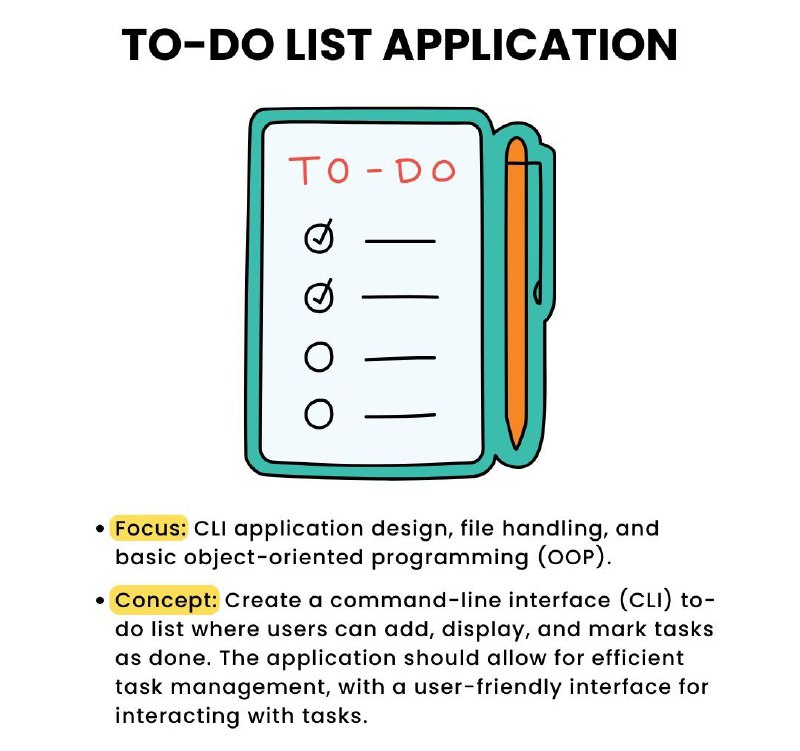
Python Projects
  • πŸ‘ 2
  • πŸ”₯ 1
Older posts β†’
Threads Profile ViewerView any public Threads profile without an account.Open ThreadLook β†’Writing with AI? Make it sound human.Metric37 rewrites AI drafts so they read naturally. Free AI detector, 1,500 words free.Try Metric37 β†’