Iran, India Move Forward With Port Deal in Face of US Sanctions
India seeks to expand trade to Russia and Europe via the port, while Iran wishes to bypass US sanctions
India expects to secure a “long-term arrangement” with Iran to manage the Iranian port of Chabahar, Reuters reported on 13 May, as India seeks to expand exports to central Asia and Europe.
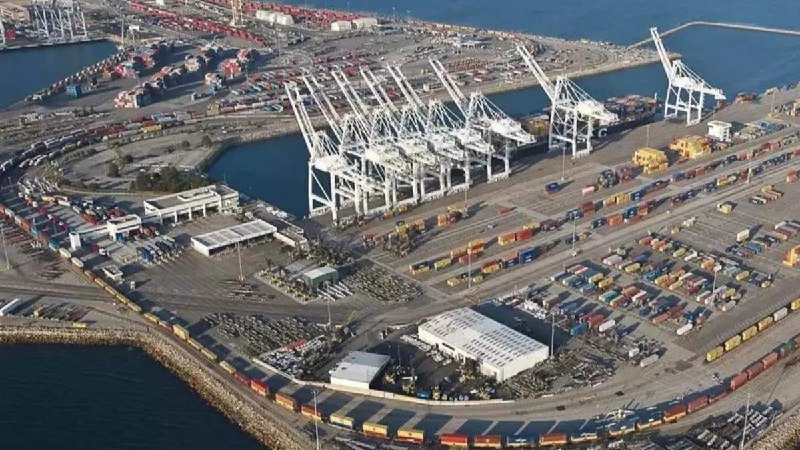
India has been developing part of the port in Chabahar on Iran’s southeastern coast to export goods to Iran, Afghanistan, and central Asian countries while bypassing Pakistani ports in Karachi and Gwadar. India and Pakistan have been enemies since the partition of British-occupied India created the Muslim state of Pakistan in 1947.
Thus far, India has managed the Chabahar port under short-term contracts, which must be renewed regularly. The uncertainty about future operations this has caused, and the complications of engaging in trade with Iran due to US sanctions, has discouraged significant investment in the port.
“As and when a long-term arrangement is concluded, it will clear the pathway for bigger investments to be made in the port,” Indian Foreign Minister S Jaishankar told reporters in Mumbai.
A source speaking with Reuters said Indian Shipping Minister Sarbananda Sonowal is traveling to Iran to witness the signing of a “crucial contract” that would ensure a long-term lease of the port to India.
The contract is expected to last ten years and will give India management control over a part of the port.
Expanded trade via the Chabahar port will help India expand trade to both central Asia and Europe.
Business Standard reports that Chabahar is also part of the proposed International North–South Transport Corridor (INSTC), a mixed sea and land transport route linking the Indian Ocean and the Persian Gulf to the Caspian Sea via Iran and onward to northern Europe via Saint Petersburg in Russia.
Exporting goods through the INSTC via Chabahar Port is expected to reduce transit times between India and Europe by 15 days compared to the Suez Canal route.
Chabahar will also allow Iran to bypass US sanctions and allow Afghanistan better access to the Indian Ocean.
🔗SOURCE ➡️ The Cradle
Related: 7/26/23 — The End of The PetroDollar, The Rise of BRICS is Here — TheMcgwire / PsyopDaily original
As the disobedience continued, the US took the route of sanctioning the individual banks that did not comply in these countries, forcing them to have a sort of foot in both camps, one in the BRICs/Mir/CHIPs axis, another in the Western/SWIFT axis.
....While Turkey has been towing a middle line, like the Gulf states and India, they have also been teeter-tottering a bit between both axes, a bit like India.
March 2022 Flashback: US Hegemony Threatened As Saudis, UAE, India Ignore Threats of Sanctions, Turn to Russia/China — TheMcgwire / PsyopDaily original
... my last publication’s thesis that the US' unilateral sanctions are expediting the fall of the dollar as a reserve currency, and critically damaging to not just the countries sanctioned by the US, but critically damaging to America itself as well.
Will threats of sanctions on the neutral gulf states and India, as we’ve already seen take place, be productive, or counter productive to America’s own security and stability?
Just as Biden threatened India with sanctions, and it seemed to only push India into Russia’s arms, threatening the gulf states with sanctions will likely do the same, encouraging them to strengthen ties with China and Russia...
...Saudi Arabia, the UAE, and India appear to be distancing themselves from Western Powers as they explore expanding their relations with Russia and China...
Follow us on Minds / X / Substack
Follow ➡️ @PsyopDaily
Post #3886
150