
Adiabatic Process Law
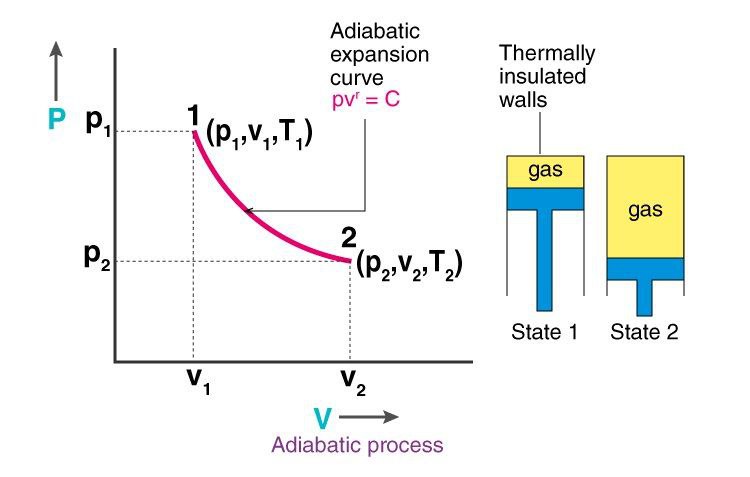
In thermodynamics, an adiabatic process (Greek: adiábatos, "impassable") is a type of thermodynamic process that occurs without transferring heat or mass between the thermodynamic system and its environment. Unlike an isothermal process, an adiabatic process transfers energy to the surroundings only as work. As a key concept in thermodynamics, the adiabatic process supports the theory that explains the first law of thermodynamics.
Some chemical and physical processes occur too rapidly for energy to enter or leave the system as heat, allowing a convenient "adiabatic approximation". For example, the adiabatic flame temperature uses this approximation to calculate the upper limit of flame temperature by assuming combustion loses no heat to its surroundings.
━━━━━━━━━━━
☢ @Physics ⚡
Post #1604
10K
- 🔥 16
- ❤ 11
- 👍 9
- 😱 2
- 🤩 1