TGViewer
Channel Public Channel
OPTIX ACADEMY

OPTIX ACADEMY

@optix_academy

از فیزیک تا اپتیک
آموزش روزانه فیزیک، اپتیک و فوتونیک
از مفاهیم پایه تا فناوری‌های پیشرفته
به همراه انجمن اپتیک

INSTAGRAM:
https://www.instagram.com/optix_academy/
YOU TUBE :
https://youtube.com/@optix_academy
Subscribers
18
Photos
45
Videos
0
Links
0
Recent Posts 8 shown
Post #67 30

Forwarded from انجمن‌ علمی فیزیک دانشگاه قم (𝓐𝓵𝓲)

💠 کهکشان فرمول ها در تلگرام

💢 بدین وسیله به اطلاع می‌رساند، کانال تخصصی «کهکشان فرمول ها 🎓» که پیش‌تر در پیام‌رسان ایتا به ارائه محتوای جزوات اساتید گروه فیزیک دانشگاه قم می‌پرداخت، فعالیت خود را در پیام‌رسان تلگرام نیز آغاز نموده است.

📌 محتوای موجود در این کانال عبارت است از:
📘 جزوات دست‌نویس دانشجویان برگرفته از تدریس اساتید مختلف رشته ی فیزیک
📑 جزوات ارائه‌شده توسط اساتید محترم(جزوات خوده اساتید)
📝 مجموعه سوالات امتحانی سنوات قبل تفکیک‌شده به تفکیک هر استاد

دانشجویان محترم می‌توانند جهت بهره‌مندی از این منابع از طریق لینک‌های زیر عضو شوند:
تلگرام:
📲@galaxyformul
ایتا :
📲@galaxyformula

امید است با همراهی شما، گامی مؤثر در مسیر یادگیری و پیشرفت تحصیلی برداشته شود.✨

#کهکشان‌فرمول‌ها
#انجمن‌علمی‌فیزیک‌دانشگاه‌قم
💠@anjouman_physics

Post #66 47
OPTIX ACADEMY Photo
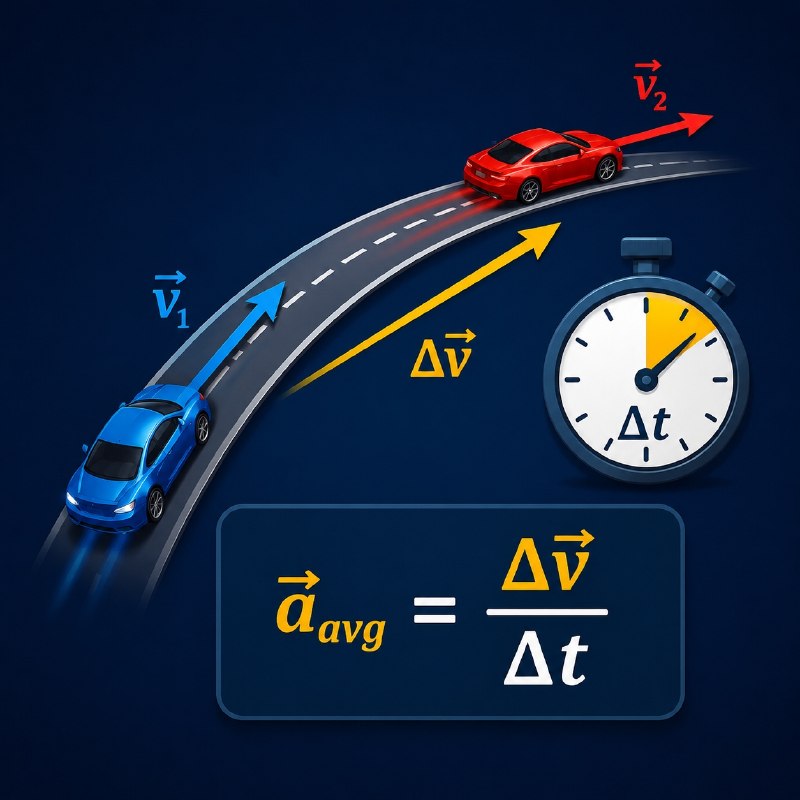
❓ How fast is an object moving?
❓ How does its velocity change?

The answers to these two questions lead us to two concepts: Velocity and Acceleration.

🚗 What Is Velocity?

Velocity tells us how much and in which direction an object's position changes.
The formula for average velocity is:
v = Δx / Δt
where:
v → velocity
Δx → change in position or displacement
Δt → change in time

The SI unit of velocity is:
m/s
For example, if a car moves 50 meters east in 10 seconds:
v = 50 / 10
v = 5 m/s east

🔵 Average Velocity and Instantaneous Velocity

We have two important concepts:

Average Velocity

Average velocity is calculated over a specific time interval.

v_avg = Δx / Δt

But:

Instantaneous Velocity

Instantaneous velocity describes the velocity of an object at a specific moment.
For example, the speedometer of a car approximately shows the car's instantaneous velocity.

⚡ What Is Acceleration?

If an object's velocity changes, the object has acceleration.

The formula for average acceleration is:
a = Δv / Δt
where:

a → acceleration
Δv → change in velocity
Δt → change in time

The SI unit of acceleration is:

m/s²

🚘 A Simple Example

Suppose the velocity of a car increases from:
10 m/s
to:
30 m/s
over:
5 s
Therefore:
a = (30 − 10) / 5
a = 20 / 5
a = 4 m/s²

This means that, on average, the car's velocity increases by 4 m/s every second.

🧠 What Is Negative Acceleration?

If an object's velocity decreases, its acceleration can be in the opposite direction of its motion.
For example, if a car's velocity decreases from:

20 m/s
to:
10 m/s
over:
5 s
then:
a = (10 − 20) / 5
a = −2 m/s²

The negative sign indicates that the change in velocity is in the negative direction of the chosen axis.

Therefore:

Negative acceleration does not always mean "slowing down."
The direction of motion and the direction of acceleration must be considered together.

📊 Position–Time Graph

One important way to study motion is by using graphs.

In a position–time graph:

Vertical axis → position x

Horizontal axis → time t

The slope of a position–time graph represents velocity.

Slope = Δx / Δt = v

Therefore:

📈 Greater slope → Greater velocity
📉 Smaller slope → Smaller velocity
➖ Horizontal line → Object is at rest

📈 Velocity–Time Graph

In a velocity–time graph:

Vertical axis → velocity v

Horizontal axis → time t

The slope of a velocity–time graph represents acceleration.

Slope = Δv / Δt = a

Therefore:

📈 Positive slope → Positive acceleration
📉 Negative slope → Negative acceleration
➖ Horizontal line → Constant velocity

💡 Connection to Optics

Velocity and acceleration are not only used for cars and everyday objects.

In physics, the concept of velocity is very important for studying the propagation of waves and light.

The speed of light in vacuum is:
c ≈ 3 × 10⁸ m/s

However, when light enters a medium such as glass or water, its propagation speed decreases.
Later, we will see that the speed of light in a medium is related to the refractive index (n):
v = c / n

This relationship is one of the important steps on our journey into optics and the refraction of light. 💡

🧪 Today's Exercise

A car is moving with a velocity of:

10 m/s
After 5 seconds, its velocity reaches:
25 m/s

❓ What is the average acceleration of the car?

Use the following equation:

a = Δv / Δt

👨‍🔬 Scientist of the Day

Ole Rømer

Ole Rømer, a Danish astronomer, was one of the first scientists to show that the speed of light is finite and that light travels at an extremely high, but not infinite, speed.


Optics & Lasers | University of Bonab
The Science of Light Starts Here.

#OPTIX
#Optics_and_Lasers
#Photonics
#UniversityOfBonab
#انجمن_علمی_دانشگاه_بناب
Post #65 37
OPTIX ACADEMY Photo
🔬 OPTIX ACADEMY

DAY 06

سرعت و شتاب

📌 دو مفهوم اساسی برای توصیف حرکت

در جلسه قبل فهمیدیم که حرکت یعنی تغییر موقعیت یک جسم نسبت به یک مرجع در طول زمان.
امروز می‌خواهیم دو سؤال مهم را پاسخ دهیم:

❓ جسم با چه سرعتی حرکت می‌کند؟
❓ سرعت آن چگونه تغییر می‌کند؟

پاسخ این دو سؤال ما را به دو مفهوم سرعت (Velocity) و شتاب (Acceleration) می‌رساند.

🚗 سرعت چیست؟

سرعت به ما می‌گوید یک جسم با چه مقدار و در چه جهتی موقعیت خود را تغییر می‌دهد.
فرمول سرعت متوسط:
v = Δx / Δt
که در آن:
v → سرعت
Δx → تغییر مکان یا جابه‌جایی
Δt → تغییر زمان
واحد سرعت در SI:
m/s
است.
مثلاً اگر خودرویی در مدت 10 ثانیه، 50 متر به سمت شرق جابه‌جا شود:
v = 50 / 10
v = 5 m/s شرق

🔵 سرعت متوسط و سرعت لحظه‌ای

دو مفهوم مهم داریم:

سرعت متوسط (Average Velocity)

سرعت متوسط در یک بازه زمانی مشخص محاسبه می‌شود.

v_avg = Δx / Δt
اما:

سرعت لحظه‌ای (Instantaneous Velocity)

سرعت جسم را در یک لحظه مشخص بیان می‌کند.
مثلاً سرعت نشان داده‌شده روی صفحه کیلومترشمار خودرو، تقریباً سرعت لحظه‌ای خودرو را نشان می‌دهد.

⚡ شتاب چیست؟

اگر سرعت یک جسم تغییر کند، جسم دارای شتاب است.

فرمول شتاب متوسط:
a = Δv / Δt
که در آن:
a → شتاب
Δv → تغییر سرعت
Δt → تغییر زمان

واحد شتاب در SI:
m/s²
است.

🚘 یک مثال ساده

فرض کنید سرعت یک خودرو از:

10 m/s
به:
30 m/s
در مدت:
5 s
افزایش پیدا کند.
پس:
a = (30 − 10) / 5
a = 20 / 5
a = 4 m/s²
یعنی سرعت خودرو به طور متوسط در هر ثانیه 4 m/s افزایش پیدا می‌کند.

🧠 شتاب منفی چیست؟

اگر سرعت یک جسم کاهش پیدا کند، شتاب می‌تواند در جهت مخالف حرکت باشد.
مثلاً اگر سرعت خودرو از:
20 m/s
به:
10 m/s
در مدت:
5 s
کاهش پیدا کند:
a = (10 − 20) / 5
a = −2 m/s²
علامت منفی نشان می‌دهد که تغییر سرعت در جهت منفی محور انتخاب‌شده است.
بنابراین:
شتاب منفی همیشه به معنی «کند شدن» نیست.
جهت حرکت و جهت شتاب باید با هم بررسی شوند.

📊 نمودار مکان–زمان

یکی از روش‌های مهم برای مطالعه حرکت، استفاده از نمودار است.

در نمودار مکان–زمان:

محور عمودی → موقعیت x

محور افقی → زمان t

شیب نمودار مکان–زمان نشان‌دهنده سرعت است.

Slope = Δx / Δt = v

پس:

📈 شیب بیشتر → سرعت بیشتر
📉 شیب کمتر → سرعت کمتر
➖ خط افقی → جسم ساکن است.

📈 نمودار سرعت–زمان

در نمودار سرعت–زمان:

محور عمودی → سرعت v

محور افقی → زمان t

شیب نمودار سرعت–زمان نشان‌دهنده شتاب است.

Slope = Δv / Δt = a

بنابراین:

📈 شیب مثبت → شتاب مثبت
📉 شیب منفی → شتاب منفی
➖ خط افقی → سرعت ثابت

💡 ارتباط با اپتیک

سرعت و شتاب فقط برای خودروها و اجسام روزمره نیستند.

در فیزیک، مفهوم سرعت برای مطالعه‌ی انتشار موج و نور بسیار مهم است.

سرعت نور در خلأ:
c ≈ 3 × 10⁸ m/s
است.

اما زمانی که نور وارد یک محیط مانند شیشه یا آب می‌شود، سرعت انتشار آن کاهش می‌یابد.
در ادامه خواهیم دید که سرعت نور در یک محیط با ضریب شکست (n) ارتباط دارد:
v = c / n
این رابطه یکی از قدم‌های مهم ما برای ورود به اپتیک و شکست نور خواهد بود. 💡

🧪 تمرین امروز

یک خودرو با سرعت:
10 m/s
حرکت می‌کند.
پس از 5 ثانیه سرعت آن به:
25 m/s
می‌رسد.

❓ شتاب متوسط خودرو چقدر است؟

از رابطه زیر استفاده کنید:
a = Δv / Δt

👨‍🔬 دانشمند امروز

Ole Rømer
اولِ رومر

اولِ رومر، ستاره‌شناس دانمارکی، یکی از نخستین دانشمندانی بود که نشان داد سرعت نور محدود است و نور با سرعتی بسیار زیاد اما نه بی‌نهایت حرکت می‌کند.
او با مشاهده‌ی ماه‌های مشتری و اختلاف زمان مشاهده‌ی رویدادهای نجومی، شواهدی برای محدود بودن سرعت نور ارائه کرد.
این موضوع برای مسیر ما اهمیت زیادی دارد؛ زیرا در ادامه قرار است درباره‌ی نور، سرعت نور و انتشار نور صحبت کنیم. 💡🌌

📚 برای مطالعه بیشتر

📖 University Physics with Modern Physics — Young & Freedman

📖 College Physics — OpenStax

💬 سؤال امروز

دو خودرو داریم:

🚗 خودرو A با سرعت 20 m/s حرکت می‌کند.

🚙 خودرو B با سرعت 20 m/s حرکت می‌کند اما در جهت مخالف خودرو A حرکت می‌کند.

❓ آیا سرعت برداری آن‌ها یکسان است؟

❓ اگر نه، تفاوت آن‌ها چیست؟

🤔 به مقدار و جهت فکر کنید.

در جلسه بعد به سراغ یکی از معروف‌ترین انواع حرکت می‌رویم:

🍎 سقوط آزاد

و با مفهوم شتاب گرانش (g) آشنا می‌شویم.

OPTIX ACADEMY

From Physics to Optics. 🔬💡


🔬 OPTIX ACADEMY

DAY 06

Velocity and Acceleration

📌 Two Fundamental Concepts for Describing Motion

In the previous session, we learned that motion means a change in an object's position relative to a reference point over time.
Today, we want to answer two important questions:
Post #54 39
OPTIX ACADEMY Photo
Huygens played an important role in the study of motion, oscillations, and waves, and his wave theory of light was one of his most significant contributions.
This makes him an excellent choice for our journey, as we move from:
Motion → Waves → Light → Optics 🌊💡

📚 Further Reading

📖 University Physics with Modern Physics — Young & Freedman

📖 College Physics — OpenStax

💬 Question of the Day

If a runner completes one full lap around a circular track and returns exactly to the starting point:

❓ Is the runner's displacement zero?

❓ Is the distance traveled also zero?

Why? 🤔

Next Session

In the next session, we will explore velocity and acceleration in greater depth and learn about position–time and velocity–time graphs.


Optics & Lasers | University of Bonab
The Science of Light Starts Here.

#OPTIX
#Optics_and_Lasers
#Photonics
#UniversityOfBonab
#انجمن_علمی_دانشگاه_بناب
Post #53 33
OPTIX ACADEMY Photo
In the previous session, we became familiar with vectors. Today, we are going to explore one of the most fundamental concepts in physics:

What is motion?

In physics, an object is considered to be in motion when its position changes over time relative to a reference point.
For example, if a car is moving along a road, its position changes relative to the road; therefore, the car is in motion.
However, if we are sitting inside the same car, the car may appear to be at rest relative to us.
Therefore, motion always depends on a reference point.

🎯 What Is a Reference Point?

To describe motion, we first need to determine what we are observing the object relative to.
This object or point is called a Reference Point.
For example:
🚗 Car relative to the road → in motion
🧍 Passenger relative to the seat → at rest
🌍 Earth relative to the Sun → in motion
Therefore, we can say:
Motion and rest are relative.

📍 What Is Position?

Position tells us where an object is located relative to a reference point.
To represent position, we usually use a coordinate system.
For example:
x = 5 m
This means that the object is 5 meters from the origin, in the positive direction of the x-axis.

🛣️ Path of Motion

The path of motion is the line or shape that an object follows as it moves.
The path can be:

➡️ Straight
⭕ Circular
〰️ Curved
or it can have more complex shapes.
For example, the motion of a car on a straight road does not follow the same path as the motion of a satellite orbiting Earth.

📏 Distance and Displacement

In the previous session, we learned about the difference between these two concepts.

🔵 Distance

Distance is the total length of the path traveled by an object.
Distance is a scalar quantity.

🔴 Displacement

Displacement is the change in an object's position from its initial point to its final point.
Displacement is a vector quantity.
For example, if we leave home, travel 3 kilometers to the east, and then travel 3 kilometers back to the west:
Distance = 6 km
But:
Displacement = 0 km
Because we have returned to our starting point.

⏱️ Time

To study motion, position alone is not enough.
We need to know how much time it takes for this change in position to occur.
Time is one of the SI base quantities, and its unit is:
second (s)

🚗 What Is Velocity?

Velocity tells us how quickly an object changes its position.
In simple terms:
Velocity = Displacement ÷ Time
If an object moves 20 meters in 5 seconds:
v = Δx / Δt
v = 20 / 5 = 4 m/s
Therefore, the average velocity of the object is:
4 m/s

⚡ What Is Acceleration?
Now we have a more important question:
What happens if an object's velocity changes?
This change is called acceleration.
Acceleration = Change in velocity ÷ Time
For example, if the velocity of a car changes from:
10 m/s
to:
30 m/s
in:
5 s
then:
a = Δv / Δt
a = (30 − 10) / 5
a = 4 m/s²
This means that the car's velocity increases by an average of 4 meters per second every second.

🧠 An Important Point

Acceleration does not only mean “moving faster.”

If an object's velocity:

⬆️ increases → there is acceleration
⬇️ decreases → there is acceleration
↪️ changes direction → there is also acceleration
Therefore, even if the magnitude of velocity remains constant, a change in direction can still cause acceleration.
This will be very important when we study circular motion.

💡 Connection to Optics

We may ask:

What does motion have to do with optics?

In optics and photonics, we constantly deal with the concept of light propagation.
Light travels through a vacuum at a very high speed:
c ≈ 3 × 10⁸ m/s
Later, we will see how the speed of light, wavelength, and frequency are related to one another.
And this is where our first steps toward understanding waves and light begin. 💡🌊

🧪 Today's Exercise

A car travels 50 meters in 10 seconds.

1️⃣ What is the car's average velocity?

If the car's velocity then changes from:
10 m/s
to:
20 m/s
in 5 seconds:

2️⃣ What is the car's average acceleration?

Formulas:
v = Δx / Δt
a = Δv / Δt
Now solve it yourself. 😉

👨‍🔬 Scientist of the Day

Christiaan Huygens
Post #52 23
OPTIX ACADEMY Photo
🔬 OPTIX ACADEMY

DAY 05

حرکت چیست؟

📌 سینماتیک؛ توصیف حرکت

در جلسه قبل با بردارها آشنا شدیم. امروز می‌خواهیم یکی از اساسی‌ترین مفاهیم فیزیک را بررسی کنیم:

حرکت چیست؟

در فیزیک، یک جسم زمانی در حال حرکت است که موقعیت آن نسبت به یک مرجع، با گذشت زمان تغییر کند.
مثلاً اگر یک خودرو در کنار جاده حرکت کند، موقعیت آن نسبت به جاده تغییر می‌کند؛ بنابراین خودرو در حال حرکت است.
اما اگر داخل همان خودرو نشسته باشیم، ممکن است خودرو نسبت به ما ساکن به نظر برسد.
پس حرکت همیشه به یک مرجع وابسته است.

🎯 نقطه مرجع چیست؟

برای توصیف حرکت، ابتدا باید مشخص کنیم جسم را نسبت به چه چیزی بررسی می‌کنیم.
به این جسم یا نقطه، مرجع (Reference Point) می‌گوییم.
مثلاً:
🚗 خودرو نسبت به جاده → در حال حرکت
🧍 مسافر نسبت به صندلی → ساکن
🌍 زمین نسبت به خورشید → در حال حرکت
بنابراین می‌توان گفت:
حرکت و سکون نسبی هستند.

📍 موقعیت چیست؟

موقعیت (Position) مشخص می‌کند یک جسم نسبت به نقطه مرجع کجا قرار دارد.
برای نشان دادن موقعیت، معمولاً از دستگاه مختصات استفاده می‌کنیم.
مثلاً:
x = 5 m
یعنی جسم در فاصله 5 متری از مبدأ، در جهت مثبت محور x قرار دارد.

🛣️ مسیر حرکت

مسیر حرکت، خط یا شکلی است که جسم هنگام حرکت طی می‌کند.
مسیر می‌تواند:

➡️ مستقیم باشد
⭕ دایره‌ای باشد
〰️ منحنی باشد
یا شکل‌های پیچیده‌تری داشته باشد.
مثلاً حرکت یک خودرو در یک جاده مستقیم با حرکت یک ماهواره در مدار زمین مسیر یکسانی ندارد.

📏 مسافت و جابه‌جایی

در جلسه قبل با تفاوت این دو آشنا شدیم.

🔵 مسافت (Distance)

کل طول مسیری است که جسم طی می‌کند.
مسافت یک کمیت نرده‌ای است.

🔴 جابه‌جایی (Displacement)

تغییر موقعیت جسم از نقطه شروع تا نقطه پایان است.
جابه‌جایی یک کمیت برداری است.
مثلاً اگر از خانه خارج شویم، 3 کیلومتر به شرق برویم و سپس 3 کیلومتر به غرب برگردیم:
مسافت = 6 km
اما:
جابه‌جایی = 0 km
چون دوباره به نقطه شروع برگشته‌ایم.

⏱️ زمان

برای بررسی حرکت، فقط موقعیت کافی نیست.
باید بدانیم این تغییر موقعیت در چه مدت زمانی اتفاق افتاده است.
زمان یکی از کمیت‌های پایه SI است و واحد آن:
second (s)
است.

🚗 سرعت چیست؟

سرعت به ما می‌گوید یک جسم با چه سرعتی موقعیت خود را تغییر می‌دهد.
به زبان ساده:
سرعت = جابه‌جایی ÷ زمان
اگر جسمی در مدت 5 ثانیه، 20 متر جابه‌جا شود:
v = Δx / Δt
v = 20 / 5 = 4 m/s
بنابراین سرعت متوسط جسم:
4 m/s
است.

⚡ شتاب چیست؟
حالا سؤال مهم‌تری داریم:

اگر سرعت جسم تغییر کند، چه اتفاقی افتاده است؟
به این تغییر، شتاب (Acceleration) می‌گوییم.
شتاب = تغییر سرعت ÷ زمان
مثلاً اگر سرعت یک خودرو از:
10 m/s
به:
30 m/s
در مدت:
5 s
برسد:
a = Δv / Δt
a = (30 − 10) / 5
a = 4 m/s²
یعنی سرعت خودرو در هر ثانیه به طور متوسط 4 متر بر ثانیه افزایش پیدا کرده است.

🧠 یک نکته مهم

شتاب فقط به معنی «تندتر شدن» نیست.
اگر سرعت جسم:

⬆️ افزایش پیدا کند → شتاب داریم
⬇️ کاهش پیدا کند → شتاب داریم
↪️ جهت حرکت تغییر کند → باز هم شتاب داریم
پس حتی اگر اندازه سرعت ثابت باشد، تغییر جهت می‌تواند باعث شتاب شود.
این موضوع در حرکت دایره‌ای بسیار مهم خواهد بود.

💡 ارتباط با اپتیک

شاید بپرسیم:

حرکت چه ارتباطی با اپتیک دارد؟

در اپتیک و فوتونیک دائماً با مفهوم انتشار نور سر و کار داریم.
نور در خلأ با سرعت بسیار زیادی حرکت می‌کند:
c ≈ 3 × 10⁸ m/s
در ادامه خواهیم دید که سرعت نور، طول موج و فرکانس چگونه به یکدیگر مربوط می‌شوند.
و اینجا اولین قدم‌های ما برای ورود به موج و نور شکل می‌گیرد. 💡🌊

🧪 تمرین امروز

یک خودرو در مدت 10 ثانیه، 50 متر حرکت می‌کند.

1️⃣ سرعت متوسط خودرو چقدر است؟

اگر سپس سرعت خودرو از:
10 m/s
به:
20 m/s
در مدت 5 ثانیه برسد:

2️⃣ شتاب متوسط خودرو چقدر است؟

فرمول‌ها:
v = Δx / Δt
a = Δv / Δt
حالا خودت حلش کن. 😉

👨‍🔬 دانشمند امروز

Christiaan Huygens
کریستیان هویگنس

هویگنس در مطالعه‌ی حرکت، نوسان و موج نقش مهمی داشت و نظریه موجی نور نیز از مهم‌ترین دستاوردهای اوست. این انتخاب برای مسیر ما فوق‌العاده است، چون از
حرکت → موج → نور → اپتیک عبور می‌کنیم. 🌊💡
📚 برای مطالعه بیشتر

📖 University Physics with Modern Physics — Young & Freedman

📖 College Physics — OpenStax

💬 سؤال امروز

اگر یک دونده یک دور کامل یک پیست دایره‌ای را طی کند و دقیقاً به نقطه شروع برگردد:

❓ آیا جابه‌جایی او صفر است؟

❓ آیا مسافت طی‌شده هم صفر است؟

چرا؟ 🤔

در جلسه بعد، سرعت و شتاب را عمیق‌تر بررسی می‌کنیم و با نمودارهای مکان–زمان و سرعت–زمان آشنا می‌شویم.


🔬 OPTIX ACADEMY

DAY 05

What Is Motion?

📌 Kinematics: Describing Motion
Older posts →

About this channel

How can I read @optix_academy without a Telegram account?
TGViewer shows the public web preview Telegram publishes for OPTIX ACADEMY: recent posts, photos, videos and the subscriber count, with no app, login or account.
How many subscribers does OPTIX ACADEMY have?
OPTIX ACADEMY (@optix_academy) has 18 subscribers on Telegram, refreshed roughly every 30 minutes.
Does OPTIX ACADEMY know I viewed it here?
No. Public channel previews carry no viewer identity, and TGViewer has no accounts or tracking of what you look up.
Threads Profile ViewerView any public Threads profile without an account.Open ThreadLook →Writing with AI? Make it sound human.Metric37 rewrites AI drafts so they read naturally. Free AI detector, 1,500 words free.Try Metric37 →