
Good morning, dear friends! ☕️🙂
🕌 The Emir of Bukhara’s Palace: An Oriental Fairy Tale in the Caucasus
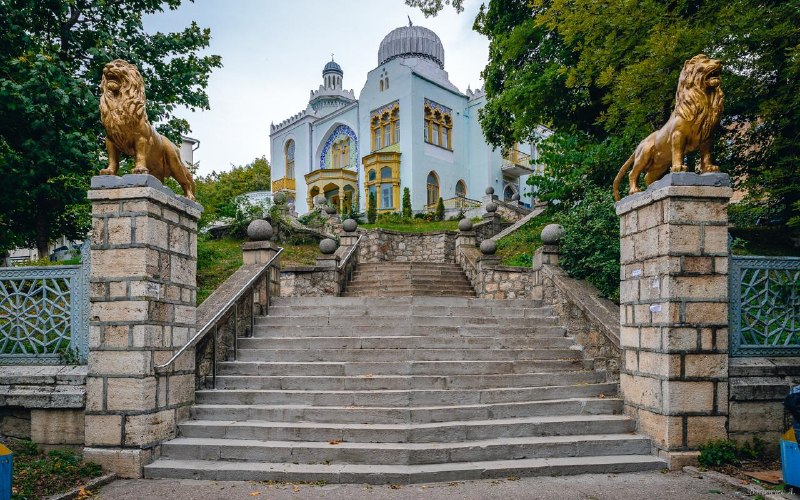
Friends, today we are traveling to southern Russia, to the resort town of Yessentuki. Here, right in the middle of a park, stands a building that one would never expect to find in this place: a palace with blue walls, oriental arches, turrets, a golden dome, and stone lions at the entrance. It looks as though it had been miraculously transported here directly from Bukhara or Samarkand.
Welcome to the Emir of Bukhara’s Palace!
👑 The Emir at the Resorts
The palace was built for Said Abd al-Ahad Khan, the penultimate emir of Bukhara from the Manghit dynasty. He was an educated and energetic ruler, spoke Uzbek, Persian, Arabic, and Russian, loved horseback riding and falconry, and also held the rank of general in the Russian cavalry.
The emir had health problems and regularly came to the Caucasus to receive treatment at the mineral springs. He liked the region so much that he asked Nicholas II to give him a plot of land in Yessentuki for the construction of a summer residence.
🏗️ A Palace the Emir Never Saw
Construction began in 1907 and lasted five years. Because of the difficult location of the plot on a slope, the builders had to chisel the rock out by hand.
The design was created by Vladimir Semyonov, who later became Moscow’s chief architect.
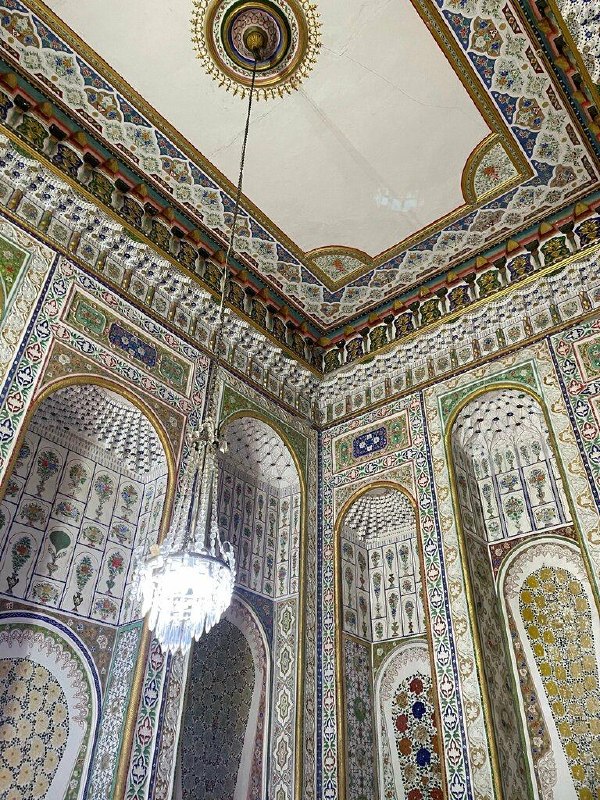
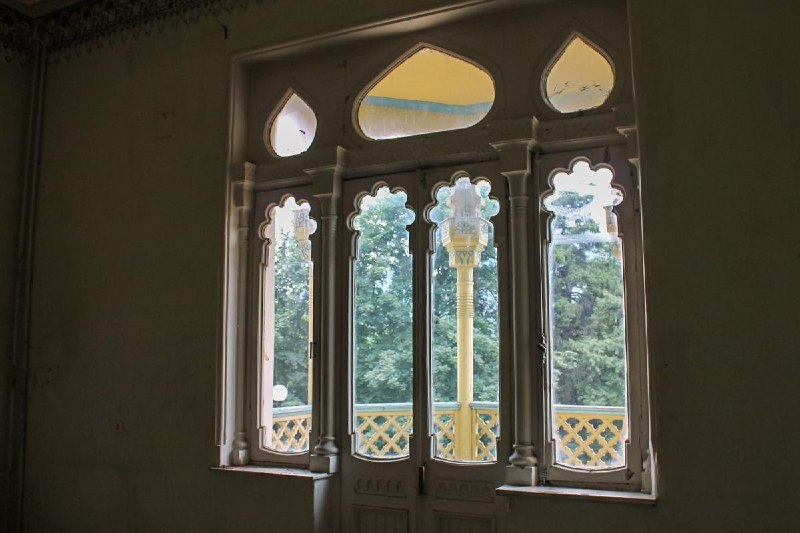
The result was a true gem of the Neo-Moorish style with Art Nouveau elements. Khorezmian and Bukharan craftsmen created carved ornaments and ceramic tiles with floral patterns.
However, the emir would never see his palace completed. He died in 1910, two years before construction was finished.
🤝 A Gift to the Empress
His son and successor, Said Alim Khan, showed no interest in the residence.
On the occasion of the 300th anniversary of the Romanov dynasty in 1913, he handed the palace over to Empress Maria Feodorovna, the mother of Nicholas II.
After that, the building was used for charitable purposes.
🏥 From Palace to Medical Institution
During the First World War, in 1915, a military hospital for wounded soldiers was established in the palace. Until 1918, it served as a military hospital where officers received rehabilitation treatment.
During the Soviet era, the building was converted into the “Udarnik” Sanatorium and later into the “Telman” Sanatorium.
At various times, Clara Zetkin, Maria Ulyanova (Lenin’s sister), and Nadezhda Krupskaya recovered and received treatment here.
🏛️ What You Can See Today
Today, the palace is a federal cultural heritage site. Extensive restoration work is currently underway there.
During the work, specialists discovered cobalt-blue glazed tiles from the early 20th century beneath thick layers of paint—a rare find.
The palace is distinguished by a complicated layout with numerous staircases, corridors, and passageways. A tiled Art Nouveau fireplace has been preserved in the great hall.
The stone lions still stand at the entrance, and above the gate, an Arabic inscription welcomes visitors: “Peace to those who enter.”
Give a ❤️ if you liked it!
📍 The coordinates of the location are available here
💥 Our channel: Node of Time EN
Post #33980
239




- ❤ 2
- 🥰 1