TGViewer
Channel Public Channel
mAia

mAia

@maia_earlybird_en

The AI world, explained: trends, research, launches. What's happening in artificial intelligence and why it matters. No hype — just what actually shifts the landscape.
Subscribers
99
Photos
3
Videos
0
Links
104
Recent Posts 20 shown
Post #139 13
This isn't even "wait, you're allowed to do that?". They've just got some nerve.

Amazon has launched an ear. But let me give you some context first.

In September, Apple unveiled the Apple Watch Series 12 and Ultra 4 with a feature set called Audio Intelligence. The headline feature is Siri Recap: the watch listens to everything around you all day and by evening produces a summary of your conversations – "to refresh your memory and keep you in the moment". Plus Live Rewind: double-press the crown and the last fifteen seconds of whatever was just said appears as text on the screen.

Apple clearly knew what they were getting into, and rolled out a whole defensive line. The feature is off by default. Raw audio is not recorded or stored. The summary is not a transcript but a compressed retelling. Speakers are not identified. Processing happens in Private Cloud Compute, which, according to Apple, even Apple itself cannot access. Summaries are deleted after seven days unless you save them. You can set a schedule: it listens at work, but not at home or at night. The launch is promised before the end of the year – for now it was just an announcement.

Ha. Didn't help. The headlines were all the same: "Apple Watch now always listening". Apple's VP John Ternus explained to journalists that the watch takes "high-level notes", not a transcript. But here's the thing: you sit down for a meeting, your colleague has Recap on their wrist – you're being recorded without your knowledge or consent. A conversation meant for the room has ended up in someone's "AI diary". At that point it doesn't matter how Apple encrypts and deletes things: the very status of the conversation has changed.

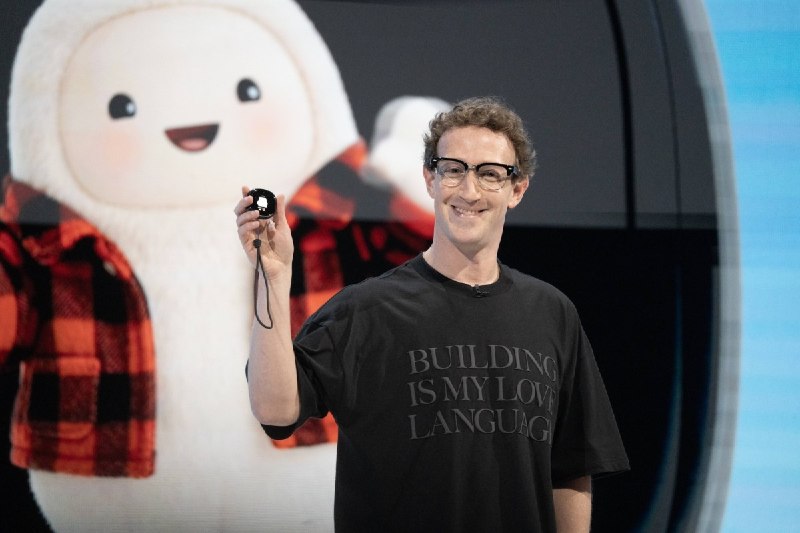
So, while Apple was busy playing defence, Amazon released two devices under the Bee brand. The Frontier bracelet at $75 and the Eclipse at $100 – a magnetic card that sticks to the back of your phone. Recording starts with a button press – Amazon makes a point of emphasising this, against the backdrop of the "always listening" Apple Watch controversy. But press it once and it records everything: conversations, meetings, someone else's remarks in the kitchen. You press the button. The people around you don't.

The audio, they say, is deleted immediately, but the transcript is kept, and AI turns it into a summary and a to-do list. And now the really interesting part – for $12 a month. With the Pro subscription, Bee connects to your Amazon account and turns offhand remarks into product recommendations. The example from the announcement itself: you say out loud that you've run out of dish soap – and it's already on your Amazon homepage. Imagine where that goes: you complain about a leaky tap and you get a plunger and a plumber. The reminders aren't the point. The point is that your day becomes a sales funnel.

We've always half-suspected we were being listened to and then shown ads. And now they want us to pay for the privilege!? Go to hell.

Okay, I'll admit it: there is a temptation. Recording a conversation with your boss or a rude shop assistant – that would sometimes be very handy. But knowing that anything I say could end up in someone's file – I wouldn't want that. In Europe this will almost certainly not be allowed – though let's see how quickly Amazon tests that.

So here's my question. Would you buy one – just for the summaries? 🐝 And if you spotted one of these on a friend's wrist, would it change how you talk to them?

Source
TechCrunch Amazon's Bee launches two new personal AI devices, starting at $75 | TechCrunch Amazon-owned Bee has launched its first new AI devices since its acquisition, including an updated wearable and a credit-card-sized recorder that attaches to smartphones. The devices can summarize conversations, create to-do lists, and integrate with Alexa…
Post #138 18
Well, what a mess!

Remember I wrote about the booming market for AI-powered scams? Well, here's some good news for a change.

So there's this Australian company called Apate – named after the Greek goddess of deception, which is a rather nice touch. They came up with the idea of sending AI agents straight into the arms of scammers. The agent picks up the phone, pretends to be a victim, chats for as long as needed, clicks on phishing links, and quietly extracts everything: accounts, crypto wallets, websites. Not to recover any money – to build a map. This is intelligence work.

They've already run 2.5 million such conversations. The telecom operator TPG has routed almost 590,000 calls to the agents. Commonwealth Bank says reported fraud losses dropped by 76%.

So the agent as bait. Turing definitely didn't see that one coming.

Source.
Telegram mAia On how AI is changing and accelerating business. $442 billion. That's more than the entire global cocaine market. That's the estimated size of Asia's scam AI industry. It has grown by multiples. Not that cocaine is a great benchmark. But when Bloomberg…
Post #136 36
📱 Karpathy divided humanity into 4 groups

Andrej Karpathy – one of the most well-known AI researchers out there – published a simple diagram: all of humanity splits into four groups based on how people interact with language models at all.

Around 6 billion have never spoken to a model once. Another 1–2 billion occasionally ask it to write a birthday message. About 20 million use agents for complex tasks. And roughly 5,000 people work with the most powerful internal systems, closed off to everyone else.

Well, that explains a lot. This is why some people genuinely think AI is a harmless toy, while others talk about exponential growth: they have literally seen different things. That's a serious gap. A very serious one.

Source
X (formerly Twitter) Andrej Karpathy (@karpathy) on X
Post #134 31
On how AI is changing and accelerating business.

$442 billion. That's more than the entire global cocaine market. That's the estimated size of Asia's scam AI industry. It has grown by multiples.

Not that cocaine is a great benchmark. But when Bloomberg picks that particular comparison, they want something to click in your head: here is the scale of an industry that has no LinkedIn page.

We're talking about fraudulent call centres that spent years operating out of guarded compounds somewhere in Myanmar and Cambodia. Now they're scaling up. They could genuinely rival Russia's prison labour camps for sheer volume. Deepfakes of your mother can be produced in either place. Automatic translation into twenty languages, accent-free. A script generated for a specific person from their own public data – what they read, where they worked, what their kids are called. What used to take time and manpower now scales like SaaS.

You may remember I wrote recently that Altman said in a Politico interview that "bad things" – fraud, hacks – are acceptable costs, because the benefits will outweigh them. But $442 billion is not exactly a line in a risk matrix. That's more than Poland produces in a year. There's no point complaining, so we just listen and quietly judge.

Source
Techmeme AI is supercharging a ~$442B scam economy that is bigger than the global cocaine trade, as the Chinese scam industry spreads beyond… Bloomberg: AI is supercharging a ~$442B scam economy that is bigger than the global cocaine trade, as the Chinese scam industry spreads beyond Asia's fortified compounds
Post #133 39
$50 billion instead of $70 billion

A $20 billion gap – this is not a typo in a report and not a revised forecast. It is, just to be clear, almost a third of what the market believed. That kind of story would be hard to miss in any industry, but in the AI sector, where everything is priced with room for exponential growth, it landed like an earthquake.

OpenAI told investors that annual revenue by the end of September would be closer to $50 billion, not $70 billion. Shares of Nvidia, Oracle, and CoreWeave fell. Australian data-centre operator Firmus – backed by Nvidia, $5 billion IPO – pulled its listing that same night. "Market volatility," they said. Sure.

Just a few posts ago I wrote that consumer AI, under any scenario, won't pay for itself at current compute prices. And OpenAI's pivot toward enterprise customers is precisely an attempt to plug that hole. But if the leading player's revenue turns out to be a third below what was floating around in the press, it means the enterprise pivot is not picking up speed quite as fast as everyone would like. Who was it that said the OpenAI and Anthropic IPOs would be pushed back a long way, if they happen at all? Maybe they were right?

Source
Post #132 47
Sam Altman gave an interview to Politico. Nothing particularly new, but it finally puts into words one distinction I'd highlight. Unlike Amodei, Altman says the world must "accept that there will be bad things" – hacks, fraud, abuse – because the benefits will outweigh them.

But there's a nuance in who exactly is saying this. Not a utilitarian philosopher, not a regulator weighing the public good. This is a man whose company earns money on every token, and whose investors are waiting for returns. When he says "the benefits will outweigh" – I believe he believes it. And at the same time I notice that the costs of those "bad things" land somewhere other than where the profits do.

Altman named the point of divergence with Anthropic and Dario Amodei directly: they are not willing to accept the deal "fraud and hacks in exchange for benefits", he is.

And even if you find Anthropic's position more convincing, you have to admit that this kind of openness from Altman is rare. Usually this is said in hallways, while the public statements are all about safety and responsibility.

At least this time it's honest.

Source
POLITICO Sam Altman to Decoded: ‘The world should accept some bad things happening’ for the benefits of AI The OpenAI CEO sought to distinguish his policy stance from rival developer Anthropic.
Post #131 50
Sovereign Hummingbird 🐦

On October 3rd, German Unity Day, Germany's Aleph Alpha released a model called Kolibri. The date was no accident – and that's the whole point of the release.

For the past few years, "sovereign AI" in Europe has been mostly talk. Now it's available in the open: you can download it and run it on your own infrastructure, inside the closed perimeter of a ministry, a factory, or an aerospace design bureau. The data stays in the building. No California cloud, no awkward questions from the security team.

But the most interesting thing about Kolibri isn't even that – it's the language. Most models know German the way a tourist knows a menu: you can follow it, but it reads like a translation. Kolibri was trained on real German, including the kind written by government agencies, courts, and parliament. The developers even had to fix their own data filters: the standard ones were discarding texts with words that were too long – which is exactly what German bureaucratic prose looks like. Bundesverfassungsgericht is not a monster to this model; it's just a familiar word.

And one more quality, unexpectedly human: it was trained to say "I don't know." If the answer isn't in the documents, Kolibri is more likely to admit that than to make something up. For a bureaucratic context where a mistake costs more than silence, that is probably its most important feature.

In general benchmarks, Kolibri doesn't beat the world leaders. But that was never the goal. This is a model that reads German documents the way they are written – and doesn't send them outside the country.

Source
Aleph Alpha Kolibri Has Landed: A Sovereign Open-Weight Model — Aleph Alpha Kolibri is an English-German Mixture-of-Experts model with 78B total and 3B active parameters, a context of up to 1M tokens and open weights under Apache 2.0, specialized for sovereign, mission-critical work.
Post #130 47
And one more number. I mean, we all kind of knew this, of course, but now it's just a fact of life. Feel free to memorize it and drop it in meetings.
2.2% of users pay for AI subscriptions.
Once more. Out of all the people using AI tools, only 2.2% actually pay for them. An average of $31 a month.
TechCrunch did the math: even if paid AI services had an audience the size of Netflix – that's $11 billion in annual revenue. OpenAI's operating costs alone are over $30 billion.
There is no scenario where this works at current pricing and current compute costs. That's just the reality.
Consumer AI will never pay for itself.
Hence the pivot to enterprise. OpenAI's enterprise revenue has doubled since July. Businesses pay well and pay a lot, and that's where the attention, the development, and the priority access to compute are all shifting now. Consumer ChatGPT, Gemini, Claude – they're not going anywhere, they're the shop window. But a shop window exists to sell what's inside.

Source
TechCrunch The ugly economics of consumer AI | TechCrunch There’s a reason frontier labs have gotten gun-shy about consumer AI — and it’s not because the tech isn’t good enough.
Post #129 36
Good news for the squishy ones.

Anthropic published a study on robots and physical labour, and the numbers in it are ones I'll be dropping into every conversation about "they'll replace us all soon".

So. Technically, robots can handle 74% of physical work tasks. (Based on the video tests I've seen, that's hard to believe, but fine.) Sounds alarming, sure. But! It's actually cheaper to hire a human than a robot right now for all but 0.3% of tasks.

That's a gap of 247 times. Who cares what a robot "can do" if it costs vastly more?

Imagine you can drive a car, but every trip costs you the price of a plane ticket.

If robots keep getting cheaper at the same pace they historically have, they'll reach cost-competitiveness on 10% of tasks in roughly forty years. That's not tomorrow, that's 2065. Even accounting for the accelerating pace of everything these days, we're still most likely looking at at least a decade.

Language models are a different story – around 80% of all work tasks in general fall within their automation range. That's where the real displacement is happening right now.
Physical labour, for the time being, is safer than it looks.

Source
Anthropic What work can robots do? What work can robots do? Anthropic's robot exposure index finds robots can do 3/4 of US physical job tasks, but are cost-competitive for only 0.3%.
Post #127 35
Jev: reflex instead of reasoning

The latest industry hype is a model that outputs a probability instead of text and deliberation. For two years now we have been getting used to AI that writes. That is, it literally thinks as it formulates a response. You ask – you get a paragraph of text. On September 15, the startup TypeSafe AI released a model called Jev that does not write at all. It answers with a single word from a predefined list – and a number saying how confident it is.

For example, you give it context and options: "is this message spam, an invoice, or a complaint?" Jev returns: "invoice, 0.94". Not text – a typed value with a probability score. Three modes: pick from options, rate on a scale, answer yes/no.

TypeSafe calls this a System One model – after Kahneman: fast, intuitive thinking instead of slow deliberation. The founder is Diogo Almeida, four years at OpenAI, worked on ChatGPT and GPT-4.

Almeida's argument: the industry has spent years optimising AI for human language, even though 90% of decisions inside software are not "write me an essay" but "pick one of five options". Running a token-by-token text-generation model for that is like calling in a professor to sort your mail.

The numbers, if you don't overthink them, are striking: a response in 70–500 milliseconds – tens to hundreds of times faster and cheaper than large models, according to the company. These are internal benchmarks, so the real-world gain will be more modest.

Unglamorous, sure – but the tasks are not exactly rocket science either. Sorting emails (one developer classified 500 of them for a few cents). Fraud detection: suspicious transaction or not, anything borderline gets escalated to a large model. Browser agents: at each step, not "think about it" but "click, scroll, or type?" Matching candidates to 400 job openings in seconds.

Hallucinations are still possible: Jev cannot answer "banana" instead of a category. But it can pick the wrong category – though that error comes with a confidence score, so it can be caught.

What this means

Intelligence is no longer one big black box. A division of labour is emerging: large models think and write, fast ones choose, code executes. You pick the right kind of thinking for the task at hand – and that is already a different kind of programming: not writing instructions, but directing processes. The name hints at this too: Jevons was a 19th-century economist who noticed that making a resource cheaper does not reduce its consumption – it causes it to explode. That is exactly the bet TypeSafe is making with AI.

And if that bet pays off, AI will move out of the chat window and into the background – into thousands of micro-decisions inside applications that you will never see. Not an assistant you talk to, but the reflexes of software. Early signals are already there: 13% of Vercel's paid teams tried Jev within the first 24 hours – a record for the platform.

The whole idea in one line:


jev → "win", 0.87
if p > 0.5: act()
Post #126 49
A Duel with Steven Pinker

Steven Pinker – brilliant scientist and the only person on earth who has ever been caught red-handed being an optimist – has written an open letter to Scott Alexander. The subject, naturally, is AI wiping out humanity.
Scott Alexander is the author of Astral Codex Ten, one of the sharpest bloggers on rationalism and everything else. Pinker is a Harvard professor, author of The Better Angels of Our Nature and Enlightenment Now.

Alexander challenged him to a public debate. Pinker responded with an open letter in Quillette: he would not debate, but would lay out his disagreements in writing. And he did – across thirty-odd pages.

The core of his objection: intelligence, in itself, does not imply a drive to dominate or to survive at any cost. In humans, those traits come bundled together thanks to evolution. Why do we assume a machine gets them as part of the same package?

That said, Pinker admits he underestimated what language models could do. And he put too much faith in developers' caution.

But the most interesting part of the letter is a question aimed at the companies themselves: why do the people warning that AI might kill everyone keep building it as fast as they possibly can?

Pinker's suggestion is that there is a connection. If you believe the only way to save humanity is to be the first to build superintelligence, then the rush becomes a moral duty. And any damage along the way is easy to write off as the cost of the rescue mission.

He does acknowledge the risks: bioterrorism, cyberattacks, uncontrolled agents. He supports independent oversight, accident investigations, liability for harm, and the ability to shut systems down.
But he still leaves us some reason for optimism. A saint, truly – bless him.

Source
Quillette An Open Letter to Scott Alexander The dangers of AI are real, but doomerism may be counterproductive.
Post #125 39
Listen, I found something, and I can feel it: this is where the cracks are starting to show, and it will only spread from here. I'm not making predictions. Let's just look at what's happening and mark this spot. It's thin here, and it will tear.

We all hope AI will make our work faster, easier, and that we'll earn more. Right? But if your work has become faster and easier, why should the client pay you the same rate? Now flip it around. Why should I pay a law firm thousands of dollars for work that its junior associates (remember the show Suits?) did by clicking a few buttons in an AI tool?

Sounds like the kind of question a perpetually grumpy, penny-pinching client asks – someone who doesn't appreciate how many years people spent in university. Except now it's not private clients asking it. It's Goldman Sachs. And it seems like the conversation has moved well past haggling over a discount, into something more fundamental: how professional work gets priced at all.

A quick note: this piece is about the large corporate legal market in the US and the UK. For decades it has run on hourly billing – time logged in six-minute increments, junior associates with annual hour targets that determine their bonuses and careers. The model has been criticised many times, but it held. Right now it's being squeezed from three sides at once.

Citi has changed how it selects law firms: firms now have to explain how much they are saving with AI. A neat opening move in a conversation about discounts.
Goldman Sachs is asking firms how much the technology saves them, and expects to get a share of those savings.
Morgan Stanley is promising more competitive tenders and alternative fee arrangements, including fixed fees. And the bank's general counsel Eric Grossman called the Big Law model – where armies of junior associates do the work – deeply unstable. This is coming from a client that pays them millions.

Where does the tension come from? With AI, the cost of delivering services should, in theory, be falling. But the bills are not falling. Demand for lawyer hours in the first half of the year actually grew unusually fast. Rates at top US firms have risen by nearly a third over three years. Clients are drawing a simple conclusion: the savings are staying inside the firms.

And since the routine work they were competent at has been taken away, expertise will need to be packaged differently. Proven by results, not by hours. Because the client does not want to pay for the time you saved. Which means that to keep earning the same, you'll have to run faster. Or change.

Consultants are already changing. At McKinsey, roughly a quarter of fees are tied not to hours but to outcomes: the client comes not with a scope of work but with a goal, and pays depending on whether it is reached. The consequences are visible inside the firm itself: McKinsey is shifting more partner compensation into equity, because revenue is becoming less predictable. Firms that sell outcomes start to live like investors: they hold reserves, spread risk, pick their projects.

Lawyers and consultants are the first to reach this point. Next in line: auditors, tax advisers, agencies – everyone who sells hours.

So when people tell you AI will put you out of a job, read it as: out of a job in the form you are used to. Because yes, only a lawyer can file a legal brief – just please, deduct the time it took to write it. Have a conscience!

Source
Nytimes As A.I. Makes Law Firms More Efficient, Clients Ask: ‘Where’s My Discount?’ There’s growing pressure to move beyond the billable hour. But big firms aren’t ready to blow up their trusted business model.
  • 👏 1
  • 😱 1
Post #122 58
YouTube has put itself through something of an internal overhaul – and it's a fairly large one.

The headline from Made On YouTube: the feed is now built from a prompt. You type "calm deep-dives for the evening" – Gemini goes through twenty billion videos and builds a dedicated tab. You can keep several tabs like that running at once. So instead of the algorithm guessing what you want, you just tell it directly – and it goes looking.

CIf you’ve already gone to check YouTube and couldn’t find anything like this, that’s completely normal. Custom Feeds were only announced on September 23. The rollout will begin in the US this fall, with the first users expected to get access starting in October. YouTube hasn’t said yet when the feature will become available in other countries.

Creators are getting some new toys too: Studio can analyze a draft and point out where the pacing, structure, or storytelling starts to drag, generate thumbnails that match the style of the channel, and show different versions to different audience segments. A/B testing is also moving into the video itself: creators will be able to compare up to three different edits with different hooks.

The most unexpected announcement is a pilot of live automatic dubbing for streams, planned for early 2027. More than 40% of livestream watch time already comes from outside a creator’s home country. That’s a huge number, and YouTube seems to have decided that translating the speaker in real time is easier than waiting for the whole world to learn English.

YouTube is also expanding its deepfake protection. The platform can already detect videos in which AI has been used to imitate a creator’s face, and by the end of the year it plans to start adding detection of cloned voices as well.

To me, this feels like one of those rare cases where AI hasn’t simply been added for the sake of adding AI. A prompt instead of a feed is quite literally a different way of interacting with the platform. We’ll see how well it holds up in real life.

Source
blog.youtube Innovation for the YouTube Era: What’s new for viewers and creators Discover everything announced at Made On YouTube 2026. Explore new conversational AI tools, Custom Feeds, Live Auto-Dubbing, and updates to the YouTube Era.
Post #121 57
Well, would you look at that. He actually went up to the UN podium and declared that AI should be renamed SI. Says he wants to see if he has enough influence to make it happen. Trump also announced the creation of a dedicated AI Force in the US and promised to appoint a new AI czar (yes! That exact word!) – an "artificial intelligence tsar" who will coordinate the administration's policy in this area. Let's just hope nobody tells him about the oprichnina. 🤦

Source
The Verge Trump says the US is officially renaming AI to ‘super intelligence’ Super American Intelligence.
Post #120 69
Looks like they've found the mass-market product.

Experience with LLMs seems to have shown that if you don't wrap an agent around them, most people will just keep chatting with the thing and using it like a search engine. I'm talking about ordinary users, not companies, industries, or vibe-coders. With this much competition, that kind of user relationship doesn't give you much of an edge. Today they're chatting with one, tomorrow with another. Time has shown that most people don't have the knowledge or the energy to build their own agent. And yet an agent is a very good product. It can lock a person into a specific vendor. It has all your logins, it's accumulated a ton of information about you, nobody understands you like your agent 😍, and at some point you simply can't function without it. For something like that, you'll happily pay a hundred a month – or per feature – and you won't go anywhere else.

Meta's Muse launched on September 8th. Grok Bot in August gave its agents cloud computers and logins to the user's apps – not "help me find something", but literally living inside your accounts. Instinct connects to your email, your screen, and your location, and calls you when it decides to – and is reportedly valued at ten billion dollars. And now OpenAI is also hiring someone for exactly this – the author of OpenClaw – to "lead the next generation of personal agents".

The principle is the same across the board: the agent lives with your access permanently, rather than showing up just for the duration of a conversation.

Which, in principle, makes sense. But it also means that agents can be sold as a product by other companies too. I can easily picture a whole bunch of niche agents, or ones that are "more refined" compared to what the big players offer. Because what would this generic American AI know about opera productions in Europe – give me a break.

Source
Axios The tech battle to build your AI assistant Tech giants and startups are racing to build your AI agent.
Older posts →

About this channel

How can I read @maia_earlybird_en without a Telegram account?
TGViewer shows the public web preview Telegram publishes for mAia: recent posts, photos, videos and the subscriber count, with no app, login or account.
How many subscribers does mAia have?
mAia (@maia_earlybird_en) has 99 subscribers on Telegram, refreshed roughly every 30 minutes.
Does mAia know I viewed it here?
No. Public channel previews carry no viewer identity, and TGViewer has no accounts or tracking of what you look up.
Threads Profile ViewerView any public Threads profile without an account.Open ThreadLook →Writing with AI? Make it sound human.Metric37 rewrites AI drafts so they read naturally. Free AI detector, 1,500 words free.Try Metric37 →