TGViewer
Channel Public Channel
Artificial Intelligence

Artificial Intelligence

@machinelearning_deeplearning

๐Ÿ”ฐ Machine Learning & Artificial Intelligence Free Resources

๐Ÿ”ฐ Learn Data Science, Deep Learning, Python with Tensorflow, Keras & many more

For Promotions: @love_data
Subscribers
56.4K
Photos
487
Videos
5
Links
422

Showing posts older than #810 ยท Back to latest

Older Posts 12 shown
Post #808 3.3K
Master AI (Artificial Intelligence) in 10 days ๐Ÿ‘‡๐Ÿ‘‡

#AI

Day 1: Introduction to AI
- Start with an overview of what AI is and its various applications.
- Read articles or watch videos explaining the basics of AI.

Day 2-3: Machine Learning Fundamentals
- Learn the basics of machine learning, including supervised and unsupervised learning.
- Study concepts like data, features, labels, and algorithms.

Day 4-5: Deep Learning
- Dive into deep learning, understanding neural networks and their architecture.
- Learn about popular deep learning frameworks like TensorFlow or PyTorch.

Day 6: Natural Language Processing (NLP)
- Explore the basics of NLP, including tokenization, sentiment analysis, and named entity recognition.

Day 7: Computer Vision
- Study computer vision, including image recognition, object detection, and convolutional neural networks.

Day 8: AI Ethics and Bias
- Explore the ethical considerations in AI and the issue of bias in AI algorithms.

Day 9: AI Tools and Resources
- Familiarize yourself with AI development tools and platforms.
- Learn how to access and use AI datasets and APIs.

Day 10: AI Project
- Work on a small AI project. For example, build a basic chatbot, create an image classifier, or analyze a dataset using AI techniques.

Free Resources: https://t.me/machinelearning_deeplearning

Share for more: https://t.me/datasciencefun

ENJOY LEARNING ๐Ÿ‘๐Ÿ‘
  • ๐Ÿ‘ 6
  • โค 2
Post #800 3.28K
Advanced AI and Data Science Interview Questions

1. Explain the concept of Generative Adversarial Networks (GANs). How do they work, and what are some of their applications?

2. What is the Curse of Dimensionality? How does it affect machine learning models, and what techniques can be used to mitigate its impact?

3. Describe the process of hyperparameter tuning in deep learning. What are some strategies you can use to optimize hyperparameters?

4. How does a Transformer architecture differ from traditional RNNs and LSTMs? Why has it become so popular in natural language processing (NLP)?

5. What is the difference between L1 and L2 regularization, and in what scenarios would you prefer one over the other?

6. Explain the concept of transfer learning. How can pre-trained models be used in a new but related task?

7. Discuss the importance of explainability in AI models. How do methods like LIME or SHAP contribute to model interpretability?

8. What are the differences between Reinforcement Learning (RL) and Supervised Learning? Can you provide an example where RL would be more appropriate?

9. How do you handle imbalanced datasets in a classification problem? Discuss techniques like SMOTE, ADASYN, or cost-sensitive learning.

10. What is Bayesian Optimization, and how does it compare to grid search or random search for hyperparameter tuning?

11. Describe the steps involved in developing a recommendation system. What algorithms might you use, and how would you evaluate its performance?

12. Can you explain the concept of autoencoders? How are they used for tasks such as dimensionality reduction or anomaly detection?

13. What are adversarial examples in the context of machine learning models? How can they be used to fool models, and what can be done to defend against them?

14. Discuss the role of attention mechanisms in neural networks. How have they improved performance in tasks like machine translation?

15. What is a variational autoencoder (VAE)? How does it differ from a standard autoencoder, and what are its benefits in generating new data?

Like if you need similar content ๐Ÿ˜„๐Ÿ‘
  • ๐Ÿ‘ 9
Post #792 3.27K
Machine Learning vs Deep Learning
  • ๐Ÿ”ฅ 7
  • ๐Ÿ‘ 5
Post #791 3.53K
๐Ÿ˜‚๐Ÿ˜‚
  • ๐Ÿ‘ 15
  • ๐Ÿคฃ 13
  • ๐Ÿ˜ 3
Post #789 3.82K
8 FREE AI Courses by Google ๐ŸŽ“๐Ÿš€ Learn, Grow, and Succeed

1. Introduction to Generative AI
โ†’ An introductory course to explain what generative AI is.
โ†’ You'll learn how AI is used and how it's different from machine learning.

๐Ÿ”— Course Link

2. Image Generation
โ†’ Discover how to train and deploy a model to generate images.
โ†’ After completing this course, you will be awarded a badge.

๐Ÿ”— Course Link

3. Responsible AI
โ†’ It explains what responsible AI is and why it's important.
โ†’ Learn the 7 AI principles.

๐Ÿ”— Course Link

4. Large Language Models
โ†’ Explore what large language models (LLM) are.
โ†’ How you can use prompting tuning to enhance LLM performance.

๐Ÿ”— Course Link

5. Transformer and BERT Models
โ†’ Two essential AI models.
โ†’ How it is to build the BERT model.
โ†’ Upon completion, you will be awarded a badge.

๐Ÿ”— Course Link

6. Attention Mechanism
โ†’ Introduce you to the attention mechanism.
โ†’ Find out how it can be applied to enhance AI tasks' performance.

๐Ÿ”— Course Link

7. Generative AI Studio
โ†’ Integrate AI into your apps.
โ†’ Find out about Generative AI Studio, what it can do, and it's features.

๐Ÿ”— Course Link

8. Image recognition
โ†’ Learn how to create an AI that understands images.
โ†’ Practical learning so that you can create your own by the end of the course.

๐Ÿ”— Course Link

All the best ๐Ÿ‘๐Ÿ‘

#freecourses
  • ๐Ÿ‘ 12
  • โค 3
Post #787 3.56K
Data Scientist Roadmap ๐Ÿ‘†
  • ๐Ÿ”ฅ 4
Post #785 3.66K
Skills required to become an AI engineer
  • ๐Ÿ”ฅ 5
Post #783 3.39K
To automate your daily tasks using ChatGPT, you can follow these steps:

1. Identify Repetitive Tasks: Make a list of tasks that you perform regularly and that can potentially be automated.

2. Create ChatGPT Scripts: Use ChatGPT to create scripts or workflows for automating these tasks. You can use the API to interact with ChatGPT programmatically.

3. Integrate with Other Tools: Integrate ChatGPT with other tools and services that you use to streamline your workflow. For example, you can connect ChatGPT with task management tools, calendar apps, or communication platforms.

4. Set up Triggers: Set up triggers that will initiate the automated tasks based on certain conditions or events. This could be a specific time of day, a keyword in a message, or any other criteria you define.

5. Test and Iterate: Test your automated workflows to ensure they work as expected. Make adjustments as needed to improve efficiency and accuracy.

6. Monitor Performance: Keep an eye on how well your automated tasks are performing and make adjustments as necessary to optimize their efficiency.
  • ๐Ÿ‘ 4
  • ๐Ÿ”ฅ 1
Post #778 3.11K
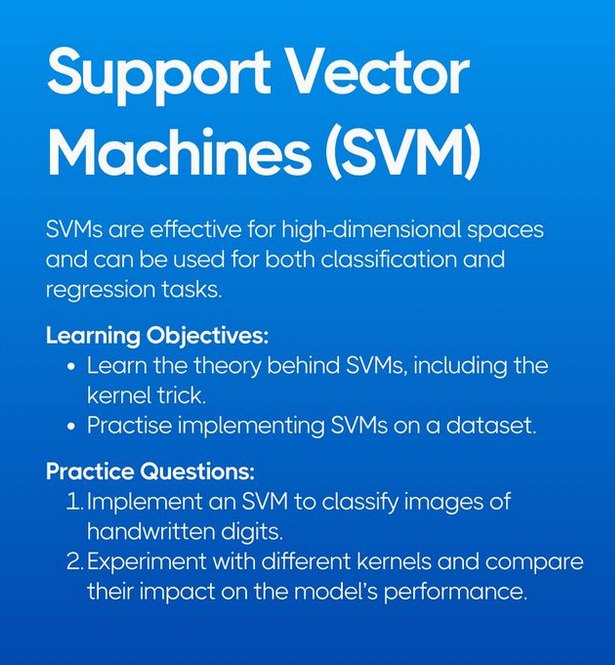
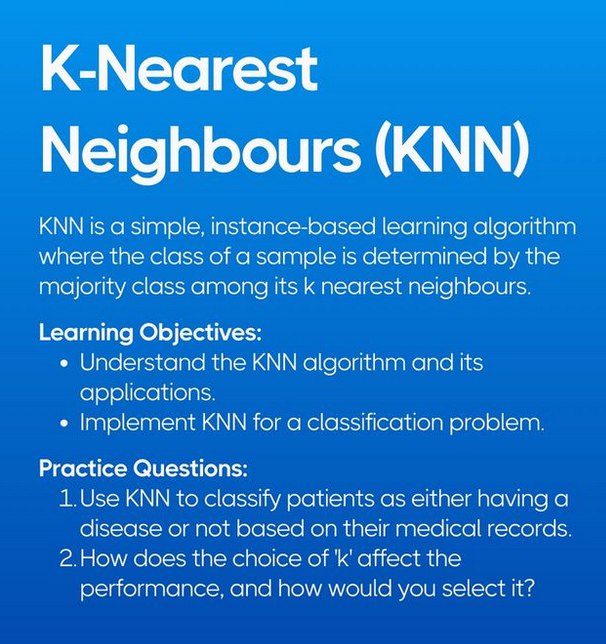
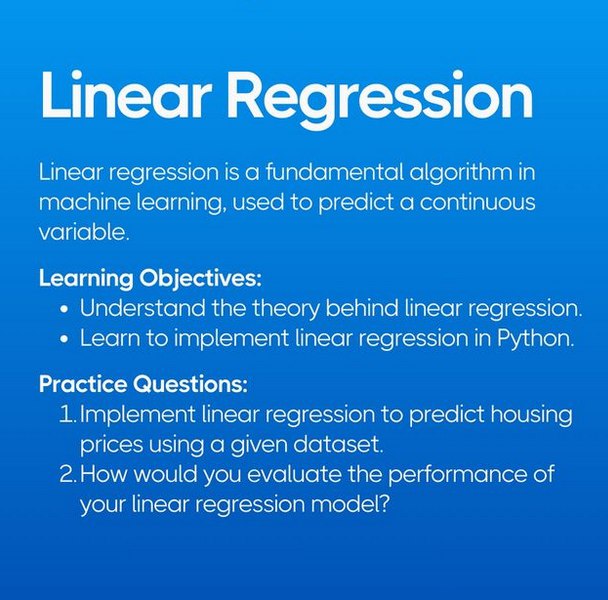
๐Ÿ”— Master 8 Essential Machine Learning Algorithms
  • ๐Ÿ”ฅ 4
  • ๐Ÿ‘ 1
Post #774 2.97K
๐Ÿ”— Master 8 Essential Machine Learning Algorithms

To truly master these foundational algorithms

It's crucial to dive deeper into their real-world applications and understand how AI is shaping the future.


That's where "The Most Effective Guide to Master AI" comes in! This comprehensive guide covers everything you need to know:

- Real-world AI applications
- Computer Vision
- Generative Models
- Essential AI tools
  • ๐Ÿ‘ 5
  • ๐Ÿ”ฅ 1
Older posts โ†’
Threads Profile ViewerView any public Threads profile without an account.Open ThreadLook โ†’Writing with AI? Make it sound human.Metric37 rewrites AI drafts so they read naturally. Free AI detector, 1,500 words free.Try Metric37 โ†’