TGViewer
Channel Public Channel
Kube Builders

Kube Builders

@kubebuilders

News and links on infrastructure and building Kubernetes clusters curated by the @Learnk8s team
Subscribers
1.63K
Photos
934
Videos
242
Links
1.9K
Recent Posts 20 shown
Post #1940 17

Forwarded from KubeFM

"It's not even nice to have, it's a must to have."

In a monolith, your code base is your call graph. In microservices, your service-to-service communication is your call graph — and you can't see it. Elamaran Shanmugam explains three problems this creates: troubleshooting failures, scaling the right services, and securing which microservices can talk to each other. Container network observability on Amazon EKS gives you the complete service map.


Watch the full interview: https://ku.bz/DCxhgWQqS
Post #1939 36

Forwarded from KubeFM

Jorrick Stempher breaks down the 5-component architecture his team built for predictive Kubernetes scaling.

He walks through the complete data pipeline: Prometheus collecting cluster metrics, a NestJS adapter that validates and cleans data before storing it in PostgreSQL, the Prophet machine learning model generating 60-minute CPU load predictions, an Index Calculation Component (ICC) that converts predictions into scaling decisions using a custom abstract metric, and Grafana for real-time visualization comparing predictions against actual performance.

Watch the full episode: https://ku.bz/clbDWqPYp
Post #1938 52
This article explains how running ZooKeeper on Google Cloud Z4D nodes with local SSDs removes the disk latency that slows consensus writes, plus the GKE anti-affinity, volume binding and JVM tuning it needs.

More: https://ku.bz/7WK7w0zK6
Post #1937 90
Harvester turns bare-metal servers into a hyperconverged platform combining VMs and containers using Kubernetes, KubeVirt, Longhorn, and Rancher.

It supports live migration and distributed storage and is built for core-to-edge ops.

More: https://ku.bz/0-LL0mwyj
Post #1936 55

Forwarded from LearnKube news

We just published Kubernetes Architecture in Financial Services, a free technical book about platform design and operations.

Drawing on public engineering talks and case studies from seven banks, it examines:

- Tenant boundaries beyond namespaces.
- Shared delivery controls and application ownership.
- Policy maintenance, exceptions, adoption, and reporting.
- Cross-cluster identity, reliability, external dependencies, and cluster replacement.

Each chapter starts with a real platform problem, compares different boundaries, and examines the operational cost of each option.

Thank you to Buoyant, Sysdig, and Nirmata for supporting the book and its research.

Download it for free:
https://learnkube.com/kubernetes-architecture-financial-services
Post #1935 106

Forwarded from LearnKube news

Kor is a CLI tool that scans your cluster and lists the unused resources nobody cleaned up, from forgotten ConfigMaps and Secrets to stale Services and PVCs.

More: https://ku.bz/YzcpnL3gj
Post #1934 130
This tutorial shows how to run Azure DevOps agents on AKS so that KEDA spins up a fresh agent pod whenever the pipeline queue grows and removes it when the job is done.

More: https://ku.bz/y7Kjp1WvS
Post #1933 118

Forwarded from KubeFM

Caching your largest container image in the AMI sounds like an easy win. But on EBS, it might not work.

Jan Ludvik discovered that EBS lazy loading can silently undo image caching. The data isn't actually on disk when the node boots. Instead, it's loaded on demand from snapshots. So even though the image was "cached," the pod still had to pull it.

His workaround: cache the smaller daemon set images (kube-proxy, vpc-cni, node-local-dns) instead. That cut the pod startup by 10 seconds.


Watch the full episode: https://ku.bz/B7TzKXyxf
Post #1932 264
Kubesafe is a tool that prevents accidental execution of dangerous commands on the wrong Kubernetes cluster by providing a safety net for cluster management.

More: https://ku.bz/3hC23K79L
Post #1931 140
KubeShark is a Kubernetes skill for Claude Code and Codex that feeds the agent official best practices, so generated manifests stop using deprecated APIs, wildcard RBAC or missing resource limits.

More: https://ku.bz/m6GhSVL9W
Post #1930 130

Forwarded from KubeFM

Ben Poland, Senior Staff Platform Engineer @ Faire, breaks down the fundamental architectural differences between Jenkins and Buildkite when running CI workloads on Kubernetes.

He explains how Jenkins controllers handle the control plane (UI, pipeline parsing, work distribution) and pod management through the Kubernetes plugin, creating a bottleneck that limits scalability to around 1,500-2,000 pods per controller.

In contrast, Buildkite separates the control plane by hosting it themselves, while Faire runs only the agent stack component in their Kubernetes infrastructure.

Watch the full episode: https://ku.bz/klBmzMY5-
Post #1929 65

Forwarded from LearnKube news

Kubernetes problems often hide in controller timing, implicit defaults, and capacity assumptions.

This week in Learn Kubernetes Weekly:

🔎 A production race condition left orphaned pods blocking new deployments.
📦 Source Hydrated Infrastructure Models commit rendered manifests for explicit GitOps audits.
🖥 Headlamp replaces the archived Kubernetes Dashboard and maps familiar workflows to a maintained UI.
⚙️ Kubernetes 1.36 adds pod-level CPU and memory management.
📊 The k8s-overcommit operator reclaims idle capacity according to priority classes.

Read issue 201: https://kube.today/issues/201

This issue is brought to you by LearnKube — understand how Kubernetes works, and what to do when it breaks. Live training with 60% hands-on labs: https://ku.bz/hypSbyc-V
Post #1928 109
This article tells how a GPU passthrough on a k3s worker VM put a whole Proxmox host into a boot loop, and how masking the guest-start service at the GRUB prompt rescued it.

More: https://ku.bz/79pRFd6Zm
Post #1927 77

Forwarded from KubeFM

A pizza order became a 15-container, 200-trace system.

In Kube Signals episode two, Brian Teller and Mauricio (Salaboy) Salatino examine observability, state management, governance, and trust for non-deterministic agents.

They discuss:

- Why multi-agent runtimes can recreate monolith scaling
- How OpenTelemetry exposes prompts, completions, and decisions
- Why execution history turns agent trust into measurable evidence

Watch: https://ku.bz/TlVjXdnb6

Kubernetes moves too fast to track everything. Learn Kubernetes Weekly filters out the noise to deliver one curated email with useful articles, tutorials, tools, jobs, events, and CFPs. Subscribe to Learn Kubernetes Weekly.
Post #1926 98

Forwarded from Kube Architect

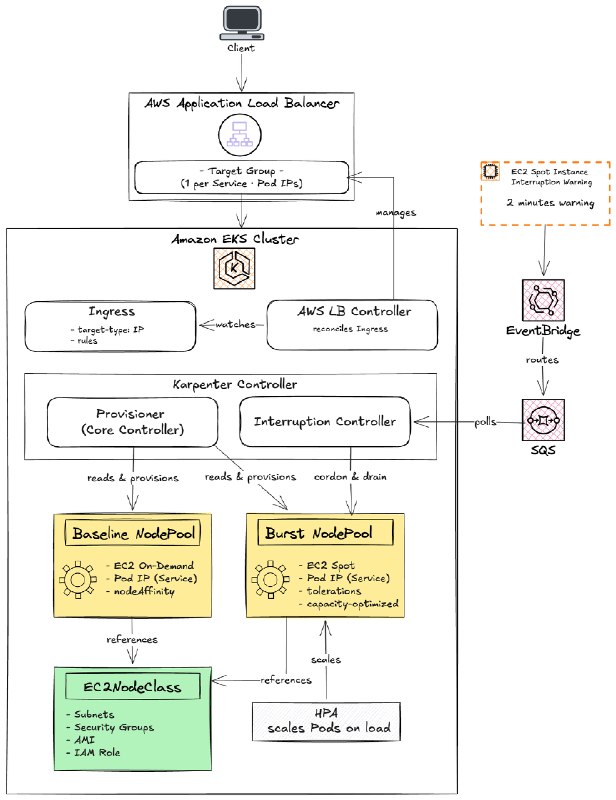
This article lays out a production EKS setup where Karpenter keeps a cheap On-Demand baseline and absorbs traffic spikes with Spot nodes that drain safely when AWS reclaims them.

More: https://ku.bz/f-CnXzXxb
Post #1925 132
tfplanctx turns a Terraform plan into a short, grep-friendly summary so coding agents can review what will change without burning context on raw plan output.

More: https://ku.bz/jm97DG4yh
Post #1924 186

Forwarded from KubeFM

The teams that upgrade Kubernetes without fear all share one thing: they've already been doing it in production — repeatedly.

Jason Deal from AWS makes the case for treating nodes as cattle, not pets. When you build automation that reliably brings nodes up and down, and then pressure-test it under normal conditions, upgrades stop being special events. You've already done it a hundred times.


Watch the full interview: https://ku.bz/1_-DTgLsg
Post #1923 149
This article explains why EKS sends most pod-to-pod traffic across availability zones and how the Kubernetes 1.35 trafficDistribution: PreferSameZone setting keeps it local and cuts the transfer bill.

More: https://ku.bz/rTP8hwDVQ
Post #1922 175
NetObserv deploys an eBPF agent on every node to capture network flows, enrich them with Kubernetes metadata, and export to Loki, Prometheus, Kafka, or IPFIX — with a web console showing topology, raw flows, and traffic metrics.

More: https://ku.bz/STLN1Tks5
Post #1921 147

Forwarded from Kube Architect

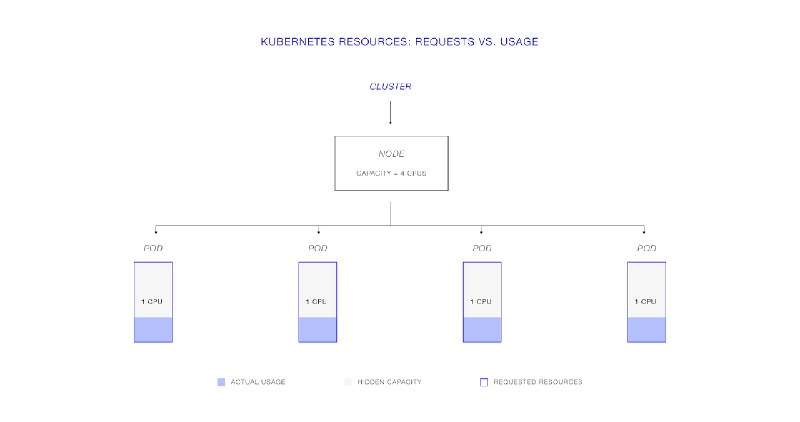
This case study shows how Inditex reclaims idle node capacity with an open-source overcommit operator that rewrites pod requests through a mutating webhook, based on priority class.

More: https://ku.bz/XV3rLBhJr
Older posts →

About this channel

How can I read @kubebuilders without a Telegram account?
TGViewer shows the public web preview Telegram publishes for Kube Builders: recent posts, photos, videos and the subscriber count, with no app, login or account.
How many subscribers does Kube Builders have?
Kube Builders (@kubebuilders) has 1.63K subscribers on Telegram, refreshed roughly every 30 minutes.
Does Kube Builders know I viewed it here?
No. Public channel previews carry no viewer identity, and TGViewer has no accounts or tracking of what you look up.
Threads Profile ViewerView any public Threads profile without an account.Open ThreadLook →Writing with AI? Make it sound human.Metric37 rewrites AI drafts so they read naturally. Free AI detector, 1,500 words free.Try Metric37 →