📖 Ancient RestorationTeachers in Ireland were once known as 'poor scholars' & seen as responsible for passing on wisdom that stretched back to Gaelic antiquity.
"Homer's Iliad, Paradise Lost, the Old Testament, Ovid.. these books were in every peasant's cottage"
📖 Ancient RestorationThe famous Hedge schools of 18th century Ireland came about when the class of poets turned to teaching in order to maintain the tradition.
A mural to the Hedge school-masters in Ardoyne, Belfast.
They educated the rural poor, teaching language, math, & even astronomy.
📖 Ancient RestorationThe Irish poet was almost certainly a descendant class of the druid (filidh); both used a poetic style of rhymed verses to retain knowledge.
The famous Hedge schools of 18th century Ireland came about when the class of poets turned to teaching in order to maintain the tradition.
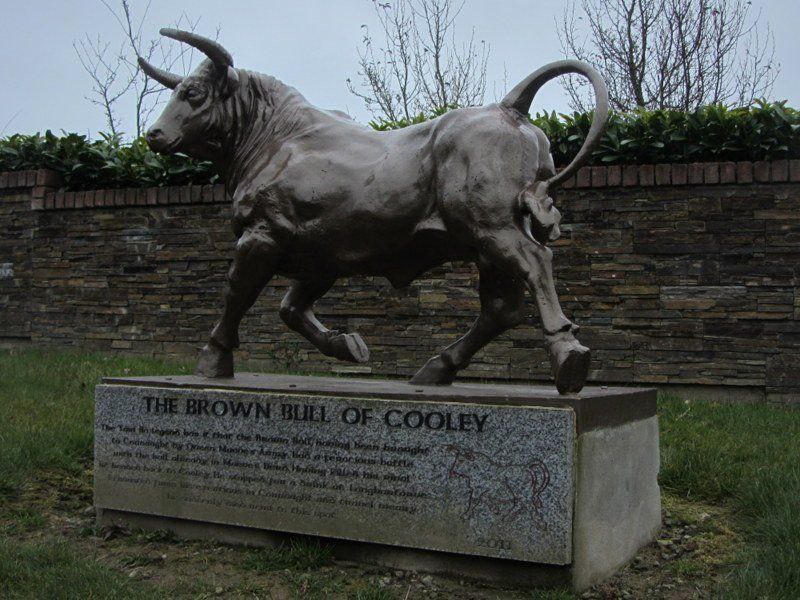
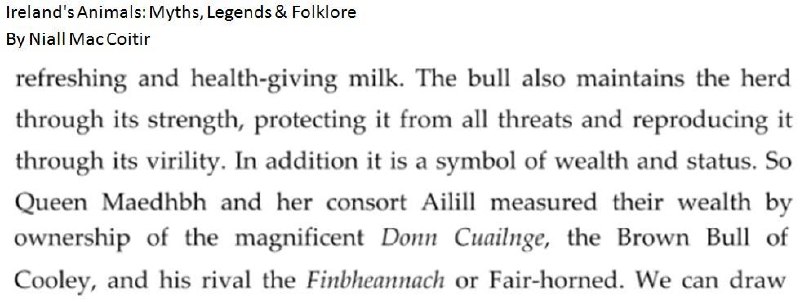
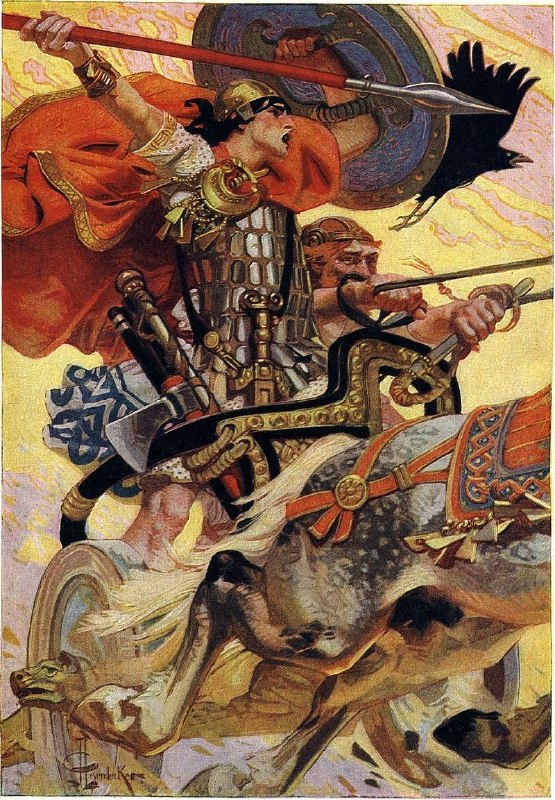
In Celtic times the bull was a symbol of wealth and status. It was a dispute about one such magnificent animal that gave rise to the war between Queen Medb and her husband, Ailill, resulting in the legend known as Táin Bó Cúailnge, The Cattle Raid of Cooley
📖 Ancient RestorationThe intellectual caste always carried a long staff, much like Merlin the wizard, going back to Sumeria. A medieval Irish priest carried a staff, bell and holy book. The cane showed the power entrusted to him to guide the flock. The bell was used to call prayers…
To add - I don't doubt that these staffs were used as weapons by priests etc. But the staff was meant to show him as a type of sovereign, akin to the rod of kingship or Zeus' scepter of Argos. The sage used his staff (knowledge) to beat alien spirits/idols away from his people.
📖 Ancient RestorationThe Dagda is the hammer-god of the Irish pantheon. Like Sucellus he carries the sacred tokens of magical wand (club)& regenerative cauldron.
The intellectual caste always carried a long staff, much like Merlin the wizard, going back to Sumeria. A medieval Irish priest carried a staff, bell and holy book. The cane showed the power entrusted to him to guide the flock. The bell was used to call prayers & curse evildoers.
📖 Ancient RestorationCernunnos on the Gundestrup Cauldron (Jutland, 150 BC). Seated between a deer and a wolf this horned figure is thought to be a totem god of the Celtic war-bands. The Stag god, as lord of wild animals, provided the royal hunter with prey and guaranteed his…
In 7,000 BC the first settlers of Ireland encountered a land of continuous forest - Oak grew in the fertile valleys & dense pine in the upland. Irish woodlands were home to native wolves, boar, brown bear, & red squirrel. (today's red sq. actually came from Britain 19th c.)
📖 Ancient RestorationThe Instructions of King Cormac states: "everyone is a fían(na) until he becomes a property owner" - This points to a rite of passage in medieval Ireland where a young man crossed from one community to another, from a member of a fighting band, to a settled…
Cernunnos on the Gundestrup Cauldron (Jutland, 150 BC).
Seated between a deer and a wolf this horned figure is thought to be a totem god of the Celtic war-bands. The Stag god, as lord of wild animals, provided the royal hunter with prey and guaranteed his authority.
📖 Ancient RestorationEtymology of Fianna: derives from 'wēd-nā', related to OIr. fíad 'wild, game, wood', OEng. wāð 'hunt' and OBret. guoid 'wild'. The ancient roving band of warriors functioned as sovereigns of pre-agrarian Celtic society, thus the connection to forests & the…
The Instructions of King Cormac states: "everyone is a fían(na) until he becomes a property owner" - This points to a rite of passage in medieval Ireland where a young man crossed from one community to another, from a member of a fighting band, to a settled farmer.
Etymology of Fianna: derives from 'wēd-nā', related to OIr. fíad 'wild, game, wood', OEng. wāð 'hunt' and OBret. guoid 'wild'. The ancient roving band of warriors functioned as sovereigns of pre-agrarian Celtic society, thus the connection to forests & the hunt.
📖 Ancient RestorationUnder Brehon law, dead ancestors could be called upon to judge in property disputes. One law describes how a claimant to the land must walk over the family burial mound without injury or death. The dead would repel outsiders, but support their own descendants.
"The ancient Irish believed the dead were repositories of wisdom and lore [and] would return to speak to their descendants."
📖 Ancient RestorationThe swearing of oaths on a saint's relic was common practice in early Ireland. The dead ancestor or saint acted as a witness to the promise, so if broken, they would incur the fury of the dead! Old Irish for relic, minn, became modern Irish for oath, mionn.
Under Brehon law, dead ancestors could be called upon to judge in property disputes. One law describes how a claimant to the land must walk over the family burial mound without injury or death. The dead would repel outsiders, but support their own descendants.
📖 Ancient RestorationSt Patrick, St Brigid, St Colmcille, Protector Saints of the Irish Who are in Heaven, Protect & pray for us.
The swearing of oaths on a saint's relic was common practice in early Ireland. The dead ancestor or saint acted as a witness to the promise, so if broken, they would incur the fury of the dead!
Old Irish for relic, minn, became modern Irish for oath, mionn.