


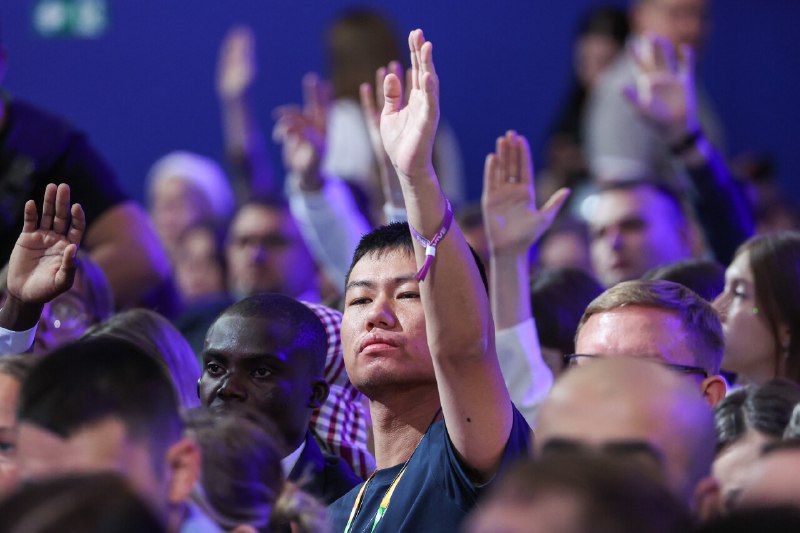


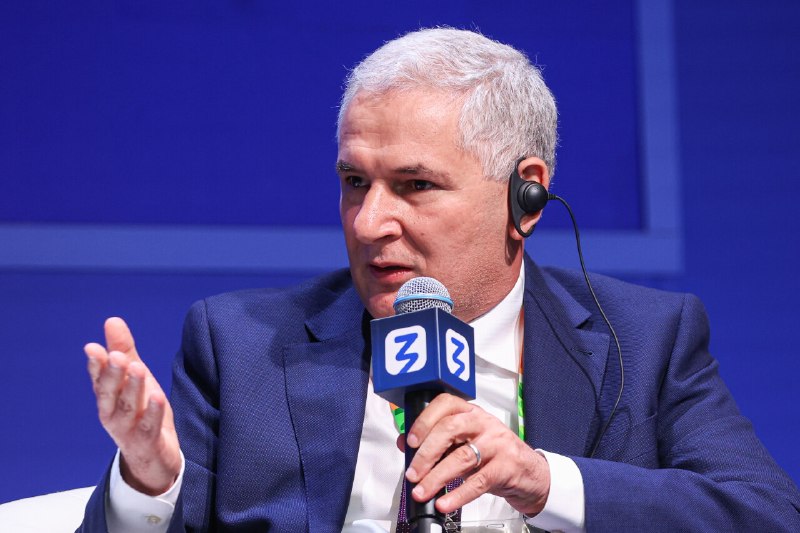
🟢On September 15, as part of the International Festival of Youth — 2026, MGIMO hosted a panel discussion titled “Leadership in a Multipolar World: What Determines a Country’s Position in the New Architecture of International Relations?”
Leading experts in international relations discussed the nature of leadership and the key factors shaping a country’s position on the global stage.
📩The discussion was moderated by Stanislav Surovtsev, Vice-Rector for International Cooperation, Youth and Social Policy, MGIMO University.
The panel brought together:
✅ Maria Zakharova, Director of the Information and Press Department of the Russian MFA;
✅ Arno Gujon, Director of the Office for Public and Cultural Diplomacy of the Government of the Republic of Serbia;
✅ Dauren Abayev, Ambassador Extraordinary and Plenipotentiary of the Republic of Kazakhstan to the Russian Federation.
✅ Toufik Djouama, Ambassador Extraordinary and Plenipotentiary of the People’s Democratic Republic of Algeria to the Russian Federation.
Here are the key takeaways from the discussion 👇
⚪Maria Zakharova highlighted a number of leadership qualities that challenge conventional perceptions of what it means to be a leader.
“It is commonly believed that a leader is someone who is always ahead, someone who strives to take first place. This is a misconception. Leadership is not about competition or being formally first. Leadership is strength and confidence that become a source of support for others. Leadership is when you are targeted by a campaign against you, yet still find the strength to keep moving forward,” Maria Zakharova emphasized.
⚪Dauren Abayev stressed that domestic stability remains the foundation of an effective foreign policy: “Without stability within a country, it is impossible to act effectively on the international stage.” Speaking about cooperation between countries and continents, he put forward the principle that “a bridge is more important than a fortress,” emphasizing the importance of openness, connections and communication over isolation. Dauren Askerbekovich emphasized that Russia and Kazakhstan are key strategic partners.
⚪Arno Gujon emphasized that leadership is made possible not by words, but by actions.
“We will not pursue a policy that treats Russia immorally. This is a principled position based on values, not political expediency.”
⚪Toufik Djouama outlined a fundamental principle of genuine partnership: “It begins where people not only take, but also share.” According to him, this principle applies equally to relations between individuals and to cooperation between states.
➡️ We thank all speakers and participants for a meaningful dialogue that brought together diverse professional and national perspectives — and for the opportunity to discuss together what defines the leadership of states today and what the world of tomorrow may look like.
🌐MGIMO International (ENG) / МГИМО для иностранцев (RUS)