TGViewer
Channel Public Channel
EverythingScience

EverythingScience

@everythingscience

Discover the best, human-curated science facts, news, discoveries, videos, and more!

Chat with us: @EverythingScienceChat
Contact: @DigitisedRealitySupport
Subscribers
22.5K
Photos
730
Videos
498
Links
5.2K

Showing posts older than #5986 · Back to latest

Older Posts 20 shown
Post #5985 589
Tropical forests can switch from carbon sinks to carbon sources during El Niño
Tropical forests draw down and store large quantities of CO₂ from the atmosphere. The Amazon rainforest in South America, for example, stores approximately 123 billion tons of carbon—more than is stored in any other terrestrial ecosystem in the world. But these forests are facing a critical challenge.

Research from 2023, which was carried out by me and more than 100 colleagues, found that tropical forests in South America are vulnerable to climate extremes. We determined that during an El Niño event, the warm phase of a natural fluctuation in Earth's climate system, South American tropical forests may fail to act as a carbon sink.

This finding becomes even more alarming when we consider the increasing frequency and intensity of El Niño events. There have been twice as many "very strong" El Niños in the past 60 years as there were in the 60 years before that. And the U.S. National Oceanic and Atmospheric Administration has recently confirmed that such an El Niño is currently underway.

Tropical forests absorb CO₂ through the process of photosynthesis and convert it into biomass. However, the balance between photosynthesis and respiration is delicate and depends on two factors: temperature and water availability.

In hotter and drier conditions, plants close the pores of their leaves to avoid water loss. But closing them effectively cuts off a plant's fuel supply because it is through these pores that they absorb CO₂. This starves plants of the carbon needed for photosynthesis and growth.

During El Niño years, which are characterized by high-temperature anomalies, prolonged climate stress leads to reduced forest growth and increased tree mortality. The effects of this are felt for decades as carbon is released back into the atmosphere when the dead trees decompose.

Source: Phys.org
@EverythingScience
Phys.org Tropical forests can switch from carbon sinks to carbon sources during El Niño Tropical forests draw down and store large quantities of CO₂ from the atmosphere. The Amazon rainforest in South America, for example, stores approximately 123 billion tons of carbon—more than is stored ...
  • 👍 3
  • 😱 2
  • 👀 1
Post #5984 567
NASA’s HiRISE Captures Perseverance Rover Completing a Marathon on Mars.
NASA’s Perseverance rover has completed the equivalent of a full marathon on Mars, reaching 26.2 miles (42.195 kilometers) after five years and four months of driving across the Red Planet.

The milestone came on the 1,890th Martian day, or sol, of the mission. Perseverance reached the distance considerably faster than NASA’s Opportunity rover, which required 11 years and two months to cover the same ground.

A Tiny Rover Seen From Mars Orbit
One day before Perseverance crossed the marathon mark, NASA captured the rover from high above the Martian surface. In the image, taken on June 13, 2026, the robotic explorer appears as a tiny green speck against the surrounding terrain.

The view came from NASA’s Mars Reconnaissance Orbiter (MRO), which photographed the area using its High-Resolution Imaging Science Experiment, better known as the HiRISE camera. Faint lines extending across the landscape reveal the tracks left by Perseverance during its journey.

At the time, the rover was traveling through a region west of Jezero Crater that mission scientists have named “Arbot.”

Source: SciTechDaily
@EverythingScience
SciTechDaily NASA's HiRISE Captures Perseverance Rover Completing a Marathon on Mars A new NASA orbital image captures Perseverance after completing a marathon across the surface of Mars. NASA’s Perseverance rover has completed the equivalent of a full marathon on Mars, reaching 26.2 miles (42.195 kilometers) after five years and four months…
  • ❤ 4
Post #5983 585
Scientists Have Identified a Key Driver of Age-Related Cognitive Decline
The aging brain depends on a microscopic border that works every second to keep danger out and support the nerve cells inside. When that barrier begins to fail, memory, mood, and thinking may suffer. Andrew A. Pieper, MD, PhD, and colleagues have now traced part of that breakdown to a single protein that appears to help keep the brain’s protective walls intact.

The research, led by the Pieper Laboratory and published in Proceedings of the National Academy of Sciences, was conducted by a research group from University Hospitals, Case Western Reserve University and the Louis Stokes Cleveland VA Medical Center.

The focus is the blood-brain barrier (BBB), a protective structure made from tightly packed endothelial cells that line the brain’s blood vessels. Endothelial cells act like a living seal between the bloodstream and the brain. Maintaining that seal takes energy, but it allows the barrier to block harmful substances and pathogens, clear some waste produced during normal brain activity, and adjust blood flow toward whichever brain regions are working hardest.

Scientists have known for years that these blood-brain barrier functions weaken in the aging brain. However, whether that decline could directly drive cognitive problems, and what molecular change might be setting the process in motion, had remained uncertain. Without that missing cause, designing targeted treatments has been difficult.

Source: SciTechDaily
@EverythingScience
Scitechdaily Scientists Have Identified a Key Driver of Age-Related Cognitive Decline A newly identified protein pathway may link blood-brain barrier deterioration to age-related cognitive decline.
  • ❤ 3
  • 👍 3
Post #5982 586
The US just approved a giant space mirror to test 'sunlight on demand.' Low Earth orbit is getting weird
A giant mirror to create "sunlight on demand" was just approved by the United States Federal Communications Commission (FCC), despite opposition from astronomers and the public, and real safety concerns.

The FCC approved the company Reflect Orbital to test one satellite, named Earendil-1, as a means of reflecting the sun's rays back to Earth for extra solar energy and wide-area lighting. The light is expected to cover an area 5 kilometers (3 miles) wide and will require repointing every four minutes.

And this is just the start. Reflect Orbital plans to have more than 50,000 satellites in action by 2035, which they claim will be used across agricultural, emergency response and other industrial sectors.

There are many problems with this proposal, including impacts these satellites will have on human health and safety, as well as on astronomy and the low-Earth environment.

Flashes during mirror repointing could disrupt pilots and drivers. The light could also disrupt circadian rhythms of plants, animals and humans. Sensitive detectors in research telescopes, as well as star-tracking cameras on lower-altitude satellites, could be overloaded and fried.

The FCC said that the "risks of harm raised on the record regarding Reflect Orbital's solar reflector are unrelated to the Commission's role in authorizing use of radiofrequency spectrum."

'Weird space stuff'
Satellite proposals for "emergent space activities" in low-Earth orbit are becoming increasingly outlandish. The proposals have become so weird, in fact, that the FCC recently published a document called "Spectrum Abundance for Weird Space Stuff."

"Once the province of science fiction," this document states, "American companies are now upgrading, relocating and servicing satellites; manufacturing pharmaceuticals in space; building private inhabitable spacecraft; and conducting private robotic missions to the surface of the moon."

Millions of orbital AI data centers are also planned. Corporations seem to be scrambling to launch anything that might persuade investors to throw money at them: space advertising, hotels for billionaires, artificial meteor showers, space burials for cremated remains, solar-powered infrared beams to power data centers and a variety of orbital missiles.

The phrase "weird space stuff" is refreshingly truthful. So, how did we get here?

Source: Phys.org
@EverythingScience
Phys.org The US just approved a giant space mirror to test 'sunlight on demand.' Low Earth orbit is getting weird A giant mirror to create "sunlight on demand" was just approved by the United States Federal Communications Commission (FCC), despite opposition from astronomers and the public, and real safety concerns.
  • 🤔 5
  • 👍 1
  • 😢 1
  • 🥱 1
  • 🗿 1
Post #5981 617
Engineers find a precise way to grow artificial blood vessels
Tissue engineers are finding ways to grow living organs and tissues from cells, with the aim of replacing diseased and damaged counterparts in the body. Scientists have successfully grown artificial muscles, livers, kidneys, skin and other tissues. But there's been no reliable way to engineer precisely patterned networks of blood vessels, some of which can be finer than a human hair.

Without a vascular network to deliver nutrients, any artificial tissues, no matter how lifelike, can't function. Now MIT engineers have found they can engineer and control the growth of blood vessels by mechanically stretching them.

The team has built a human "blood vessel on a chip," composed of a central artery made from human endothelial cells, that is embedded in a gel that also contains a small magnet. The researchers studied how the main artery responded as they jostled the gel back and forth using an external magnet to move the magnet embedded within the gel.

They found that the simple mechanical action of repeatedly jostling the artery stimulated it to sprout other, smaller capillaries. By changing the direction in which the artery is jostled or stretched, the researchers could redirect the growing new vessels. Stretching the artery by varying degrees influenced how many new vessels sprouted.

Their results, published in the Proceedings of the National Academy of Sciences, offer scientists a new way to engineer artificial blood vessels and program the patterns in which they grow. The study's MIT co-authors include Sina Kheiri, Jessica Shah, Shashaank Venkatesh and Roger Kamm, along with Peiyuan Chai and Ryan Flynn at Harvard University.

"Healthy tissues depend on organized blood vessel networks, but state-of-the-art protocols don't make it possible to fabricate such networks within engineered tissues," says Ritu Raman, associate professor of mechanical engineering at MIT and the study's co-lead author. "The ability to program blood vessel growth with physical cues may enable reproducible and scalable fabrication of engineered tissues that can be implanted in the body to restore function after debilitating disease or injury."

Source: Phys.org
@EverythingScience
Phys.org Engineers find a precise way to grow artificial blood vessels Tissue engineers are finding ways to grow living organs and tissues from cells, with the aim of replacing diseased and damaged counterparts in the body. Scientists have successfully grown artificial muscles, ...
  • 👏 6
  • ❤ 2
Post #5980 585
In search of life beyond our solar system: Atmosphere detected on a habitable-zone rocky world
In a major milestone in the search for life on other planets, astronomers have detected, for the first time, an atmosphere surrounding an Earth-like, rocky planet orbiting within the habitable zone of another star. The finding provides the strongest evidence yet that worlds with conditions similar to Earth in composition and temperature, with the potential to support life, could exist beyond our solar system.

"An atmosphere is essential for a planet to support life as we know it," said lead author Collin Cherubim, who recently earned his Ph.D. in Earth and Planetary Sciences from Harvard University.

"This is the first time anyone has found an atmosphere on a rocky planet in the habitable zone of another star."

Published in Sciencethe study reports observational results detecting helium escaping from the atmosphere of LHS 1140 b, a rocky exoplanet about 48 light-years from Earth. Motivated by theoretical predictions, the discovery provides evidence that the planet possesses an atmosphere.

The planet orbits a red dwarf star within the star's habitable zone, or the region where temperatures and environmental conditions are within the range that could support liquid water on the planet's surface.

Astronomers have discovered thousands of exoplanets, including a few rocky worlds within their stars' habitable zones, but determining whether those planets have atmospheres has remained a great challenge.

Source: Phys.org
@EverythingScience
Phys.org In search of life beyond our solar system: Atmosphere detected on a habitable-zone rocky world In a major milestone in the search for life on other planets, astronomers have detected, for the first time, an atmosphere surrounding an Earth-like, rocky planet orbiting within the habitable zone of ...
  • 👍 2
  • 👀 2
Post #5979 580

This post (sticker, poll or similar) has no web preview. Open in Telegram

  • 🤯 3
  • 😢 2
  • 👎 1
  • 😐 1
Post #5978 665

This post (sticker, poll or similar) has no web preview. Open in Telegram

  • ❤ 4
  • 💯 3
  • 👍 2
  • 👏 2
Post #5977 739
Could Dark Matter Be Hiding in a Hidden Fifth Dimension?
Every galaxy appears to carry far more mass than telescopes can see. That invisible material, known as dark matter, may be linked to a hidden fifth dimension whose geometry naturally shapes how dark matter particles behave, according to a theory developed at the University of Sheffield.

Dark matter has occupied both physics and science fiction for decades, appearing in stories ranging from planet-destroying vortexes in Star Trek to the ‘Dust’ that sustains the multiverse in Philip Pullman’s His Dark Materials fantasy trilogy.

In real cosmology, it remains one of physics’ deepest unresolved questions. Researchers infer its existence from its powerful gravitational influence, which helps hold galaxies together, but no experiment has directly detected it or established what it is made of.

The idea that dark matter could occupy an unseen extra dimension has received growing attention. A study published in Physical Review D now extends that possibility by proposing a framework that could explain both dark matter’s behavior and its continued resistance to detection.

A hidden dimension aligns dark matter
The model places dark matter in an extra dimension with a force-carrying particle called a dark photon. The shape and geometry of that dimension naturally bring the masses of the two particles into a precise alignment.

That alignment produces dark matter resonance, an effect broadly comparable to the strong vibration created when a musical instrument reaches the correct note.

Dr Yu-Dai Tsai, a Royal Society Dorothy Hodgkin Senior Research Fellow at the University of Sheffield, said: “Dark matter resonance is already known to be a powerful idea, with the potential to change our understanding of how dark matter was produced in the early universe and how we search for it today.

“But many previous resonant dark matter models have treated the resonance as an assumption. This work gives a possible deeper origin for it: the resonance may come directly from the geometry of hidden dimensions.

“This resonance can make dark matter interactions much stronger at crucial epochs in cosmic history, such as in the early Universe. Crucially, the model allows for these strong interactions in the past while still explaining why dark matter appears so inert and hard to detect today.”

Geometry replaces artificial fine-tuning
Physicists have previously studied resonant dark matter and extra dimensions as separate ideas. Those earlier models, however, often required particle masses to be adjusted with extreme precision or ‘arranged by hand’ before the underlying physics would work.

The Sheffield model instead suggests that this close alignment may emerge naturally from the mathematical structure of the extra dimension rather than from an imposed coincidence.

“Understanding dark matter would represent a profound advance in humanity’s knowledge of the cosmos and what it is made of,” Yu-Dai added.

“Our research gives physicists clear new targets in the search for dark matter, while connecting two of the biggest ideas in fundamental physics: the mystery of dark matter and the existence of hidden dimensions.”

Source: SciTechDaily
@EverythingScience
Scitechdaily Could Dark Matter Be Hiding in a Hidden Fifth Dimension? The geometry of a hidden dimension may naturally explain dark matter resonance and its elusive behavior.
  • ❤ 4
Post #5976 1.11K
Nanoplastics found in Antarctic soils for first time, suggesting long-range atmospheric transport
Microplastic contamination has been a much-discussed topic over the last several years, but contamination from even smaller plastic particles represents another pressing issue. Nanoplastics—defined as being under a micrometer in diameter—may pose an even higher ecological risk because they can travel more easily, cross cellular membranes and easily adsorb other pollutants.

Although nanoplastics have been found in environments all over the world, it was thought that soil in pristine places like Antarctica, particularly areas farther from the ocean, might be somewhat protected from contamination. However, a new study, published in Scientific Reports, reports that nanoplastics have now been found in the soils of desert valleys in the interior of Antarctica.

Source: Phys.org
@EverythingScience
Phys.org Nanoplastics found in Antarctic soils for first time, suggesting long-range atmospheric transport Microplastic contamination has been a much-discussed topic over the last several years, but contamination from even smaller plastic particles represents another pressing issue. Nanoplastics—defined as ...
  • 😱 1
Post #5975 983
Optical writing of antiferromagnets points toward new storage devices and energy efficient information systems
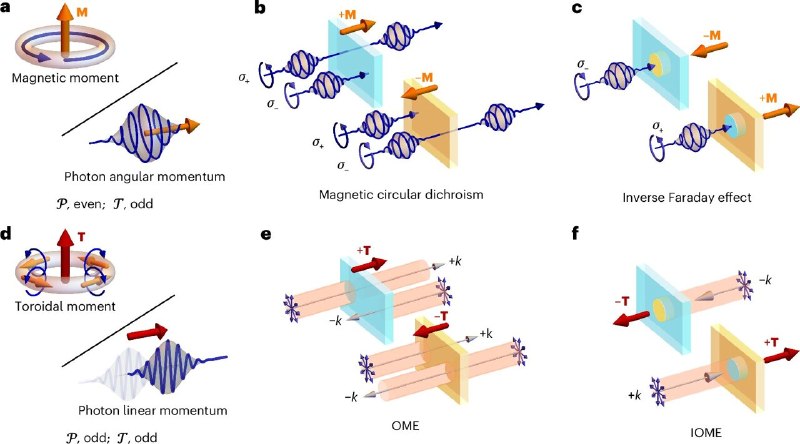
A German-Japanese research team involving the University of Augsburg has made a significant breakthrough in the use of antiferromagnets. For the first time, the team has succeeded in writing magnetic information using only ultrashort laser pulses—without the need for electric currents or magnetic fields.

Antiferromagnetic materials are considered promising for the next generation of data storage devices because they react particularly quickly and are insensitive to external disturbances. Until now, however, their application has been limited because their magnetic states are difficult to control precisely.

The research team led by experimental physicist Prof. Dr. István Kézsmárki has now developed a new method in which it is not the polarization of the light, but its direction of propagation ("pulse"), that is used for control. Through targeted irradiation, it is possible to switch between different magnetic states and write information. Furthermore, this information can also be read out using purely optical means. The paper is published in the journal Nature Materials.

Data storage technology of the future
The method operates in the telecommunications wavelength range and is therefore compatible with existing optical networks. In the future, it could enable a direct link between optical communication and magnetic data storage—faster and with significantly lower energy consumption.

Furthermore, the researchers were able to demonstrate that complex magnetic patterns can be selectively written into the material and stored stably. By repeatedly switching the material using laser light, the information is retained permanently (nonvolatile), which is a key requirement for practical storage technologies.

Source: Phys.org
@EverythingScience
Phys.org Optical writing of antiferromagnets points toward new storage devices and energy efficient information systems A German-Japanese research team involving the University of Augsburg has made a significant breakthrough in the use of antiferromagnets. For the first time, the team has succeeded in writing magnetic ...
  • ❤ 1
  • 🔥 1
Post #5974 922
We remember little to nothing of early childhood — and a recent mouse study may help explain why
The brain's memory center may come "prewired," rather than being built from scratch after birth, a new study in mice finds.

The research, published in April in the journal Nature Communications, offers a new perspective on a long-standing question in neuroscience: Does the brain begin as a blank slate and build memories by adding connections through experience, or does it come with built-in wiring? The new research focused on the hippocampus, a seahorse-shaped structure deep in the brain that's essential for forming memories.

Rather than supporting either theory directly, the research points to the latter idea but adds a significant twist.

The researchers focused on a region of the hippocampus called cornu ammonis 3 (CA3), which plays a central role in storing and recalling memories. A trait known as plasticity enables neurons within CA3 to continuously strengthen and weaken their connections and thus strengthen or weaken different memories.

The team examined mouse brain tissue collected shortly after birth, during adolescence or during adulthood. They found that early in life, hippocampal networks are densely wired, with many neurons hyperconnected in a seemingly random pattern. As the brain matures, these haphazard networks become sparser yet more structured as connections are pruned. This pruning begins soon after birth, with significant declines in connectivity by adolescence.

The finding discounts the idea that the hippocampus starts out as a blank slate, or "tabula rasa."

"We find, in a nutshell, that the system is not a tabula rasa, as we thought originally, where you can just write information and then at some point, this information fills the system," said study co-author Peter Jonas, a neuroscientist at the Institute of Science and Technology Austria. "Rather, it starts out as a tabula plena [full slate] and then becomes more sparser and specifically connected."

This pattern may help to explain why we remember so little from infancy.

Memories are thought to be stored within networks of neurons that fire together, representing specific experiences. In a young brain, however, these connections between neurons, called synapses, behave differently, the study suggests. In young brain tissue, a single input could cause a neuron to fire, the team found, while in mature networks, neurons typically require multiple inputs to fire.
Source: Live Science
@EverythingScience
Live Science We remember little to nothing of early childhood — and a recent mouse study may help explain why Early in life, neural networks in the brain's memory center are highly connected, and they are only later refined into precise systems, a mouse study finds.
  • 👍 1
Post #5973 838
Webb Reveals Hidden Heart of Centaurus A
Centaurus A is a giant galaxy located in the southern constellation of Centaurus.

Also known as NGC 5128, LEDA 46957, ESO 270-9, and Caldwell 7, the galaxy is one of the brightest objects in the southern hemisphere night sky.

Centaurus A was discovered on April 29, 1826 by the Scottish astronomer James Dunlop.

At a distance of 13 million light-years, it is the closest active galactic nucleus to us.

Astronomers theorize that what was originally an elliptical galaxy collided with a relatively smaller spiral galaxy, giving it the peculiar shape we see now.

“At Centaurus A’s core sits a supermassive black hole actively feeding on surrounding material,” the Webb astronomers said in a statement.

“As it does, the black hole launches powerful jets and releases enormous amounts of energy, shaping the galaxy around it.”

“At the same time, Centaurus A bears the scars of a dramatic past: a major collision with another galaxy roughly two billion years ago.”

“The aftermath of that merger is still visible today in its unusual structure and ongoing star formation.”

Visible light observations from the NASA/ESA Hubble Space Telescope could not reveal the central region of Centaurus A where dust blocked the view, while NASA’s retired Spitzer Space Telescope revealed large scale structures in the infrared without resolving individual stars.

Now, Webb brings both clarity and depth, exposing the galaxy’s inner workings star by star.

Source: Sci.News
@EverythingScience
Sci.News Webb Reveals Hidden Heart of Centaurus A Celebrating four years of science, the NASA/ESA/CSA James Webb Space Telescope has pierced the thick dust of the giant galaxy Centaurus A to reveal its active core, intricate dust lanes and millions of stars that illuminate the aftermath of an ancient galactic…
  • ❤ 2
  • 🔥 1
Post #5972 760
New CRISPR method makes it possible to control protein production in cells
The speed at which a cell produces proteins is a decisive factor in determining whether it divides, specializes or retains its stem cell properties. A team of researchers led by Professor Stefan H. Stricker, professor of epigenetic engineering at LMU's Biomedical Center and research group leader at Helmholtz Munich, has worked with international partners to demonstrate directly for the first time that the amount of ribosomal RNA (rRNA) directly regulates these processes. Their results were published in the journal Science.

New method makes it possible to control ribosomal RNA in a targeted manner
It has been established for some time that the amount of ribosomal RNA differs among different types of cells and is altered in a number of diseases. But it remained unclear whether these specific characteristics are the cause or merely the result of biological processes.

With the newly developed CRISPR-based method TAPIR (Targeted Activation of Protein Translation), researchers now have access to a tool that can boost the activity of ribosomal genes and, as a result, influence a cell's protein production. "Our new study shows that targeted activation of rRNA production significantly increases protein synthesis," explains Stricker, lead author of the publication.

New perspectives for rare diseases and cancer
The results could be particularly relevant for diseases in which ribosome function is disrupted. These include ribosomopathies such as Treacher-Collins syndrome, a rare congenital disease that causes facial malformations. In a mouse model, the researchers partially compensated for disease-related alterations by stimulating rRNA production in a targeted way.

In addition, the research team observed that similar mechanisms also play a role in pancreatic cancer. Tumor cells seem to use increased rRNA production to maintain their rapid growth. In the mouse model for pancreatic cancer, TAPIR was able to increase rRNA production and promote the growth of the cancer cells. This shows that increased rRNA production has a causal effect in contributing to tumor growth and is not just a side effect.
Source: Phys.org
@EverythingScience
Phys.org New CRISPR method makes it possible to control protein production in cells The speed at which a cell produces proteins is a decisive factor in determining whether it divides, specializes or retains its stem cell properties. A team of researchers led by Professor Stefan H. Stricker, ...
  • 👏 4
  • ❤ 3
Post #5971 747
The Milky Way's Arms Reach Out Further Than we Thought
Because of our Solar System's location in the Milky Way's galactic disk, astronomers have a harder time determining the true extent of the Milky Way than they do galaxies millions or even billions of light-years away. And whereas distant galaxies can be well-constrained using optical telescopes, astronomers must rely on instruments that capture light at other wavelengths (radio, infrared, ultraviolet, and X-ray) to better understand the Milky Way's properties.

This includes the Milky Way's outer arms, whose true distances have remained somewhat unclear until recently. Using NASA's Chandra X-ray Observatory and ESA's XMM-Newton satellite, a team of astronomers recently made precise distance measurements to dust clouds in the Milky Way’s spiral arms. Their findings suggest that they may be wider than previously thought, causing astronomers to rethink prevailing theories about our home galaxy's structure.

The results are described in a new paper published in the journal Astronomy & Astrophysics. The team's distance measurements relied on a technique that utilizes light echoes, where they observed rings created by gamma-ray bursts (GRBs) bouncing off of dust clouds in the spiral arms. These GRBs were released by the collapse of massive stars (supernovae) or the merger of neutron stars (kilonova bursts). The diameters of the rings in X-rays provide distance measurements, with larger rings being generated by dust clouds closer to us.

Source: Universe Today
@EverythingScience
Universe Today The Milky Way's Arms Reach Out Further Than we Thought A new result using NASA’s Chandra X-ray Observatory shows that the outer spiral arms in the Milky Way galaxy may reach wider than previously thought. This finding may lead astronomers to adjust their understanding of our home galaxy’s structure.
  • ❤ 3
  • 👍 2
Post #5970 686
Scientists figured out how to shrink huge ultrafast lasers so they fit on a tiny chip — the 'holy grail' of the field
A breakthrough in photonic chips could make large, costly, ultrafast lasers dramatically smaller, leading to portable and affordable imaging, diagnostic and information-processing devices, researchers say.

By using a decades-old overlooked laser architecture, scientists managed to fit an ultrafast laser onto a tiny photonic chip — a chip that uses light, rather than electricity, for computing operations.

In a new study published June 3 in the journal Nature, the team demonstrated that a tiny laser on the photonic chip could deliver 1.05 nanojoules of energy in 147-femtosecond (147 quadrillionths of a second) bursts — thereby competing with the output of laboratory-class ultrafast lasers.

Ultrafast lasers are used in a variety of applications, from precision manufacturing and eye surgery to biological imaging and atomic clocks, but the systems needed to power them tend to take up whole tabletops in labs or factories. Yet the powerful output of these laser pulses made them difficult to miniaturise onto photonic chips.

"For more than twenty years, a high-pulse-energy femtosecond laser on chip was widely regarded as a holy grail of integrated photonics," Tobias Kippenberg, a photonics professor at the Swiss Federal Institute of Technology(EPFL), said in a statement.

Source: Live Science
@EverythingScience
Live Science Scientists figured out how to shrink huge ultrafast lasers so they fit on a tiny chip — the 'holy grail' of the field Scientists have managed to get ultrafast lasers running on tiny chips, paving the way for miniature-but-powerful diagnostic devices.
  • 🔥 4
Post #5969 624
How to stay cool in a heat wave even without air conditioning
Heat can be dangerous, but health experts say there are ways to manage the threat.

Scorching temperatures, especially combined with high humidity, pose risks particularly for children, older people and those with certain health conditions. Anyone can suffer from heat-related illness.

Climate change is also exacerbating heat waves and heat stress.

So here are some tips to stay safe:

When heat becomes dangerous
Dangers posed by hot weather depend on more than the temperature. The most detailed measurement is called the wet bulb globe temperature (WBGT), which includes temperature, humidity, cloud cover and wind. The heat index, which measures temperature and humidity, is less descriptive but easier to find on weather apps. Both explain why a shaded soccer field on a 90 degree F day (32 degree C) in arid Phoenix may be less risky than an exposed park on an 80 degree F (27 degree C) day in soupy Little Rock.

Just based on heat index, NOAA has a chart that calculates how dangerous prolonged exposure can be. For example, a day in which temperatures reach 96 degree F (36 degrees C) and 45% humidity would fall into the "danger" category for prolonged exposure or strenuous activity.

The WBGT threshold isn't exact, but recent research suggests that even some young, healthy people can't endure hours of exposure to high heat and humidity.

How to cool down
Overnight temperatures can be a particularly dangerous part of a heat wave, said Ashley Ward, director of the Heat Policy Innovation Hub at Duke University.

"Your body needs a reprieve," she said. "You don't get that overnight, we start the next day at a deficit." Heat can worsen labor productivity and lead to more visits to the emergency room.

"When we have overnight temperatures that don't drop below 75 degrees" F (24 degrees C), she said, "you start to see some pretty extraordinary outcomes with respect to heat illness and heat stroke, and even mortality."

Ward said air conditioning can help, but she acknowledged that not everyone has access...

Source: Phys.org
@EverythingScience
Phys.org How to stay cool in a heat wave even without air conditioning Heat can be dangerous, but health experts say there are ways to manage the threat.
  • ⚡ 2
  • 🙏 1
Post #5968 591
NASA Satellites Spot Rare Underwater Volcano Eruption That Could Create Earth’s Newest Island
Oceanographers often point out that the surfaces of the Moon and Mars are mapped more precisely than much of the deep seafloor on Earth. That gap is especially clear in the Bismarck Sea, a deep basin north of Papua New Guinea. Its seafloor is geologically complex, with faults, volcanic structures, rifts, scarps, active subduction zones, and spreading zones lying at depths that are difficult to map in fine detail with sonar.

On May 8, 2026, satellites picked up signs of an unexpected underwater volcanic eruption in the Central Bismarck Sea. For volcanologists, the event highlighted a major problem: there were no detailed maps of the region, and the deep water setting of the eruption remains poorly understood.

The eruption is believed to be taking place along Titan Ridge, about 16 kilometers (10 miles) southeast of a submarine eruption recorded in 1972. Still, scientists do not yet agree on exactly which volcanic feature is active, how deep the vent was before the eruption, or when it last erupted.

“The good news is that there are huge opportunities to explore and learn using both government and commercial satellite platforms already in orbit,” said Jim Garvin, the chief scientist at NASA’s Goddard Space Flight Center.

Source: SciTechDaily
@EverythingScience
SciTechDaily NASA Satellites Spot Rare Underwater Volcano Eruption That Could Create Earth’s Newest Island A submarine eruption north of Papua New Guinea may be building new land while satellites track its evolution from above.
  • 👍 2
Post #5967 658
Japan releases snowman-like asteroid image after flyby
Rare images taken by a Japanese space probe during a flyby of a near-Earth asteroid have revealed that the space rock resembled a snowman, scientists said Monday.

The fridge-sized Hayabusa2 skimmed asteroid Torifune on Sunday in a mission that demonstrated the ability to deflect a potentially dangerous space rock away from Earth.

A new image released by the Japan Aerospace Exploration Agency (JAXA) on Monday could aid such efforts, as researchers say near-Earth asteroids vary in their size, shape and surface characteristics.

"The moment I actually saw this image and the scientific data—it really gave me goosebumps," JAXA scientist Yuya Mimasu told reporters, adding the asteroid "personally looked like a snowman."

The black-and-white image, captured by a telescopic camera, showed what appeared to be two round objects joined together.

"You can actually see the rocks... I really hadn't expected to be able to take a photo like this, so I'm absolutely over the moon," he said.

The mission follows NASA's successful 2022 test that changed the orbit of the asteroid Dimorphos by deliberately smashing it with a spacecraft.

Torifune was known to have an elongated shape, but its details were unknown.

After the Torifune mission, the space probe is expected to attempt in 2031 a "rendezvous"—a maneuver in which it flies alongside or touches down on a space rock to gather detailed data—with an asteroid called 1998KY26.

Source: Phys.org
@EverythingScience
Phys.org Japan releases snowman-like asteroid image after flyby Rare images taken by a Japanese space probe during a flyby of a near-Earth asteroid have revealed that the space rock resembled a snowman, scientists said Monday.
  • ❤ 2
  • 🔥 2
Post #5966 684
Bacteria discovered with the ability to jettison cells as a survival mechanism
Popular science fiction is no stranger to escape-pod scenarios, typically featuring characters who narrowly avoid their demise by jettisoning from a spaceship—think R2-D2 and C-3PO shooting away from a rebel spaceship in the opening of Star Wars: A New Hope. Biologists at the University of California San Diego have found that communities of bacteria feature a similar ejection capability.

Groups of bacteria known as biofilms thrive on surfaces all around us. These microscopic clusters are abundant in aquatic environments, from the slick surface of lake rocks to the slimy buildup in plumbing pipes. Biofilms also inhabit select parts of our bodies, including our skin and the surfaces of our teeth.

UC San Diego scientists from Professor Gürol Süel's laboratory in the School of Biological Sciences documented the biofilm ejection phenomenon for the first time while studying a bacterium known as hay bacillus (Bacillus subtilis).

Previous views held that biofilms facing death simply dissolved and faded away. Adding to the researchers' surprise, they reviewed similar ejection capabilities across the animal kingdom and found that the only other organisms that feature similar mechanisms are jellyfish.

A hidden rupture mechanism
"We found that at the end of their life cycles, these bacterial biofilms forcefully ejected specific cells from the community," said Süel, a professor in the Department of Molecular Biology, of the study, published in Nature Microbiology. "The biofilm senses that it is in trouble so it shoots cells out of the community like an escape pod."

Survival through expelled cells
The researchers say the ejection capability allows a biofilm facing nutrient starvation or other threats to ensure that the community can survive by releasing mobile cells that have the potential to swim away and colonize a new location.

"The biofilm knows it is going to die, so it ejects some of its cells so they can survive and live to fight another day," said Süel.

Source: Phys.org
@EverythingScience
Phys.org Bacteria discovered with the ability to jettison cells as a survival mechanism Popular science fiction is no stranger to escape-pod scenarios, typically featuring characters who narrowly avoid their demise by jettisoning from a spaceship—think R2-D2 and C-3PO shooting away from ...
  • ❤ 1
Older posts →
Threads Profile ViewerView any public Threads profile without an account.Open ThreadLook →Writing with AI? Make it sound human.Metric37 rewrites AI drafts so they read naturally. Free AI detector, 1,500 words free.Try Metric37 →