TGViewer
Channel Public Channel
EverythingScience

EverythingScience

@everythingscience

Discover the best, human-curated science facts, news, discoveries, videos, and more!

Chat with us: @EverythingScienceChat
Contact: @DigitisedRealitySupport
Subscribers
22.4K
Photos
731
Videos
498
Links
5.2K

Showing posts older than #5723 · Back to latest

Older Posts 19 shown
Post #5722 584
Nanoparticles can genetically modify several human cell types
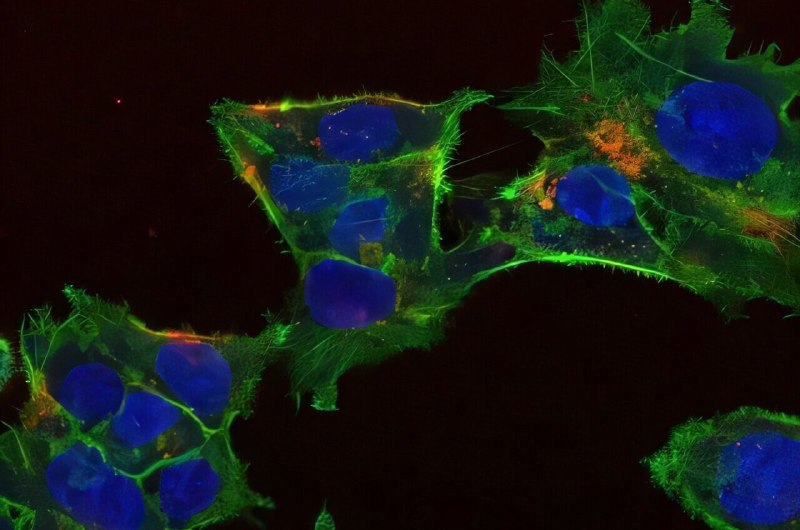
In a demonstration that could help pave the way for gene therapies with fewer side effects, several human cell types have been genetically modified with protein nanoparticles designed at University of Michigan Engineering and Michigan Medicine. Gene therapy has been enormously successful for treating disorders of the blood, including sickle cell disease and leukemia. However, using a virus as a vector for treatment can create unwanted side effects, such as secondary cancers and immune system overreactions. With the nanoparticles, the research team aims to develop a safer method for delivering gene therapies.

In a proof-of-concept experiment, the researchers used nanoparticles to modify several types of human cells. They made human liver cancer cells, kidney cells and immune cells glow green by giving them genes for green fluorescent protein. The cells activated the new genes after they engulfed and digested the nanoparticles, releasing the DNA or messenger RNA packed inside. The work is published in the journal Advanced Materials.

"There are a lot of diseases where a protein is missing or dysfunctional due to a single mutation, and we can definitely correct for that by introducing a new gene," said Joerg Lahann, the Wolfgang Pauli Collegiate Professor of Chemical Engineering, director of the U-M Biointerfaces Institute and the corresponding author of the study.

"Typically, this is done with viruses, but the viruses can be toxic and activate the immune cells. So there has been a push in the field to replace virus-based gene editing strategies."

Source: Phys.org
@EverythingScience
Phys.org Nanoparticles can genetically modify several human cell types In a demonstration that could help pave the way for gene therapies with fewer side effects, several human cell types have been genetically modified with protein nanoparticles designed at University of ...
  • ❤ 2
  • 👍 1
Post #5721 566
Artemis II Moon mission complete!
✅✅✅✅✅✅

- Space Launch System rocket launched crew into space
- Orion spacecraft kept astronauts safe
- Flew around the Moon, observed its far side
- New human spaceflight distance record
- Crew safely returned to Earth
- Inspired the WORLD

Source: @NASA
@EverythingScience
  • 🔥 1
  • 👏 1
Post #5720 654
Graphene 'leaf tattoo' sensor tracks plant hydration in real time
Is your houseplant thirsty? Are crops getting enough water? Is a forest at high risk of wildfire? Leaf health can answer all these questions, and researchers at The University of Texas at Austin have developed new technology to measure hydration levels with greater accuracy and without hurting the plant. The researchers developed an electronic tattoo for leaves that uses the hyperflexible and sustainable material graphene to track hydration levels. It sticks on the leaves without harming them, a major improvement over current methods that work only with dead or dried-out leaves or provide indirect measurements.

"Being able to directly measure and monitor the live leaf over time, at the point of photosynthesis, gives us more information to understand the health of our plant ecosystems, whether that's an individual plant or an entire forest," said Jean Anne Incorvia, associate professor in the Cockrell School of Engineering's Chandra Family Department of Electrical and Computer Engineering and one of the leaders on the new research published recently in Nano Letters.

Source: Phys.org
@EverythingScience
phys.org Graphene 'leaf tattoo' sensor tracks plant hydration in real time Is your houseplant thirsty? Are crops getting enough water? Is a forest at high risk of wildfire? Leaf health can answer all these questions, and researchers at The University of Texas at Austin have ...
  • ❤ 4
Post #5719 647
🌚 Thank you for following this historic event with us. We will now resume the posting of all science news, but more Artemis II photos and info will be included too.

Hope you enjoyed this semi-live coverage of the launch and mission. If you missed parts or would like to see things again, a post containing all the best media will be pinned in the coming days.
  • ❤ 12
  • 👍 6
  • 👏 2
Post #5718 754
"We are fortunate to be in this agency at this time together."

Artemis II pilot Victor Glover expresses gratitude for everyone who supported him throughout his lunar mission.

Source: @NASAArtemis
@EverythingScience
  • ❤ 10
Post #5717 668
"We are a mirror, reflecting you."

Artemis II mission specialist Jeremy Hansen discusses ways that the crew worked together and supported each other throughout their lunar mission.

Source: @NASAArtemis
@EverythingScience
  • ❤ 6
Post #5716 613
"Planet Earth: You. Are. A. Crew."

Artemis II mission specialist Christina Koch reflects on what it means to be a "crew."

Source: @NASAArtemis
@EverythingScience
  • ❤ 6
Post #5714 620
Let's run that back. One more time... Or two?
Our crew is now safely back on Earth. Relive the historic mission, and keep an eye on our website as more images and videos keep rolling in. go.nasa.gov/3OhVQph

Source: @NASA
@EverythingScience
  • ❤ 4
  • 🔥 2
Post #5713 636
The Artemis II crew is back on Earth. The science is just getting started 🚀

Here in Houston, teams of scientists have already started digging into the data that the Artemis II crew has collected. What they learn from this process will shape the next missions to the Moon.
NASA is preparing to send astronauts on increasingly difficult journeys, exploring more of the Moon and laying the groundwork required to go even further.

Future missions will land astronauts in the lunar South Pole region for the first time. They'll investigate the landscapes around their landing sites and deploy science instruments on the lunar surface. Generations of scientists will analyze the samples they bring home.

The data that future explorers collect about moonquakes, buried water ice, and the effects of radiation on plants and space crops will inform our future beyond Earth. Know before you go. Survive and thrive. Return safely. That’s NASA exploration science.

📷 Info: This shot is intentionally overexposed. For scientific analysis, the lunar science team requested multiple images of the same scene with different exposure settings—including overexposed, underexposed, & standard. Each highlights different aspects of the surface.
Source: @NASASolarSystem
@EverythingScience
  • ❤ 3
  • 👏 1
Post #5712 637
'I'm at a loss for words': Artemis II mission comes home to joy and cheers after historic 10-day mission
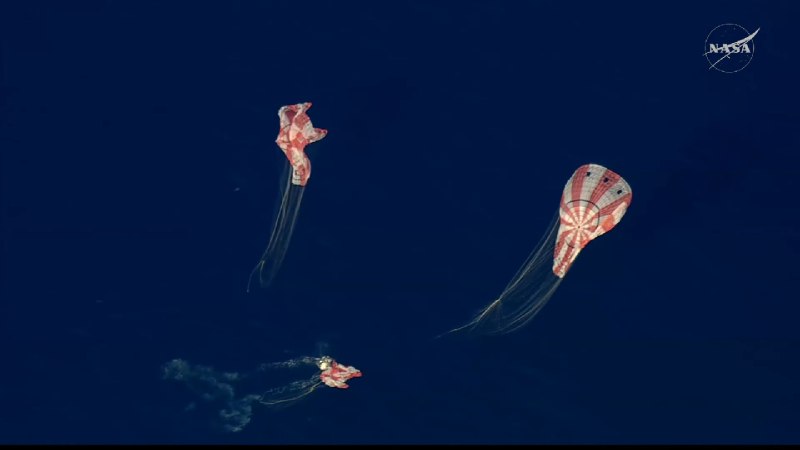
The Artemis II mission ended in a dramatic fashion on April 10, 2026, when NASA's Orion spacecraft splashed down in the Pacific Ocean, just off the coast of San Diego, closing out humanity's first crewed journey to the moon in over 50 years.

The four-person crew — consisting of commander Reid Wiseman, pilot Victor Glover, and mission specialists Christina Koch and Jeremy Hansen — returned to Earth after a 10-day mission that tested the systems NASA plans to use for future lunar expeditions. NASA said the splashdown occurred at 8:07 p.m. EDT or 5:07 PST, with recovery operations led by the US Navy's USS John P. Murtha.

An extreme homecoming
Re-entry tends to be one of the more dramatic and dangerous parts of a mission, especially for Artemis II.

Unlike return missions from the International Space Station, which begin in low Earth orbit and thus don't need nearly as much speed to return to Earth, Artemis II flew back into Earth's atmosphere from the moon at near-record-breaking speeds. Orion came back at roughly 24,600 mph (39,600 kmh), around 24 times the speed of a bullet. That faster speed meant that the capsule's heat shield endured around twice the amount of heat as a spacecraft coming back from the ISS.

Source: Live Science
@EverythingScience
Live Science 'I'm at a loss for words': Artemis II mission comes home to joy and cheers after historic 10-day mission NASA's 10-day moon mission has officially ended with a "bullseye landing"
  • ❤ 2
Post #5709 550
Big smiles from Christina and Victor on the deck of the USS John P. Murtha, as they waited to be escorted for their routine post-mission medical checks.

Source: @NASA
@EverythingScience
  • ❤ 3
  • 👏 1
Post #5708 550
All four of the Artemis II astronauts have been successfully extracted from the Orion spacecraft following splashdown and are now on the USS John P. Murtha. Next up, they will be escorted to the medical bay where they will undergo post-mission medical evaluations.

Source: @NASA
@EverythingScience
  • 👍 1
Post #5704 546
Orion’s crew and service module have separated. The crew module continues on its path towards Earth while the service module will harmlessly burn up in Earth’s atmosphere over the Pacific Ocean. The Artemis II return trajectory is designed to ensure any remaining debris does not pose a hazard to land, people, or shipping lanes.

Source: @NASAArtemis
@EverythingScience
  • 👍 1
Post #5703 563
The third return burn for the Artemis II mission occurred at 2:53pm ET (1853 UTC), refining Orion’s path for atmospheric entry and splashdown. During the maneuver, the spacecraft made precise adjustments to stay on its targeted course home.

Source: @NASAArtemis
@EverythingScience
  • 👏 3
Post #5702 523
Changing history, and protecting some really special people.

As the NASA Artemis II crew heads home, Jennifer Gratz and the service module propulsion console in the Orion Mission Evaluation Room are watching every burn, including the final return trajectory correction burn—making sure Orion brings its astronauts safely back to Earth.

Source: @NASA_Johnson
@EverythingScience
  • ❤ 4
Older posts →
Threads Profile ViewerView any public Threads profile without an account.Open ThreadLook →Writing with AI? Make it sound human.Metric37 rewrites AI drafts so they read naturally. Free AI detector, 1,500 words free.Try Metric37 →