TGViewer
Channel Public Channel
EverythingScience

EverythingScience

@everythingscience

Discover the best, human-curated science facts, news, discoveries, videos, and more!

Chat with us: @EverythingScienceChat
Contact: @DigitisedRealitySupport
Subscribers
22.4K
Photos
731
Videos
498
Links
5.2K

Showing posts older than #5574 · Back to latest

Older Posts 13 shown
Post #5573 362
Time for a check-up!

During their 10-day mission, the Artemis II crew will verify the AVATAR organ chips are working properly as they gather data on how deep space radiation and microgravity affect bone marrow cells. go.nasa.gov/3Ok9hVO

Source: @NASAScience_
@EverythingScience
  • ❤ 1
Post #5569 383
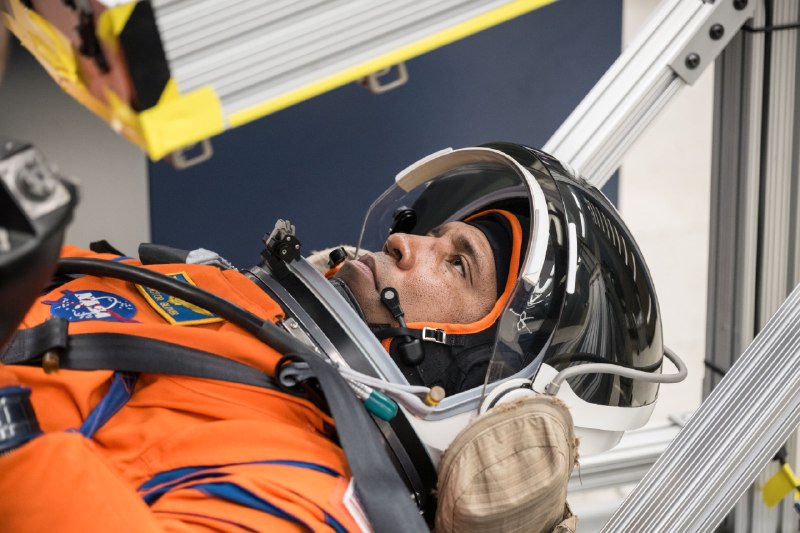
It’s more than a suit — it’s survival engineering. 🧑‍🚀

NASA Artemis II astronauts wear the Orion Crew Survival System, a custom‑fit pressure suit built at NASA’s Johnson Space Center, to protect them during launch and splashdown. With a lighter helmet, fire‑resistant layers, touchscreen‑ready gloves, improved cooling, and boots built for agility, every detail is engineered for deep‑space safety.

In an emergency, the OCSS can sustain an astronaut for up to six days with oxygen, hydration, and survival gear. Designed, tested, and tailored by JSC’s Orion Crew Survival Systems team, it’s one of the mission’s most essential pieces of hardware as Artemis II heads for the Moon.

Source: @NASA_Johnson
@EverythingScience
  • 👏 2
  • 🤝 2
  • 👍 1
  • 🙏 1
Post #5568 357
It's time for Artemis II to break Apollo 13's distance record. What to know about the moon flyby
The Artemis II astronauts are already the champions of a fresh new era of lunar exploration. Now it's time to set a new distance record.

Launched last week on humanity's first trip to the moon since 1972, the three Americans and one Canadian are chasing after Apollo 13's maximum range from Earth. That will make them our planet's farthest emissaries as they swing around the moon without stopping on Monday and then hightail it back home.

Their roughly six-hour lunar flyby promises views of the moon's far side that were too dark or too difficult to see by the 24 Apollo astronauts who preceded them. A total solar eclipse also awaits them as the moon blocks the sun, exposing snippets of shimmering corona.

"We'll get eyes on the moon, kind of map it out and then continue to go back in force," said flight director Judd Frieling. The goal is a moon base replete with landers, rovers, drones and habitats.

A look at Artemis II's up-close and personal brush with another world—our constant companion, the moon.

Source: Phys.org
@EverythingScience
phys.org It's time for Artemis II to break Apollo 13's distance record. What to know about the moon flyby The Artemis II astronauts are already the champions of a fresh new era of lunar exploration. Now it's time to set a new distance record.
  • 🤯 3
  • 👍 2
Post #5561 398
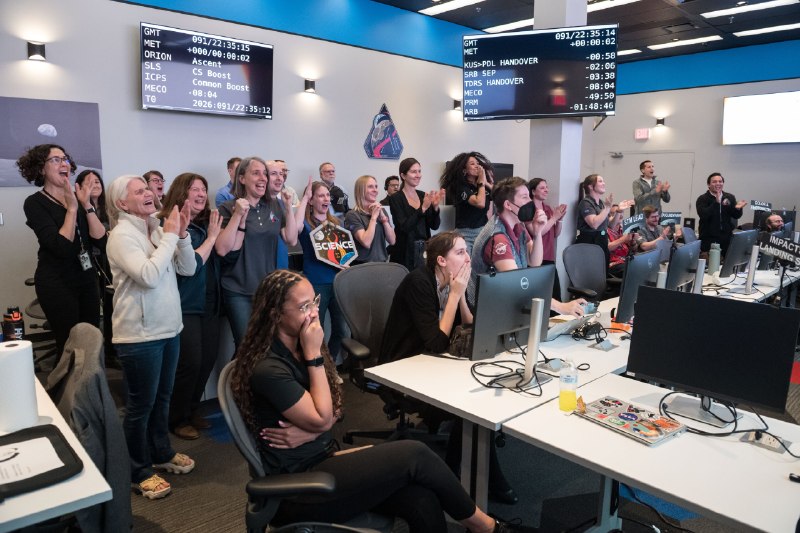
The moment they’ve been waiting for.

Scientists in the Science Evaluation Room are preparing for the Artemis II crew to become the first humans to fly around the Moon in over 50 years. These team members conduct rapid data interpretation, collaborative analysis, real-time decision making, and seamless coordination with the operations teams. Learn more about the SER: nasa.gov/blogs/missions…

Source: @NASA_Johnson
@EverythingScience
  • ❤ 2
Post #5560 439
Artemis astronauts, here’s your Moon-observing assignment 👀

This custom science plan is fine-tuned for the exact lighting conditions on the Moon’s surface when the Artemis II crew flies by, and for their viewing angle as they’re hurtling through space. ️

Above is a screenshot of the actual Lunar Targeting Plan that the Artemis II mission will use for the April 6 flyby. The targets are prioritized based on both their science value and their visibility at the time of observation.

As the astronauts approach the Moon, most of the lunar nearside will be illuminated – a shared view with observers on Earth. When they’re all the way on the other side of the Moon, they’ll see a waxing crescent: 20% of the lunar farside will be sunlit, and 80% will be dark.

The Lunar Targeting Plan is focused on the sunlit parts of the surface, but the night side of the Moon offers unique science opportunities, too. The astronauts will look for bursts of light created when space debris slams into the Moon’s surface, a.k.a. “impact flashes”.

They’ll keep their eyes out for dust lofted above the lunar horizon and backlit by the Sun. And on top of all that, they’ll experience a total solar eclipse lasting almost an hour

Source: @NASAScience_
@EverythingScience
  • ❤ 5
Post #5558 422
"Thanks to you and to the whole team on the ground for building on our Apollo legacy with Artemis."

In addition to a wake-up song this morning, the Artemis II astronauts were treated to an audio message from Apollo 16 astronaut Charlie Duke.

Source: @NASAArtemis
@EverythingScience
  • ❤ 2
  • 🔥 1
  • 👏 1
  • 👌 1
Post #5557 459
Why do the Artemis II astronauts keep calling their Orion spacecraft, "Integrity"?

The crew chose this name for their home away from home because it "embodies the foundation of trust, respect, candor, and humility" of the teams behind the Artemis II mission.

Source: @NASAArtemis
@EverythingScience
  • ❤ 4
  • 🔥 2
Post #5555 416
What are NASA’s Artemis II astronauts eating? 58 tortillas, 43 cups of coffee and a lot of hot sauce
Dining in space isn’t exactly a Michelin Star experience, but it is exciting. The Artemis II mission is no exception: the astronauts’ menu includes foods such as macaroni and cheese, beef brisket, broccoli au gratin—and 58 tortillas.

In all, the four crew members—Reid Wiseman, Victor Glover, Jeremy Hansen and Christina Koch—have a selection of 189 different menu items to choose from on their journey around the moon. Tortillas are among the most popular astronaut foods—in part because it’s simply easy to fill them, fold them up and eat them without bits floating off in the zero-g environment inside a spacecraft.

On Friday the crew’s breakfast menu included vegetable quiche, scrambled eggs, couscous with nuts, peaches and oatmeal. “There’s even a muffin being enjoyed today,” said NASA public affairs officer Leah Cheshier Mustachio in the agency’s livestream coverage of the mission. Coffee is also in high demand: NASA has allotted 43 cups of coffee for the crew—a little more than 10 cups per astronaut across the 10-day mission.

Source: Scientific American
@EverythingScience
Scientific American What are NASA’s Artemis II astronauts eating? 58 tortillas, 43 cups of coffee and a lot of hot sauce The menu for NASA’s moon mission has 189 unique items on it and mirrors that of the International Space Station
  • 👍 1
Post #5554 420
Artemis II Crew Talks about the Moon
Join the crew of Artemis II as they discuss their personal feelings about what the Moon means to them.

Source: NASA
@EverythingScience
  • ❤ 3
Post #5553 419
Don't worry: space has mac and cheese.

Food aboard Orion must be easy to prepare and consume in microgravity, minimize crumbs, and remain safe and stable throughout the mission. The crew provided input well before the meals were packed for the test flight.

Source: @NASAArtemis
@EverythingScience
  • ❤ 4
Older posts →
Threads Profile ViewerView any public Threads profile without an account.Open ThreadLook →Writing with AI? Make it sound human.Metric37 rewrites AI drafts so they read naturally. Free AI detector, 1,500 words free.Try Metric37 →