TGViewer
Channel Public Channel
EverythingScience

EverythingScience

@everythingscience

Discover the best, human-curated science facts, news, discoveries, videos, and more!

Chat with us: @EverythingScienceChat
Contact: @DigitisedRealitySupport
Subscribers
22.1K
Photos
731
Videos
498
Links
5.2K

Showing posts older than #5060 · Back to latest

Older Posts 19 shown
Post #5059 861
This Brilliant Map Has 3D Models Of Nearly Every Single Building In The World - All 2.75 Billion Of Them
Google Maps has got fresh competition. Using machine learning, computer engineers have developed an interactive map that shows 3D models of the world's buildings – practically every single one of them. Here's how it works and how you can tinker around with it yourself. 

Called the GlobalBuildingAtlas, the freely available map features nearly all of the world’s 2.75 billion buildings, which presumably includes your home, your favourite restaurant, the hospital you were born in, and so on. Each structure is displayed with a resolution of 3 x 3 meters (approx. 10 x 10 feet), capturing the shape and size of each building with surprisingly good accuracy. 

Around 97 percent (2.68 billion) of the buildings are displayed in the highest level of detail, plus the map contains buildings from regions often missing in global maps, such as Africa, South America, and rural areas.

Source: IFLScience
@EverythingScience
IFLScience This Brilliant Map Has 3D Models Of Nearly Every Single Building In The World - All 2.75 Billion Of Them Hey, look! That's your house.
  • 🤯 2
Post #5058 807
There Is A Very Simple Test To See If You Have Aphantasia
It's difficult to work out what is going on in your own mind, let alone anyone else's. That's one of the reasons why people with aphantasia, or who do not have an inner monologue (anendophasia), may not realize that their minds work differently from other people's.

Aphantasia is a difference in the way the brain generates mental imagery. When the majority of people are asked to picture a horse, for example, they really do see a horse clearly in their mind's eye. You may see details of the horse you are picturing, its long, flowing mane, or its horrendous white sweat quite clearly. For around 1-4 percent of people worldwide, or around 82-380 million people on Earth, that is not the case.

"Aphantasia is the inability to voluntarily visualize mental images – a neurological variation that affects how people think, dream, remember, and learn. When someone with aphantasia tries to visualize an apple, a loved one's face, or a childhood memory, they experience no mental pictures," the Aphantasia Network explains.

"Instead of mental pictures, your mind works with facts, concepts, and knowledge. You know what a horse looks like – four legs, mane, tail – you just can't see one in your head."

Source: IFLScience
@EverythingScience
IFLScience There Is A Very Simple Test To See If You Have Aphantasia Around 1-4 percent of the world's population have it, but you may not realize until you talk to others.
  • 👍 3
  • 🤯 1
Post #5056 789
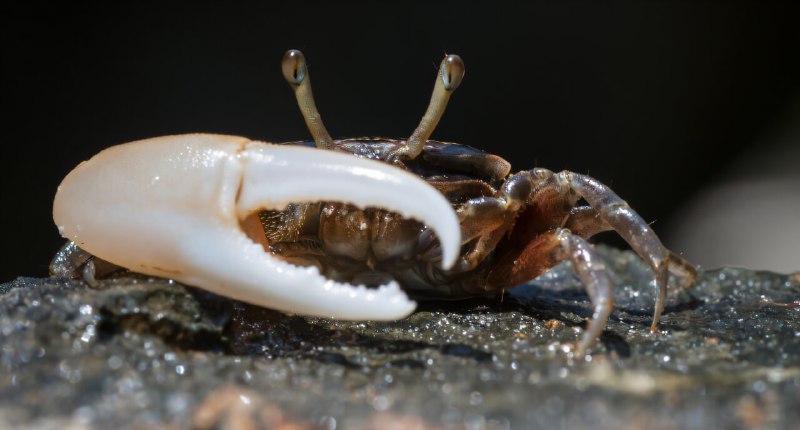
Fiddler crabs found to hoover up and break down microplastic particles
New research has found that Fiddler crabs are playing an unheralded role when it comes to hoovering up microplastics found in the world's mangrove forests and salt marshes.

Scientists studying a thriving population of Fiddler crabs in a polluted mangrove forest in Colombia have found that they can ingest and break down large quantities of small plastic particles in the sediment.

The ability to mobilize large amounts of sediment for feeding and sheltering, and the creature's specialized digestive processes, which earn it the reputation of being an "ecosystem engineer," can break down plastics within days, much faster than sunlight and waves.

However, scientists say that this litter recycling service may come at a cost, with the potential release of harmful nanoplastics into their tissues and, consequently, the food chain.

Source: Phys.org
@EverythingScience
phys.org Fiddler crabs found to hoover up and break down microplastic particles New research has found that Fiddler crabs are playing an unheralded role when it comes to hoovering up microplastics found in the world's mangrove forests and salt marshes.
  • 🙈 1
Post #5053 654
The Artemis II crew will observe parts of the Moon never before seen by human eyes. Their exact view will depend on lunar surface lighting (aka the Moon's phase) as they fly by, which in turn depends on launch timing.

Dive in with Ernie Wright, Artemis II Visualization Lead.

Source: @NASAArtemis
@EverythingScience
  • 🔥 1
Post #5051 699
Post #5049 676
Orcas are all about working smarter, not harder, as they coordinate in their pods to corral and stun their prey.

Source: @NatGeo
@EverythingScience
  • ❤ 3
Post #5048 592
NASA’s Webb Observes Exoplanet Whose Composition Defies Explanation
Scientists using NASA’s James Webb Space Telescope have observed a rare type of exoplanet, or planet outside our solar system, whose atmospheric composition challenges our understanding of how it formed. 

Officially named PSR J2322-2650b, this Jupiter-mass object appears to have an exotic helium-and-carbon-dominated atmosphere unlike any ever seen before. Soot clouds likely float through the air, and deep within the planet, these carbon clouds can condense and form diamonds. How the planet came to be is a mystery. The paper appears Tuesday in The Astrophysical Journal Letters. 

“This was an absolute surprise,” said study co-author Peter Gao of the Carnegie Earth and Planets Laboratory in Washington. “I remember after we got the data down, our collective reaction was ‘What the heck is this?’ It's extremely different from what we expected.”

Source: NASA
@EverythingScience
NASA Science NASA’s Webb Observes Exoplanet Whose Composition Defies Explanation - NASA Science Scientists using NASA’s James Webb Space Telescope have observed a rare type of exoplanet, or planet outside our solar system, whose atmospheric composition
  • ❤ 2
  • 🤯 1
Post #5046 626
Your body is full of medicine. Researchers can now synthesize it
Northeastern University researchers have made a breakthrough drug discovery, developing the first synthetic endogenous cannabinoid compound, with repercussions for new therapeutics from pain and inflammation to cancer.

Spyros P. Nikas, an associate research professor in Northeastern's Center for Drug Discovery, says that the discovery hinges on the distinction between two different kinds of cannabinoid chemicals, endogenous and exogenous. Exogenous cannabinoids are those produced outside the human body, like THC or CBD, both derived from the cannabis plant and present in marijuana.

Our own bodies, however, are also producing cannabinoids all the time. Called endogenous cannabinoids—or just "endocannabinoids"—these chemicals "modulate a wide range of physiological and pathophysiological responses," Nikas says, processes that include mood, inflammation and even neurodegenerative disorders like Alzheimer's and Parkinson's. The research is published in the Journal of Medicinal Chemistry.

Cannabinoids—not just cannabis
Endocannabinoids don't have the same structure as the plant-derived cannabinoids, "but they do exactly the same job," says Alexandros Makriyannis, the George D. Behrakis chair of the department of chemistry and chemical biology.

The cannabinoid system within the human body—"combining endocannabinoids, receptors and enzymes"—Nikas says, "exists everywhere with high abundance in the central nervous system."

Due to its prominence, Nikas calls it "a system that is responsible for the homeostasis of the human being."

The receptors that bind with cannabinoids, called CB1 and CB2, are also found throughout the body, but "they have different distribution in different tissues and organs," Nikas says.

Drugs that target the CB1 and CB2 receptors do exist already in medicine—for instance, to prevent vomiting in chemotherapy patients—but these are derived from the exogenous cannabinoids, and thus also exhibit the cannabis plant's side effects, from hallucinations to dependence, Nikas says.

Drugs derived from endocannabinoids "are not expected to have these side effects," Nikas says, as they are made inside our own, but the synthetic variety could still "have a wide range of therapeutic utility."

If researchers can produce synthetic endocannabinoids, they should come with all the medical benefits of our own naturally created endocannabinoids without the attendant side effects of exogenous cannabinoids. The problem is how unstable these synthetics usually are.

Source: Phys.org
@EverythingScience
phys.org Your body is full of medicine. Researchers can now synthesize it Northeastern University researchers have made a breakthrough drug discovery, developing the first synthetic endogenous cannabinoid compound, with repercussions for new therapeutics from pain and inflammation ...
  • ❤ 1
Post #5044 545
Possible 'superkilonova' exploded not once but twice
When the most massive stars reach the ends of their lives, they blow up in spectacular supernova explosions, which seed the universe with heavy elements such as carbon and iron. Another type of explosion—the kilonova—occurs when a pair of dense dead stars, called neutron stars, smash together, forging even heavier elements such as gold and uranium. Such heavy elements are among the basic building blocks of stars and planets.

So far, only one kilonova has been unambiguously confirmed to date, a historic event known as GW170817, which took place in 2017. In that case, two neutron stars smashed together, sending ripples in space-time, known as gravitational waves, as well as light waves across the cosmos.

The cosmic blast was detected in gravitational waves by the National Science Foundation's Laser Interferometer Gravitational-wave Observatory (LIGO) and its European partner, the Virgo gravitational-wave detector, and in light waves by dozens of ground-based and space telescopes around the world.

Now, astronomers are reporting evidence for a possible second kilonova event, but the case is not closed. In fact, this situation is much more complex because the candidate kilonova, named AT2025ulz, is thought to have stemmed from a supernova blast that went off hours before, ultimately obscuring astronomers' view.

Source: Phys.org
@EverythingScience
phys.org Possible 'superkilonova' exploded not once but twice When the most massive stars reach the ends of their lives, they blow up in spectacular supernova explosions, which seed the universe with heavy elements such as carbon and iron. Another type of explosion—the ...
Post #5041 780
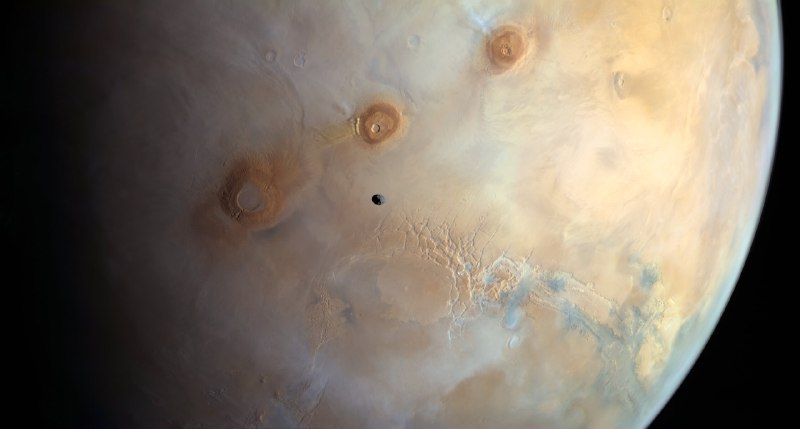
ESA & Andrea Luck released some amazing images of Phobos and Mars taken by Mars Express. In one frame you can see the moon agains the Martian surface between the Tharsis volcanoes and Noctis Labyrinthus–Valles Marineris. The second shows it near the limb of the planet.
flickr.com/photos/1922712…

Source: @DJSnM
@EverythingScience
  • ❤ 2
  • 😍 1
Post #5040 553
2025 Rewind ⏪
A year of new Earth observation missions, ensuring continuity for existing ones, and celebrating 50 years of esa.

Source: @ESA_EO
@EverythingScience
  • ❤ 1
Older posts →
Threads Profile ViewerView any public Threads profile without an account.Open ThreadLook →Writing with AI? Make it sound human.Metric37 rewrites AI drafts so they read naturally. Free AI detector, 1,500 words free.Try Metric37 →