TGViewer
Channel Public Channel
EverythingScience

EverythingScience

@everythingscience

Discover the best, human-curated science facts, news, discoveries, videos, and more!

Chat with us: @EverythingScienceChat
Contact: @DigitisedRealitySupport
Subscribers
21.5K
Photos
733
Videos
500
Links
5.2K

Showing posts older than #4394 · Back to latest

Older Posts 17 shown
Post #4393 608
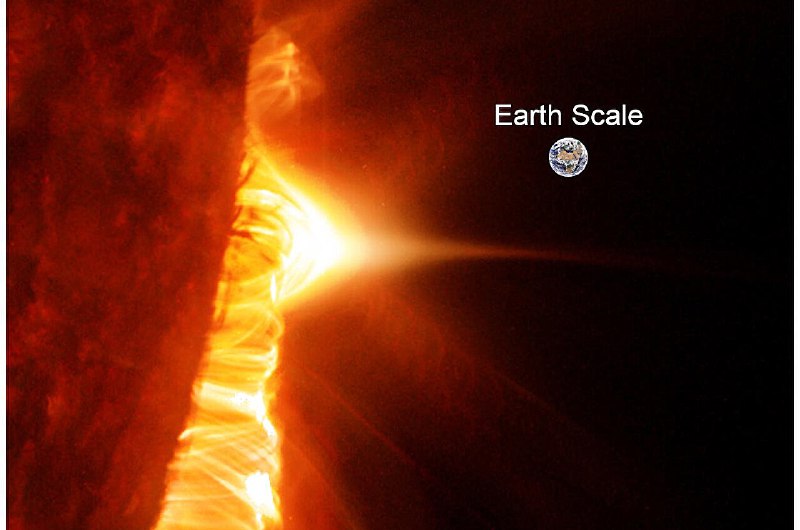
Solar flares may be 6.5 times hotter than previously thought
New research from the University of St Andrews has proposed that particles in solar flares are 6.5 times hotter than previously thought. The research provides an unexpected solution to a 50-year-old mystery about our nearest star.

Solar flares are sudden and huge releases of energy in the sun's outer atmosphere that heat parts of it to greater than 10 million degrees. These dramatic events greatly increase the solar X-rays and radiation reaching Earth and are hazardous to spacecraft and astronauts, as well as affecting our planet's upper atmosphere.

The research, published in The Astrophysical Journal Letters, looks at evidence of how flares heat solar plasma to greater than 10 million degrees. This solar plasma is made up of ions and electrons. The new research argues that solar flare ions, positively charged particles that make up half of the plasma, can reach over 60 million degrees.

Source: Phys.org
@EverythingScience
phys.org Solar flares may be 6.5 times hotter than previously thought New research from the University of St Andrews has proposed that particles in solar flares are 6.5 times hotter than previously thought. The research provides an unexpected solution to a 50-year-old mystery ...
  • 🔥 1
Post #4391 600
Scientists Find Kidney-Saving microRNA in a World-First Discovery
In a groundbreaking achievement, researchers at the CRCHUM, the hospital research center affiliated with Université de Montréal, have identified a type of microRNA that can safeguard small blood vessels and help maintain kidney function following severe injury.

This discovery holds significant promise for the more than four million Canadians living with chronic renal failure, as well as millions of patients worldwide, by offering new possibilities for earlier detection and prevention of the disease.

Until now, there had been no dependable biomarker to assess the condition of these delicate capillaries or to guide targeted strategies aimed at protecting kidney function.

Source: SciTechDaily
@EverythingScience
SciTechDaily Scientists Find Kidney-Saving microRNA in a World-First Discovery Millions of kidney patients could benefit from early detection and prevention as a result of the breakthrough made by scientists at the CRCHUM. In a groundbreaking achievement, researchers at the CRCHUM, the hospital research center affiliated with Université…
  • 👏 3
  • ❤ 1
Post #4390 587
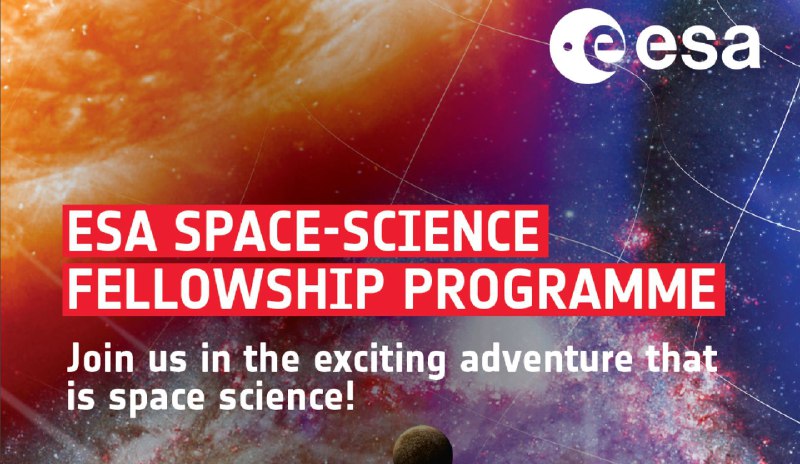
Apply to the ESA Research #Fellowships in Space Science and come work with us at one of three locations:

📍ESAC near Madrid, Spain
📍ESTEC in Noordwijk, the Netherlands
📍The ESA office at the Space Telescope Science Institute in Baltimore, USA

Details 👉 https://t.co/d4EvwZiqj9

Source: @esascience
@EverythingScience
  • 👍 1
Post #4384 569
The SWOT satellite captured the tsunami triggered by Russia’s Kamchatka earthquake on July 30.

By providing data on the wave’s height, shape, and direction, SWOT is helping scientists improve tsunami forecast models and protect coastal communities. https://t.co/BL8QjUrWaj

Source: @NASAEarth
@EverythingScience
  • 🤯 2
Post #4383 594
MIT Scientists May Have Finally Solved the Moon’s Magnetic Mystery
For decades, scientists have wrestled with a simple question: what happened to the Moon’s magnetism? Instruments on orbiting spacecraft once detected strong magnetic signatures in lunar surface rocks, indicating a powerful field in the past. Yet the moon itself has no inherent magnetism today.

Researchers at MIT now believe they may have uncovered the answer. Their hypothesis suggests that the Moon once possessed a faint magnetic field, and when a massive impact occurred, it produced a burst of plasma that temporarily strengthened this field, particularly on the far side of the Moon.

Source: SciTechDaily
@EverythingScience
SciTechDaily MIT Scientists May Have Finally Solved the Moon’s Magnetic Mystery A massive impact may have temporarily strengthened the Moon’s weak magnetic field, producing a short-lived surge that became preserved in certain lunar rocks. For decades, scientists have wrestled with a simple question: what happened to the Moon’s magnetism?…
  • 👍 1
  • 🤔 1
Post #4382 581
Interstellar invader comet 3I/ATLAS could be investigated by these spacecraft as it races past the sun: 'This could be literally a once-in-a-lifetime opportunity'
New research investigates the possibility that different spacecraft could visit Comet 3I/ATLAS, giving scientists a unique on-location view of the interstellar visitor, or even offering the chance to collect material that could be much older than the bodies of our solar system.

Source: Space.com
@EverythingScience
Space Interstellar invader comet 3I/ATLAS could be investigated by these spacecraft as it races past the sun: 'This could be literally… "It's like an aeon-old fridge, which will open during the next months to release some of its contents."
  • ❤ 2
Post #4381 625
Get ready for autumn skies 🍂

In September, you’ll get a good look at Saturn and see a celestial trio before sunrise mid-month. Get more details about what to expect from this month’s night skies: https://t.co/ClHjcD6zgu

Source: @NASA
@EverythingScience
  • 😍 2
Post #4380 614
After up to 45 days in their father’s brood pouch, baby seahorses—each around the size of a jelly bean—float together in small groups, wrapping their tails around one another as they travel.

Source: @NatGeo
@EverythingScience
  • ❤ 8
Post #4379 576
Scientists stunned by the Universe’s first known black hole
Just 500 million years after the Big Bang, a colossal black hole, 300 million times the mass of the Sun, was already blazing at the heart of a tiny, brilliant galaxy. Found with JWST, this discovery could explain the strange "Little Red Dots" seen in the early cosmos and rewrites what we thought was possible for black hole growth.

Source: ScienceDaily
@EverythingScience
ScienceDaily Scientists stunned by the Universe’s first known black hole Just 500 million years after the Big Bang, a colossal black hole, 300 million times the mass of the Sun, was already blazing at the heart of a tiny, brilliant galaxy. Found with JWST, this discovery could explain the strange "Little Red Dots" seen in the…
  • 🤔 1
Post #4378 586
How magnets could help astronauts explore the moon and Mars
Scientists have developed a more efficient way to generate oxygen for astronauts that could help with future missions into deep space.

Current life-support systems such as those on the International Space Station (ISS) rely on bulky centrifuges to separate the oxygen and hydrogen bubbles created when water is split by electricity, a process known as electrolysis. On Earth, bubbles rise away from electrodes, but in microgravity, spinning is required to separate them. This method works, but the equipment is heavy, power-hungry and is ill-suited for long-duration missions to the moon or Mars.

A new study led by Alvaro Romero-Calvo of the Georgia Institute of Technology, in collaboration with colleagues at the University of Bremen’s Center of Applied Space Technology and Microgravity (ZARM) and the University of Warwick, has demonstrated a simpler, lighter and more sustainable solution in the form of magnets.

Source: Space.com
@EverythingScience
Space How magnets could help astronauts explore the moon and Mars Magnets could make bulky centrifuges obsolete in space oxygen systems.
Post #4374 581
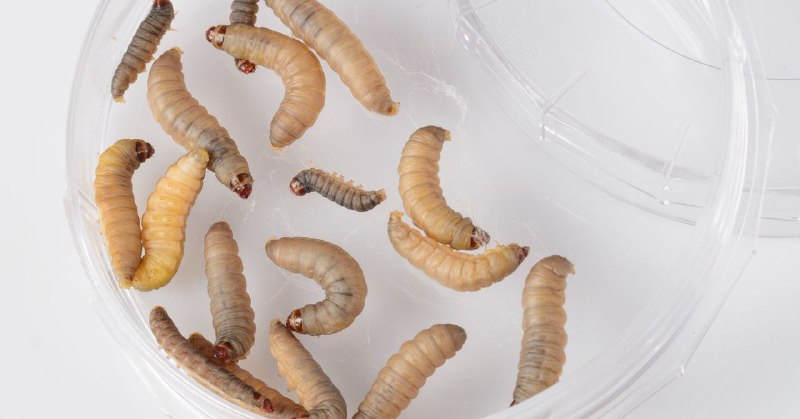
Hungry Worms Could Help Solve Plastic Pollution
Plastics that support modern life are inexpensive, strong, and versatile, but are difficult to dispose of and have a serious impact when released into the environment. Polyethylene, in particular, is the most widely produced plastic in the world, with more than 100 million tons distributed annually. Since it can take decades to decompose—and along the way can harm wildlife and degrade into harmful microplastics—its disposal is an urgent issue for mankind.

In 2017, European researchers discovered a potential solution. The larvae of wax moths, commonly known as wax worms, have the ability to break down polyethylene in their bodies. Wax worms have been considered a pest since ancient times because they parasitize beehives, feeding on beeswax. However, we now know that they also spontaneously feed on polyethylene, which has a chemically similar structure.

Source: Wired
@EverythingScience
WIRED Hungry Worms Could Help Solve Plastic Pollution Researchers are working on manipulating the digestive systems of wax worms to create a scalable way of disposing of plastic.
Older posts →
Threads Profile ViewerView any public Threads profile without an account.Open ThreadLook →Writing with AI? Make it sound human.Metric37 rewrites AI drafts so they read naturally. Free AI detector, 1,500 words free.Try Metric37 →