TGViewer
Channel Public Channel
EverythingScience

EverythingScience

@everythingscience

Discover the best, human-curated science facts, news, discoveries, videos, and more!

Chat with us: @EverythingScienceChat
Contact: @DigitisedRealitySupport
Subscribers
21.6K
Photos
738
Videos
501
Links
5.3K

Showing posts older than #3995 · Back to latest

Older Posts 19 shown
Post #3994 2.47K
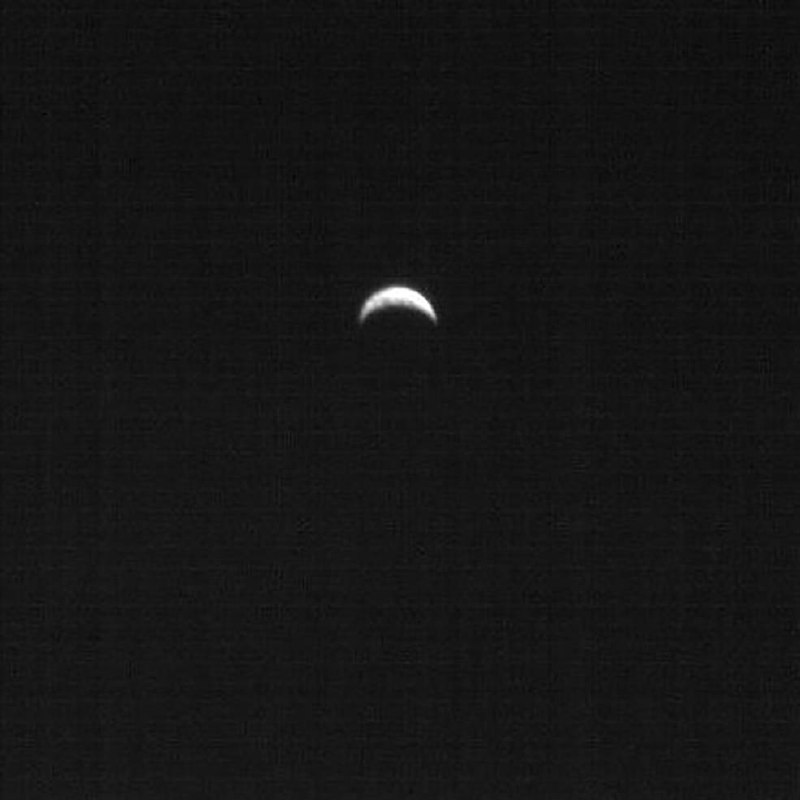
Impact confirmed! Visual confirmation and loss of signal.
  • ❤ 12
  • 🎉 5
  • 👏 2
  • 👍 1
Post #3993 2.1K
T-1 minute to impact
  • 👏 8
  • 👍 1
Post #3992 2.23K
‍Dimorphos has been precision locked by the DART spacecraft. Impact is in about 15 minutes! Time to see what impacting an asteroid actually does to alter its trajectory.

🌐 Stream
@EverythingScience
  • 👍 12
  • 🔥 3
  • ❤ 1
Post #3991 2.56K
Watch a Live Feed from NASA’s DART Spacecraft on Approach to Asteroid Dimorphos (upcoming)

NASA’s Double Asteroid Redirection Test (DART) has one single instrument onboard – the Didymos Reconnaissance and Asteroid Camera for Optical Navigation, aka the DRACO camera. DRACO serves as the spacecraft’s eye and will guide DART to its final destination: impact with asteroid Dimorphos. The stream you'll be watching will be a real-time feed from the DART spacecraft enabled through the DRACO camera sending one image per second to Earth.

In the hours before impact, the screen will appear mostly black, with a single point of light. That point is the binary asteroid system Didymos which is made up of a larger asteroid named Didymos and a smaller asteroid that orbits around it called Dimorphos.

As the 23:14 UTC impact of asteroid Dimorphos nears closer, the point of light will get bigger and eventually detailed asteroids will be visible.

At 23:14 UTC, the DART spacecraft is slated to intentionally crash into asteroid Dimorphos. This stream will be delayed due to the time it takes the images to arrive at Earth, plus additional time for feeding the images to various platforms.

After impact, the feed will turn black – due to a loss of signal. After about 2 minutes, this stream will turn into a replay – showing the final moments leading up to impact. That replay file will also become available on NASA websites and social media accounts.

DART is a spacecraft designed to impact an asteroid as a test of technology. DART’s target asteroid is NOT a threat to Earth. This asteroid system is a perfect testing ground to see if intentionally crashing a spacecraft into an asteroid is an effective way to change its course, should an Earth-threatening asteroid be discovered in the future.

🌐 Stream
@EverythingScience
YouTube DART's Impact with Asteroid Dimorphos (Official NASA Broadcast) Countdown to impact as NASA’s Double Asteroid Redirection Test (DART) attempts humanity’s first-ever test of planetary defense! The DART spacecraft will intentionally crash into asteroid Dimorphos at 7:14 p.m. ET on Monday, September 26, 2022 to see if kinetic…
  • 🔥 11
  • 👍 2
  • ❤ 1
Post #3990 2.53K
NASA is going to impact their DART small satellite into Diomorphos asteroid, as a method of planetary defense test

NASA’s Double Asteroid Redirection Test (DART) is set to make history next Monday (3rd Oct) as the world’s first planetary defense test, and the spacecraft’s own “mini-photographer” LICIACube (short for Light Italian CubeSat for Imaging Asteroids) is warming up to capture the event.

Article
@EverythingScience
NASA DART’s Small Satellite Companion Tests Camera Prior to Dimorphos Impact NASA’s Double Asteroid Redirection Test (DART) is set to make history next Monday as the world’s first planetary defense test, and the spacecraft’s own “mini-photographer” LICIACube (short for Light Italian CubeSat for Imaging Asteroids) is warming up to…
  • 👍 11
  • ❤ 3
  • 🔥 2
Post #3989 3.78K
Designing a way to make oxygen injectable

What if emergency medical personnel could treat a desperately ill patient in need of oxygen with a simple injection instead of having to rely on mechanical ventilation or rush to get them onto a heart-lung bypass machine?

A new approach to transporting gases using a class of materials called porous liquids represents a big step toward artificial oxygen carriers and demonstrates the immense biomedical potential of these unusual fluids.

Article
@EverythingScience
phys.org Designing a way to make oxygen injectable What if emergency medical personnel could treat a desperately ill patient in need of oxygen with a simple injection instead of having to rely on mechanical ventilation or rush to get them onto a heart-lung ...
  • 🤯 10
  • 👌 4
  • ❤ 2
  • 👍 2
Post #3986 3.01K
Tarantula Nebula (NIRCam).png140.7 MB Tarantula Nebula (MIRI).png2 MB
Tarantula Nebula (NIRCam) Full Res
In this mosaic image stretching 340 light-years across, Webb’s Near-Infrared Camera (NIRCam) displays the Tarantula Nebula star-forming region in a new light, including tens of thousands of never-before-seen young stars that were previously shrouded in cosmic dust. The most active region appears to sparkle with massive young stars, appearing pale blue.

Scattered among them are still-embedded stars, appearing red, yet to emerge from the dusty cocoon of the nebula. NIRCam is able to detect these dust-enshrouded stars thanks to its unprecedented resolution at near-infrared wavelengths.

Low-res
Read more
  • ❤‍🔥 7
  • ❤ 4
  • 👍 4
  • 🔥 4
  • 🤔 1
Post #3985 1.92K
Webb’s NIRCam instrument draws attention to bright, hot features, such as the massive young stars in blue. As seen here, its MIRI instrument sees in longer wavelengths of light, uncovering cooler gas and dust deeper within the clouds.

#Webb
High-res
Read more
@EverythingScience
  • 👍 4
  • 🔥 1
Post #3984 1.93K
This Webb caught a giant space tarantula!

Take a moment to stare into thousands of never-before-seen young stars in the Tarantula Nebula. Webb reveals details of the structure and composition of the nebula, as well as background galaxies

The Tarantula Nebula gets its name from its dusty filaments. The largest and brightest star-forming region near our galaxy, it's home to the hottest, most massive stars known! This nebula lets us see what star formation might have looked like at its peak in our cosmic history.

#Webb
High-res
Read more
@EverythingScience
  • 🔥 12
  • ❤ 5
  • 👍 3
Post #3983 1.94K
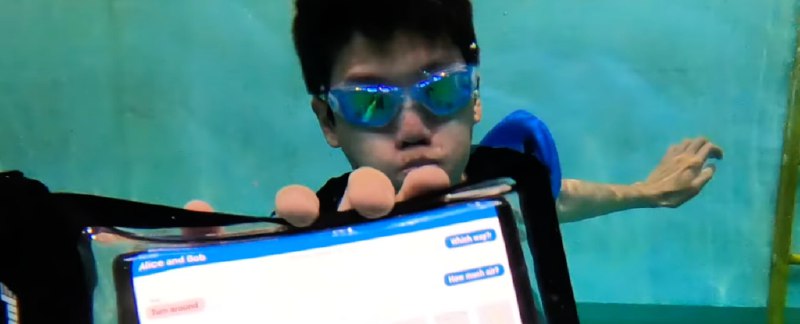
Finally! There's Now a Way to Send Text Messages on Your Phone Underwater

You may not have given much thought to being able to text underwater, but for millions of scuba diving and snorkeling enthusiasts, communication in the ocean is pretty essential to staying safe.

"Other than downloading an app to their phone, the only thing people will need is a waterproof phone case rated for the depth of their dive," says Chen.

That app is AquaApp, and it can work with speakers and microphones on ordinary smartphones – or even smartwatches. It gives users 240 preset messages to pick from, split into eight categories for easier access.

In tests in a variety of scenarios, the team found the app was effective at communicating messages across a distance of 30 meters (98 feet). For shorter-length messages – emergency SOS messages, for example – the app can go up to 100 meters (nearly 330 feet). This is all managed without a huge drain on battery life.

Read more to find out how it works

Article
@EverythingScience
ScienceAlert Finally! There's Now a Way to Send Text Messages on Your Phone Underwater Waterproof case (and a little coding knowledge) required.
  • 👍 7
  • ❤ 1
Post #3982 2.21K
Cannabis users no more likely to lack motivation than non-users: Study breaks 'stoner' stereotype

Adult and adolescent cannabis users are no more likely than non-users to lack motivation or be unable to enjoy life's pleasure, new research has shown, suggesting there is no scientific basis for the stereotype often portrayed in the media.

Cannabis users also show no difference in motivation for rewards, pleasure taken from rewards, or the brain's response when seeking rewards, compared to non-users.

Article
@EverythingScience
Medicalxpress Cannabis users no more likely to lack motivation than non-users: Study breaks 'stoner' stereotype Adult and adolescent cannabis users are no more likely than non-users to lack motivation or be unable to enjoy life's pleasure, new research has shown, suggesting there is no scientific basis for the ...
  • 👍 12
  • 😁 5
  • 👎 1
Post #3981 1.99K
NASA unsure next Moon rocket launch attempt possible this month

After scrapping a second attempt to get its new 30-story lunar rocket off the ground due to a fuel leak, NASA officials said Saturday it may not be possible to try again this month.

The current launch window for NASA's Artemis 1 mission to the Moon ends Tuesday and is "definitely off the table," said Jim Free, associate administrator for Exploration Systems Development, at a press conference Saturday.

The next possible launch window is September 19 to October 4, and failing that, October 17 to 31, NASA said.

The ability to take off during those windows "will really depend on the options that the team comes back with likely on Monday or early Tuesday morning," said Free.

Article
@EverythingScience
phys.org NASA unsure next Moon rocket launch attempt possible this month After scrapping a second attempt to get its new 30-story lunar rocket off the ground due to a fuel leak, NASA officials said Saturday it may not be possible to try again this month.
  • 👍 5
  • ❤ 2
  • 🔥 2
  • 😁 2
  • 👎 1
Post #3980 1.99K
New method eradicates deadly brain tumors by 'starving' them of energy source

A groundbreaking study at Tel Aviv University effectively eradicated glioblastoma, a highly lethal type of brain cancer.

The researchers achieved the outcome using a method they developed based on their discovery of two critical mechanisms in the brain that support tumor growth and survival: one protects cancer cells from the immune system, while the other supplies the energy required for rapid tumor growth. The work found that both mechanisms are controlled by brain cells called astrocytes, and in their absence, the tumor cells die and are eliminated.

The researchers explain, "Glioblastoma is an extremely aggressive and invasive brain cancer, for which there exists no known effective treatment. The tumor cells are highly resistant to all known therapies, and, sadly, patient life expectancy has not increased significantly in the last 50 years. Our findings provide a promising basis for the development of effective medications for treating glioblastoma and other types of brain tumors."

Article
@EverythingScience
Medicalxpress New method eradicates deadly brain tumors by 'starving' them of energy source A groundbreaking study at Tel Aviv University effectively eradicated glioblastoma, a highly lethal type of brain cancer. The researchers achieved the outcome using a method they developed based on their ...
  • 👍 15
  • ❤ 4
  • 🔥 1
Post #3979 1.93K
ℹ️ Due to an update on one of our regular science news site, instant view on all of their new articles has been broken for the time-being.

We always strive to ensure all our posted articles support instant view for your convenience but until this issue is fixed, we will continue posting articles from this site without support for instant view.

Once fixed we'll be able to update our previous posts to re-enable instant view on all articles.
  • ❤ 20
  • 👍 7
Post #3978 1.91K
Scientists Just Found a New Kind of Synapse Hiding in The Brains of Mice

A previously unknown type of synapse appears to have been hiding in strange, hair-like appendages that can be found on the surfaces of neurons, new research reveals.

A study in mice suggests that structures called primary cilia play a role in neuronal signaling; specifically, they act as a shortcut for transmitting signals directly into the nucleus to trigger changes to chromatin, the complex that forms chromosomes.

This discovery may help scientists unravel the role of these mysterious structures in other cells, as well as give us a deeper understanding of the complicated workings of the brain.

Article
@EverythingScience
  • 🔥 3
  • 👏 1
  • 🤯 1
Post #3977 1.85K
SU(N) matter is about 3 billion times colder than deep space

A Kyoto team led by study author Yoshiro Takahashi used lasers to cool its fermions, atoms of ytterbium, within about one-billionth of a degree of absolute zero, the unattainable temperature where all motion stops.

That's about 3 billion times colder than interstellar space, which is still warmed by the afterglow from the Big Bang.

"Unless an alien civilization is doing experiments like these right now, anytime this experiment is running at Kyoto University it is making the coldest fermions in the universe," said Rice University's Kaden Hazzard

"The payoff of getting this cold is that the physics really changes," Hazzard said. "The physics starts to become more quantum mechanical, and it lets you see new phenomena."

Article
@EverythingScience
phys.org SU(N) matter is about 3 billion times colder than deep space Japanese and U.S. physicists have used atoms about 3 billion times colder than interstellar space to open a portal to an unexplored realm of quantum magnetism.
  • 😱 8
  • 👍 7
  • ❤ 2
Post #3976 1.56K
Years after shuttle, NASA rediscovers the perils of liquid hydrogen

‍A more in-depth overview of today's scrub, the road ahead for the SLS rocket, and the smallest element in the universe.

NASA sought to launch a rocket largely cobbled together from the space shuttle, which itself was designed and built more than four decades ago.

As the space shuttle often was delayed due to technical problems, it therefore comes as scant surprise that the debut launch of NASA's Space Launch System rocket scrubbed a few hours before its launch window opened...

Article
@EverythingScience
Ars Technica Years after shuttle, NASA rediscovers the perils of liquid hydrogen "Every time we saw a leak, it pretty quickly exceeded our flammability limits."
  • 👍 3
  • 😢 3
Post #3975 1.68K
SLS Update Continued

NASA Administrator Bill Nelson says the Artemis 1 mission management team will determine whether to make another launch attempt Monday or Tuesday, or roll the Space Launch System moon rocket back to the Vehicle Assembly Building for repairs and re-testing.

If the rocket has to return to the VAB, the Artemis 1 launch will be delayed to October. The next launch period opens Sept. 19 and closes Oct. 4, but it's more likely that the flight would be pushed back to a launch period opening Oct. 17.

"We'll go when we're ready," Nelson said. "This is part of our space program -- be ready for scrubs."

The Artemis 1 launch team has entered into a 48-hour countdown recycle to preserve the chance to try another launch attempt as soon as Monday.
Source

🌐 Live Stream
@EverythingScience
  • 😐 5
  • 🤔 3
  • 👍 1
Older posts →
Threads Profile ViewerView any public Threads profile without an account.Open ThreadLook →Writing with AI? Make it sound human.Metric37 rewrites AI drafts so they read naturally. Free AI detector, 1,500 words free.Try Metric37 →