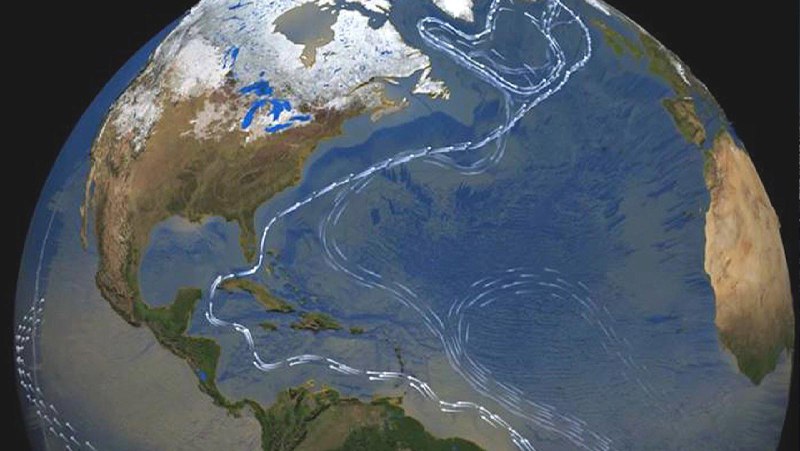
A massive Atlantic Ocean circulation system that plays a central role in regulating Earth’s climate has been weakening for nearly 20 years, according to a new study. Scientists say the slowdown spans a large portion of the Atlantic and could eventually alter weather patterns in many parts of the world.Source: SciTechDaily
The research, led by scientists at the University of Miami Rosenstiel School of Marine, Atmospheric and Earth Science, provides some of the strongest direct observational evidence so far that the Atlantic Meridional Overturning Circulation (AMOC) is losing strength. Researchers say the findings could improve climate forecasts and help scientists better understand how global warming may affect future weather and ocean conditions.
“A weaker AMOC can shift weather patterns, potentially leading to more extreme storms, changes in rainfall, or colder winters in some regions,” said Shane Elipot, a senior author of the study and physical oceanographer at the Rosenstiel School. “It can also influence sea-level rise along coastlines, affecting communities and infrastructure.”
Why the AMOC Matters for Global Climate
The AMOC is one of the most important systems controlling climate in the Atlantic region. It helps distribute heat through the ocean, influencing temperatures, weather patterns, and sea levels, especially around the North Atlantic.
Scientists say a slowdown in the circulation could affect European winters, hurricane activity, rainfall patterns, and other climate conditions around the globe.
Researchers also believe measurements taken along the western boundary of the Atlantic may act as an early warning signal for future climate changes. They compared the monitoring approach to a canary in a coal mine because it may provide an efficient way to track long-term changes in this crucial climate-regulating system.
“This research helps scientists better predict how the climate may change in the coming decades—information that governments, businesses, and communities use to prepare for future environmental conditions,” said Elipot.
@EverythingScience