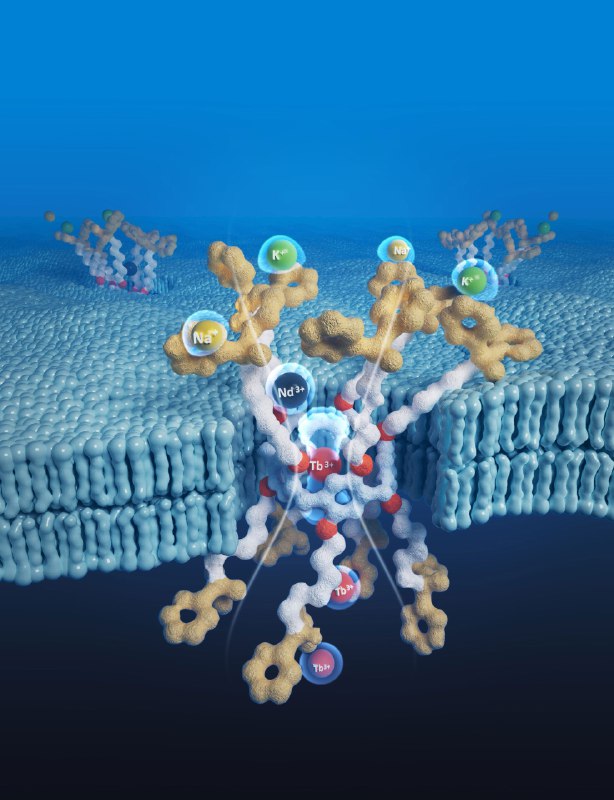
A team of scientists at The University of Texas at Austin has created a cleaner and more efficient way to extract rare earth elements, which are vital for technologies such as electric vehicle batteries and smartphones. The technique could strengthen domestic production and lessen dependence on expensive imports.
The new process makes it possible to separate and collect rare earth elements from sources that were previously too difficult or inefficient to use, offering a potential solution to supply challenges heightened by global trade tensions.
“Rare earth elements are the backbone of advanced technologies, but their extraction and purification are energy intensive and extremely difficult to implement at the scales required,” said Manish Kumar, professor in the Cockrell School of Engineering’s Fariborz Maseeh Department of Civil, Architectural and Environmental Engineering and the McKetta Department of Chemical Engineering. “Our work aims to change that, inspired by the natural world.”
The study, recently published in ACS Nano, describes how the team engineered artificial membrane channels, tiny pores within membranes, that imitate the highly selective transport systems of natural proteins in living organisms. In biology, such channels guide ions as they move between cells.
Each channel has unique properties that allow only ions with specific traits to pass through while blocking others. This fine-tuned selectivity is essential for many biological functions, including the way the human brain processes information.
Source: SciTechDaily
@EverythingScience