TGViewer
Channel Public Channel
Elcomsoft

Elcomsoft

@elcomsoft

Elcomsoft official channel is the place where you can find news, events and the latest updates of our products.

website: elcomsoft.com
twitter: twitter.com/elcomsoft
youtube: youtube.com/c/ElcomsoftCompany
blog: blog.elcomsoft.com
t.me/elcomsoftru
Subscribers
548
Photos
573
Videos
1
Links
458

Showing posts older than #629 · Back to latest

Older Posts 20 shown
Post #628 450
🆕Downloading iOS 26 iCloud Backups🆕

Elcomsoft Phone Breaker 11.2 adds the ability to download iCloud backups created on devices running iOS and iPadOS 26 and, by extension, iOS/iPadOS 27 beta.

⚡️With this release, Elcomsoft Phone Breaker becomes the first and only third-party tool capable of pulling these backups from Apple’s cloud. That might read like a routine compatibility update. It isn’t. In iOS 26, Apple reworked its iCloud backup mechanism from the ground up, breaking every third-party tool that relied on the previous scheme. Restoring access meant rebuilding a large part of our cloud extraction pipeline. Below is what changed, what we did about it, and where the current build still has rough edges.

Roughly the only thing left untouched is the authentication protocol – every other layer between an authenticated session and a reconstructed backup was redesigned. For example, the chunks that make up a single backup may be spread across multiple back-end servers, with different hosts holding different parts of the same copy.

Taken together, these changes made every existing third-party forensic tool incompatible with iOS 26 backups. Adding support wasn’t a matter of patching a parser; it required reworking the entire engine.

Let's talk about what we fixed❤️

More information at the link📎

#EPB #iCloud
Post #627 785
Forensic Implications of Apple Stolen Device Protection🧐

If you extract data from iPhones for a living, Stolen Device Protection is the change you can no longer afford to ignore. It does something deceptively simple: it puts Face ID or Touch ID in front of the “Trust This Computer” prompt.

The practical result is that an examiner who knows the device passcode still cannot pair an unfamiliar iPhone to a forensic workstation. That is the most disruptive change Apple has made to iPhone pairing behavior in roughly a decade, and as of spring 2026 it is switched on out of the box.

This article walks through what the feature is, how it has changed over time, what it is designed to stop, and – the part that matters most for a lab – exactly which steps of a data extraction it gets in the way of.

💡We are also in the process of finalizing our own solution for circumventing Stolen Device Protection that will allow sideloading and using the extraction agent with protection still engaged.

More in our new article📎
  • ❤ 1
  • 👍 1
Post #626 724
A Decade of BitLocker Vulnerabilities: What’s Patched, What’s Not, and What Still Works💬

A
few days ago we wrote about YellowKey, the newest entry in what has become a remarkably long list of BitLocker bypasses. That article walked through one specific attack with a practical workflow. This follow-up steps back and surveys the broader landscape: where BitLocker has been broken before, where it is still broken today, and what an investigator should expect to encounter on a seized Windows machine in 2026.

We tried to keep it deliberately high-level. For a much deeper rabbit hole, the single best starting point is Rairii’s curated catalogue at github.com/Wack0/bitlocker-attacks, which tracks the boot-manager bug pipeline more thoroughly than any vendor write-up.

The newest entry in this catalogue, and the reason we are writing the overview, is YellowKey. It belongs in the software and boot-chain family alongside bitpixie and BitUnlocker: pure software, no special hardware, and TPM-agnostic – the bug sits inside the Windows Recovery Environment rather than in the boot manager or the TPM stack, so dTPM, fTPM, and Pluton platforms are equally exposed because none of them are in the loop🔥

The operational bar is unusually low even by the standards of that family. In our view that makes YellowKey the most accessible currently-active BitLocker bypass on the public record. The structural mitigation, Microsoft’s Trusted WIM Boot – which hashes WinRE.wim against a known-trusted value and refuses to auto-unlock the OS volume on mismatch – is enforced on some recent OEM images but is not the default across most of the fielded install base, which is why YellowKey fails on a some laptops and works on the others. Notably, as the attack lives inside WinRE rather than requiring a downgrade to an older signed bootloader, the eventual PCA 2011 DBX enforcement we discuss below will not retire YellowKey – only broader Trusted WIM Boot rollout will.

More in our new article📎
Post #625 530
🆕Downloading iPhone and iPad backups from Apple iCloud🆕

Pulling a backup out of iCloud
is one of the more technically demanding jobs in cloud forensics.
An iCloud backup is not a single, ready-to-download file: instead, it is assembled from a large number of separate fragments that have to be collected and stitched back together into a coherent backup☁️

Recent changes to Apple’s communication protocols broke things for everyone except Apple themselves, meaning that we had to rework the underlying extraction logic. This is documented in Elcomsoft Phone Breaker 11 Restores iCloud Access.

Recent changes to Apple’s communication protocols and to the format of certain server responses meant that logic had to be substantially reworked. The first pass in version 11.0 had teething issues: backups could stop partway through, often after only the first few gigabytes...

⚡️...Version 11.1 applies the final fixes! Backups that previously stalled now download completely, and the reconstruction step produces a consistent backup you can actually work with – but only if the backup was made by a device running iOS or iPadOS 18 or lower. Cloud backups produced by iOS or iPadOS 26 are not supported just yet. Support for them is coming in a follow-up release😊

More information at the link📎

#EPB #iCloud
  • 🔥 1
Post #624 1.01K
Using the Extraction Agent in 2026: Compatibility, Signing, Firewall, and Extraction Tips🎓

Over the years, we have published several articles about the extraction agent. However, the underlying technology changes quickly, and incremental changes often have significant cumulative effects. As a result, many of our older posts are no longer relevant and can be misleading if followed to the letter today🇷🇺

While last year’s recap, Installing and Troubleshooting the Extraction Agent (2025), remains a solid foundation for general setup, it does not account for the most recent hardware and software developments.

The agent is an in-house app that gets sideloaded directly onto the target device.


This article serves as the definitive point of reference, providing an up-to-date recap of everything you need to know about the extraction agent as of May 2026.

Let's talk about:

💡What is it?
💡Data Scope and Acquisition Benefits
💡May 2026: At a Glance
💡Supported Devices and OS Versions
💡Installation, Signing, and Network Isolation

More in our new article📎

#EIFT
  • ❤ 1
Post #623 1.47K
🆕Elcomsoft Phone Breaker 11 Restores iCloud Access🆕

Elcomsoft Phone Breaker 11 restores extraction capabilities for most data categories including synchronized data, iCloud Drive, and iCloud backups🏙

Extracting cloud data becomes increasingly valuable – and increasingly complex at the same time. In scenarios where a target device is physically unavailable cloud extraction is often the only real way to access evidence.

This is particularly relevant when devices are secured by an unknown passcode or locked under Apple’s Stolen Device Protection framework without available biometric authentication, rendering traditional extraction techniques ineffective.

Apple’s cloud ecosystem aggregates synchronized data from all devices tied to a specific Apple ID, providing forensic specialists with a comprehensive, cross-device dataset rather than a fragmented, single-device view. Accessing this data, however, requires more and more efforts🗄️

Beginning with the rollout of iOS 18, Apple initiated substantial modifications to its cloud infrastructure and access mechanisms. While backward compatibility with legacy access protocols was temporarily maintained to support devices running older versions of iOS, Apple executed a definitive cut-off in January and February of 2026. During this window, the old protocols were permanently blocked, and cloud authentication procedures were entirely overhauled, rendering prior extraction methods obsolete.

More information at the link📎

#EPB #iCloud
  • 👍 2
  • ❤ 1
Post #622 943
🆕New Security Features and Low-Level Extraction of iOS 26🆕

We
updated iOS Forensic Toolkit, adding low-level extraction support for iOS 26 and 26.0.1 via the extraction agent.

This support is available for most iPhones and iPads compatible with the iOS 26 branch with a notable exception of the iPhone 17 range and M5-based iPads.

❓Why exactly are these devices exempt, and what else did Apple do to make iOS 26 tougher and more resistant? Let’s find out.

❗️Released on September 15, 2025, iOS 26 represents an important shift in mobile security. Apple made an attempt to transition the operating system’s defenses away from reactive software patching, anchoring it instead in hardware-enforced trust based on hardware-level memory safety and post-quantum encryption.

This shift establishes a framework designed to operate in highly sensitive environments. The underlying architecture is robust enough that devices running the iOS 26 branch are formally approved to process and store information classified up to the NATO Restricted level. Germany’s Federal Office for Information Security (BSI) evaluated and confirmed this certification.

And more information at the link📎

#EIFT
Post #621 608
Digital Triage Masterclass🇷🇺

For decades, the forensic “gold standard” was straightforward: isolate the machine, pull the plug, and image the drive. In that era, what you saw on the screen was exactly what you would extract, bit by bit, from the magnetic platters. Today, that assumption is outdated, and is actively detrimental to an investigation...

Enter digital triage❤️
Far from being just an industry buzzword, triage has emerged as a practical necessity for modern investigations. It serves as the bridge between the initial seizure of a device and the final lab report.

Instead of acquiring raw sectors and waiting for parsing, digital triage zeroes in on high-value artifacts – communications, web activity, system usage, and active sessions, – allowing investigators to bypass the imaging bottleneck and make immediate, actionable decisions in the field🔑

The primary advantage of this methodology is its operational efficiency: the ability to cut through hundreds of gigabytes of irrelevant system files to quickly extract just the data that matters. By prioritizing high-value evidence, investigators can make actionable decisions on the spot.

Let's discuss:

❓️The Toolkit: Elcomsoft Quick Triage and Elcomsoft System Recovery

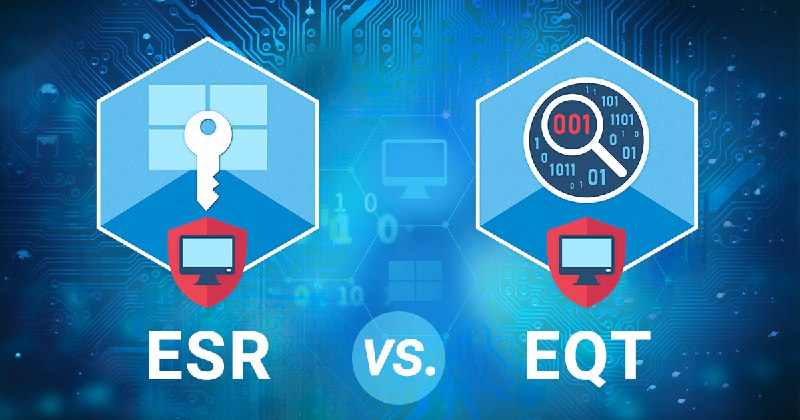
We have two different tools that cover two distinct digital triage scenarios: Elcomsoft Quick Triage (EQT) and Elcomsoft System Recovery (ESR). Both tools are ultimately built to handle data extraction with basic features for quick on the spot analysis. The choice depends entirely on the system’s current power state and your level of access.

❓️The Masterclass of Digital Triage

Welcome to the Masterclass of Digital Triage. In this series of articles, we tackle the distinct roadblocks investigators face in modern environments, guiding you from initial system access to granular artifact analysis.

More in our new article📎
  • 👍 1
Post #620 580
Recovering Windows Credentials with Elcomsoft System Recovery❗️

In traditional forensic workflows, gaining access to a Windows system was a straightforward exercise: extract the NT hashes from a local database and run a fast (very fast!) offline attack.

Today, Windows authentication is moving away from those essentially insecure NTLM hashes toward more resilient mechanisms.

Microsoft is actively steering users away from local Windows accounts, pushing them toward cloud-integrated identities (such as the Microsoft Account) and hardware-backed security models (like Windows Hello).

💡We will examine the four primary sign-on options used in modern versions of Windows: legacy local Windows accounts, consumer Microsoft Accounts, traditional Active Directory environments, and Entra ID cloud configurations;

💡We will detail what credential extraction actually entails in each specific scenario;

💡Because the definition of a recoverable credential now varies depending on the account type, we will discuss exactly which data can be targeted, what can be recovered with an offline attack, and where traditional password recovery is no longer applicable.

More information at the link📎

#ESR
Post #619 490
🆕Low-Level Extraction for M-Series iPads🆕

With the release of iOS Forensic Toolkit 10.01 we are extending low-level extraction capabilities to Apple tablets running up to iPadOS 18.7.1.

This update brings our extraction agent to the latest hardware, supporting not just A-series but also M-series iPads⚡️

We have also implemented support for the distinct memory layout found in high-end 1TB and 2TB iPad Pro models equipped with 16GB of RAM, which required a targeted engineering approach to handle the structural differences.

There is also a practical advantage to examining Apple tablets: their extended hardware lifecycle👣

Tablets are typically kept in service much longer than smartphones, with users routinely skipping multiple hardware generations before upgrading. Because of this longer operational life, examiners have a higher probability of encountering an older device running an exploitable version of iPadOS. This directly increases the chances of successfully deploying an extraction agent to acquire the full file system and the decrypted keychain.

More information at the link📎

#EIFT #update
Post #618 665
🆕Low-Level Extraction for iOS 17 and 18🆕

We’ve just update iOS Forensic Toolkit to version 10.0, significantly expanding its low-level extraction capabilities for both the extraction agent and bootloader-based methods🔴

⚡️ Previously, agent-based extraction was capped at iOS 16.6.1. This release finally covers the remainder of the iOS 16 branch, and adds support for the entire iOS 17 branch as well as iOS 18 through 18.7.1;
⚡️We have also expanded checkm8 support to cover all the latest OS updates pushed by Apple on devices susceptible to the exploit;
⚡️Finally, we improved extended logical acquisition support for iOS/iPadOS 26, now pulling significantly more shared data than before.

In this update we are making the following changes:

▪️For quite a while, agent-based extraction hit a hard wall at iOS 16.6.1. Newer releases required more powerful exploits, or more exactly, a chain of exploits.
With version 10.0, we finally put the pieces of the puzzle together. First, we’ve added support for the remaining iOS 16 builds, covering iOS 16.7 through 16.7.15. More importantly, the agent now supports the entire iOS 17 branch (17.0 to 17.7.8) and introduces support for a range of iOS 18 versions (18.0 to 18.7.1);

▪️Checkm8 support now includes iOS and iPadOS 15.8.7, iPadOS 16.7.15, and iPadOS 18.7.5. We also added support for iOS 16.8.8, though keep in mind the usual checkm8 limitations still apply. Finally, if you are extracting smart home or media hardware, we updated coverage for tvOS and audioOS to versions 26.3 and 26.4;

▪️We’ve added extended logical extraction support for iOS 26, including iOS 26.4, which delivers significant forensic value: this newly improved method can pull massive amounts of "shared files".

More information at the link 📎

#EIFT #update
  • ❤ 1
  • 🔥 1
Post #617 1.33K
🆕Distributed Password Recovery Goes 64-bit: Ready for RTX 5090🆕

We have just released a major update to Elcomsoft Distributed Password Recovery. While the release notes might simply say “migrated to 64-bit,” the reality under the hood is far more complex and significant⚡️

This is not a cosmetic update or a simple recompile; it is a fundamental architectural shift necessitated by the evolution of GPU hardware. Put simply: if you want to use the latest NVIDIA RTX 50-series Blackwell GPUs for password recovery, you can no longer use 32-bit code❗️

Here is why we did it, why it took so long, and why it matters for your forensic lab⌛

Let's talk about:

💡The introduction and evolution of hardware acceleration
💡Under the hood: the EDPR architecture
💡The plugin problem
💡The migration struggle
💡The result: ready for RTX 5090

More information at the link 📎

#EDPR
  • ❤ 3
Post #616 2.8K
iOS Forensic Toolkit 9.0: full unlocking and perfect acquisition support for iPhone 6/6 Plus and other Apple A8/A8X devices🔥

The latest update to Elcomsoft iOS Forensic Toolkit introduces full unlock and perfect acquisition capabilities for iPhone 6, iPhone 6 Plus, iPad Mini 4, iPad Air 2 and other A8/A8X devices, including on-device passcode recovery.

In addition, low-level extraction is now supported for Apple TV 4 (HD), Apple TV 4K (1st gen) and HomePod devices running tvOS/audioOS 26.

More information at the link 💡

#EIFT #updating
  • 👍 1
Post #615 2.31K
Choosing the Right Strategy: Cold Boot Forensics vs Live System Analysis🔎

The first steps of an investigation are rarely straightforward. Do you shut down the system and image the storage media, taking the safe but slow traditional path? Do you run a triage tool on the live system to grab passwords and keys, or do you reboot into a clean forensic environment?

Traditional wisdom might suggest pulling the plug to preserve the state of the disk, but modern encryption makes this increasingly difficult📊

During the initial stage of an investigation, the choice usually falls between two primary strategies: deploying a live triage tool on the running system or booting into a clean, external environment🖥

In this article, we look at the trade-offs between Elcomsoft Quick Triage and Elcomsoft System Recovery to help you decide which tool fits the scenario.

More in our new article📎

#EQT #ESR
Post #614 3.69K
Eighteen Years of GPU Acceleration🎉

Eighteen years ago, before “GPU acceleration” and “AI data center” became household terms, a small hi-tech company changed the rules of cryptography. In 2007, we unveiled a radical idea – using the untapped power of graphics processors to recover passwords, which coincided with the release of video cards capable of performing fixed-point calculations. What began as an experiment would soon redefine performance computing across nearly every field.

Let's talk about questions:

❓What Happened in 2007
❓Beyond Gaming: The Rise of GPU Acceleration Everywhere
❓How GPU Acceleration Works

Not as Simple as It Sounds...

And also...a major update is coming❗️

More in our new article📎
  • ❤ 5
Post #613 2.83K
Elcomsoft System Recovery 8.36 adds Windows Server 2025 support, BitLocker key exporting, and enhanced SRUM analysis

This update introduces support for the newest Windows Server 2025 Active Directory database (ntds.dit), allowing investigators to extract, analyze, and recover credentials and directory data from up to date systems. Version 8.36 also adds the ability to export BitLocker keys discovered in the Active Directory database of Windows Server 2025, along with reporting, giving examiners the ability to identify, extract, and document recovery keys for encrypted volumes directly from the system under investigation💻

The update enhances Forensic Tools data export with new options to save extracted evidence in CSV and XML formats, in addition to the already available plain text exporting💡

More information on the website at the link ✍🏻
#ESR #updating
Post #612 1.95K
Exploring iPadOS, tvOS and audioOS 17 and 18 Devices: File System and Keychain Extraction🔈

The latest update to iOS Forensic Toolkit brought bootloader-level extraction to a bunch of old iPads, Apple TVs, and even the first-gen HomePod running OS versions 17 and 18. This enabled full file system and keychain extraction on a those older Apple devices that can still run these versions of the OS.

What’s new in the Elcomsoft iOS Forensic Toolkit 🖥

Speaking of iOS Forensic Toolkit 8.81, the update extends bootrom (checkm8) extraction to cover iPadOS, tvOS and audioOS builds from the latest major families (17 and 18) on a defined set of older devices, adding the ability to perform full file system dumps and decrypt the keychain.

More details in our article:
✍️https://blog.elcomsoft.com/2025/11/exploring-ipados-tvos-and-audioos-17-and-18-devices-file-system-and-keychain-extraction/

#EIFT #updating
  • ❤ 1
Post #611 1.63K
What’s New in Elcomsoft System Recovery 8.34: More Data, Faster Imaging, BitLocker Key Extraction

We updated Elcomsoft System Recovery to version 8.34. This release focuses on expanding the tool’s data acquisition capabilities, improving disk imaging performance, and adding BitLocker recovery key extraction for systems managed via Active Directory. Here’s a technical breakdown of the changes.

Elcomsoft System Recovery (ESR) is a portable digital forensics tool designed for on-site analysis of Windows-based systems. It enables investigators to examine computers without removing drives or booting into the installed operating system. Built on a Windows PE environment, ESR provides quick access to local storage and is compatible with all major Windows file systems and a wide range of both legacy and modern hardware. It’s especially useful in time-critical scenarios or when physical access to the system is restricted.

🔎added 800+ file system artifacts
🔎 extracting AD BitLocker Recovery Keys
🔎 much faster disk imaging
🔎 access to Windows 11 hidden volumes
🔎 view Event Log files from Custom Locations

👉🏻 https://blog.elcomsoft.com/2025/04/whats-new-in-elcomsoft-system-recovery-8-34-more-data-faster-imaging-bitlocker-key-extraction/

#ESR #updating
  • ❤ 2
  • 👍 1
Post #610 1.46K
iOS Forensic Toolkit 8.62: bug fixes and performance enhancements

Elcomsoft iOS Forensic Toolkit 8.61 is a maintenance release that resolves several compatibility issues during checkm8 extractions for select combinations of hardware and software.

The update to Elcomsoft iOS Forensic Toolkit 8.62 brings stability and compatibility improvements to bootloader-level checkm8 extractions, resolving several issues discovered with specific combinations of software and hardware.

In the latest update, we continued our efforts to enhance and stabilize the extraction process that utilizes the bootloader exploit, focusing on uncommon scenarios and specific combinations of software and hardware. We are constantly working to improve stability and fix issues, whether identified internally or reported by our users. As a result, the toolkit has become more reliable and user-friendly, resolving numerous potential challenges in data extraction.

👉🏻 https://www.elcomsoft.com/news/864.html

#checkm8 #dataextraction #EIFT
Post #609 1.26K
Elcomsoft Distributed Password Recovery introduces intelligent load balancing, performance optimizations

Elcomsoft Distributed Password Recovery 4.70 introduces intelligent load balancing, a new resource management feature to optimize the use of computational resources available on each workstation. intelligent load balancing allows password recovery jobs to complete sooner thanks to more even use of available compute units. In addition, we’ve made over 60 commits to thoroughly optimize the entire codebase.

👉🏻https://www.elcomsoft.com/news/863.html

#EDPR #updating
Older posts →
Threads Profile ViewerView any public Threads profile without an account.Open ThreadLook →Writing with AI? Make it sound human.Metric37 rewrites AI drafts so they read naturally. Free AI detector, 1,500 words free.Try Metric37 →