The Deepest and Most Liquid Market in the World #primers
U.S. Treasuries are money because they have no credit risk, and can be converted to bank deposits almost instantly if the investor wants to purchase real goods and services. This high degree of liquidity is possible because of a very deep cash market and repo market that does not exist for any other asset in the world.
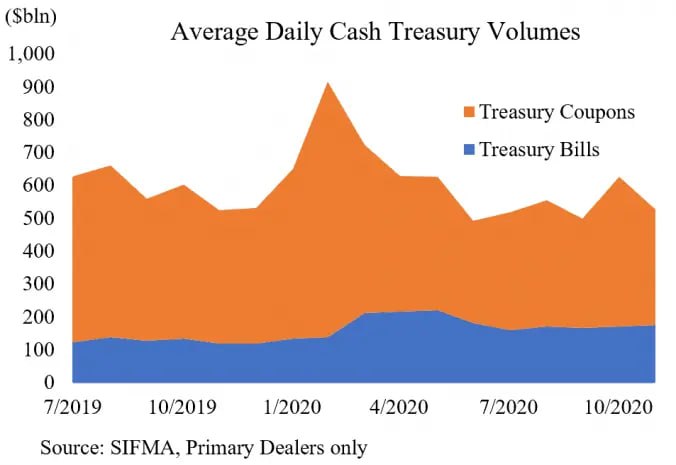
Cash Treasuries are traded traded virtually around the clock from New York to Tokyo to London with the average daily volume exceeding $500 billion. In contrast, the most liquid ETF – the SPY – has average daily dollar volumes of around $30 billion. Anyone who wants to sell large amounts of Treasuries can usually do so effortlessly, especially when selling shorter dated Treasury bills or recently issued Treasury coupons. (Treasury bills are short dated debt issued with a discount that mature within a year, while Treasury coupons are longer dated debt issued with 2 to 30 year tenors and pay interest semi-annually.)
Treasury holders don’t have to sell their Treasuries when they need cash; instead they repo their Treasuries out for cash. A repo is a very short-term loan secured by the Treasury security as collateral. The Fed’s SOFR index shows that around a $1 trillion dollars of overnight repo loans are made each day against Treasury collateral. An institutional investor that needs cash can just repo out his Treasury for cash, renewing the overnight loan as long as he wants.
In practice, institutional investors don’t even have to convert their Treasury securities to bank deposits to spend them. If they are purchasing financial assets like corporate debt or equities, they can simply pledge their Treasuries as collateral with their broker to purchase financial assets. If they are doing a big M&A deal often they can just pay with Treasuries, kind of like paying with $1 million dollar bills.
#primers
2/4
Post #52
316
DT Primers The Treasury as a Money Creator #primers There are a few forms of money in the modern financial system, but not all of them are well known. We all know about currency (paper bills) and bank deposits (the numbers in your checking account). We know from this…