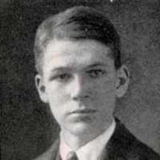

National Socialist, anthropologist and racial pope Hans Gunther opinion on east slavs 🇺🇦 🇷🇺☀️
THE east of Europe shows a gradual transition of the racial mixtures of Central Europe into predominantly East Baltic, Hither Asiatic, and Inner Asiatic regions.
Owing to the likeness between East Baltic and Inner Asiatic bodily characters it will often be hard to fix a sharp boundary between these two races. We have to bear in mind that from 1237 to 1480 Russia was under the rule of the Mongols, and that these were only stopped in Silesia (the battle of Wahlstatt) in 1241 by an army of German knights after having marched through Poland.
Inner Asiatic blood shows itself as a more or less strong admixture all over the east of Europe. It is said to be very evident in the Russian district of Yaroslav
In the western and northern Ukraine we meet once again with a Dinaric region, this element being, it would seem, particularly prominent in the districts of Kharkov, Poltava, Kiev, and Chernigov; it dies out to the north in Volhynia, and to the east apparently only when the Volga region is reached. Podolia would seem to be predominantly Dinaric-Alpine; but towards Galicia the Alpine race increases, and in west Galicia clearly predominates. The Carpathians seem to have an Alpine-Dinaric mixed population. The districts in the bend between the Carpathians and the Transylvanian Alps are Alpine-East Baltic-Dinaric with a Nordic mixture.
Then, however, owing to contra-selection among the warrior ruling classes, the conquest through the birth-rate by the East Baltic race among the north and west Slavs, and by the Dinaric race among the south Slavs, must have had its beginning, and soon have become definitive.1 This racial change has also made itself felt in the speech: the assertion has been made that there is an inward change in the Russian tongue towards the Finnish-Ugrian group.2
In Herodotus' time (fifth century B.C.) the whole of central and northern Russia was still in the occupation of Finnish-Ugrian peoples. Of far-reaching importance for the East Baltics, there then came the meeting with Nordic tribes and peoples -- above all, with the Nordic proto-Slavs, who took with them East Baltics wherever they settled. As the Nordic upper layer disappeared, the appearance of the Slav peoples (except the South Slavs) was more and more determined by East Baltic characteristics
This racial change has also made itself felt in the speech: the assertion has been made that there is an inward change in the Russian tongue towards the Finnish-Ugrian group.2
The graves of the Old Slavs from the times of the wandering of the peoples show a ruling class which is still almost purely Nordic.
The Nordic blood in the Russian-speaking regions, however, may be reckoned at 25 per cent. to 30 per cent.
Source:-Rassenkunde Europas by Hans Gunther
Contact:@Messagehere333
👉subscribe/подписывайся, гой
Backup Channel/резервный канал