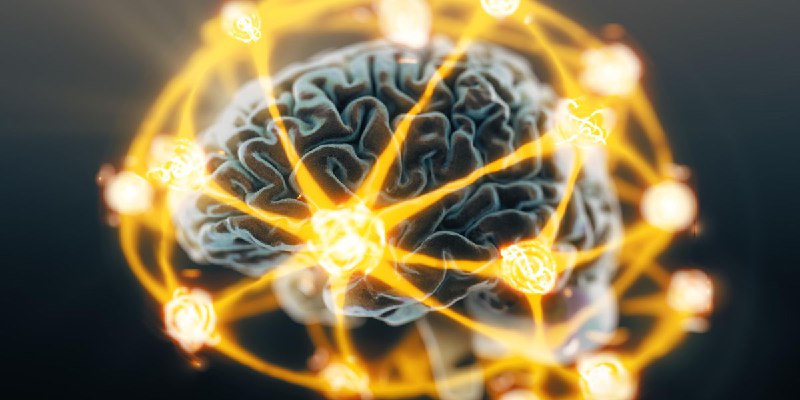
💫AI + quantum computing = quantum memristor
A memristor, or memory resistor, is a kind of building block for an electronic circuit. The first concept of it was created about 10 years ago. They are a frequency switch that remembers its state (on or off) after the perception of power, similar to synapses - connections between neurons in the human brain, electrical conduction, the frequency of which decreases or weakens depending on how many charge frequencies passed through them in the past .
Theoretical memristors act as artificial neurons capable of both computing and storing data. Therefore, neuromorphic (brain-like) computers based on memristors work well with artificial neural networks, i.e. ML company.
Unlike classical computers, which turn transistors on or off to symbolize data as 1 or 0, quantum qubits are used. Qubits can be in a state of superposition when they combine 1s and 0s with each other. The more qubits connected together with a quantum computer, the more its computing power can grow exponentially.
The quantum merristor is based on the flow of photons, directly in superpositions, where each individual photon can travel along the effect paths created by the laser on the glass. One of the mechanisms in this combined photonic circuit is used to measure the flux of these photons, and this data, through a complex electronic communication circuit, controls the transmission along the path. As a result, he turned out to be like a memristor.
Usually memristive behavior and quantum effects do not combine. Memristors act as a consequence of measuring their internal data, and spectacular effects have a high fragility value when it comes to external interference such as measurement. The researchers overcame this controversy by designing the interactions within their device so that they were sufficiently scrutinized to thus memristivity, but scrutinized enough to retain the detected behavior.
The advantage of using a quantum memristor in quantum ML over conventional quantum circuits is that the memristor, unlike any other quantum component, has memory. The next measurement is the connection of several memristors in the aggregate, the increase in the number of photons in each memristor and the amount of accumulation in which they matter in each number of measurements.
https://spectrum.ieee.org/quantum-memristor
Post #437
508