

When Fashion Was Freedom: Iran Through the Eyes of Women and Admirers of Jacqueline Kennedy
🧿It’s hard to imagine now, but once upon a time Tehran was a true fashion capital, just like Paris is today — and this really was the case, right up until the Islamic Revolution. Let’s take a closer look at this story.
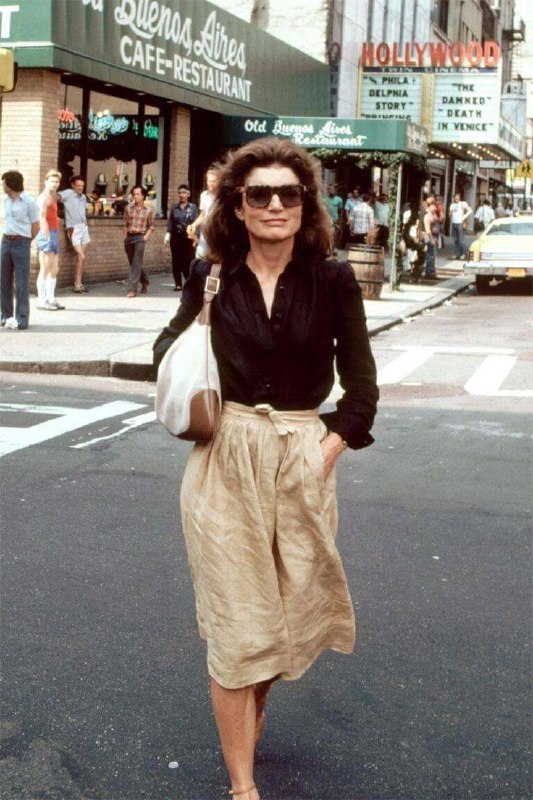
As we’ve said, half a century ago Tehran was often called the “Paris of the Middle East.” In the 60s and 70s, the streets of Iran’s capital looked like a fashion runway: mini-skirts, voluminous hairstyles, bold makeup, French perfume, and designer suits. And the style idol for many Iranian women was none other than Jacqueline Kennedy — the First Lady of the United States, an icon of refined elegance and a symbol of a glamorous era.🌟
⭐️Surprisingly, Jacqueline never even visited Iran, but her photos — in newspapers and glossy magazines — set the standards of fashion that everyone, young and old, quickly embraced. Beauty salons held real competitions to see who could recreate the perfect “Jacqueline hairstyle,” while boutiques sold exact copies of her Chanel suits and pleated dresses. At the same time, while every fashionable woman was trying to imitate Mrs. Kennedy’s looks, Shah Mohammad Reza Pahlavi was striving to bring Iran closer to a Western lifestyle — for him, as for many, this was a symbol of progress and moving forward.
But unfortunately, everything changed in 1979. The Islamic Revolution overthrew the Shah, Ayatollah Khomeini came to power, and along with this political upheaval, everyday life changed drastically. Women became the face of the new ideology: silk scarves and Chanel suits were now things of the past — they had to embody modesty and government control. The hijab, once a personal choice, became a legal obligation. Violating the dress code was punished by fines, public shaming, or even arrest. Instead of dresses and elegant hats, Iranian women began wearing black chadors and loose manteaux that hid their figures. For many young women, this was not just a farewell to Jacqueline Kennedy’s fashion — it was a mournful goodbye to freedom itself
However, no dictator could ban a true love for beauty. Behind closed doors, Iranian women continued to dress stylishly, inspired by Western trends. Beneath strict hijabs were designer hairstyles and carefully chosen outfits. With each decade, women pushed for more freedom of expression — and slowly but surely, they made progress.
Today, the rules are much less strict than they were in the first years after the revolution. Many young women wear colorful, airy headscarves and more feminine, tailored manteaux. They experiment with colors, cuts, and makeup, openly expressing their individuality — even within the official dress code.❤️🩹
For many young Iranian women, Jacqueline Kennedy has once again become a symbol — not just of fashion, but of a time when a woman could be seen and heard. That’s why photos of Jacqueline or Empress Farah Diba often appear on Iranian social media — as a quiet protest and a reminder that fashion is also freedom.🩷🤍
Babel Unity x NSCA
Post #148
425