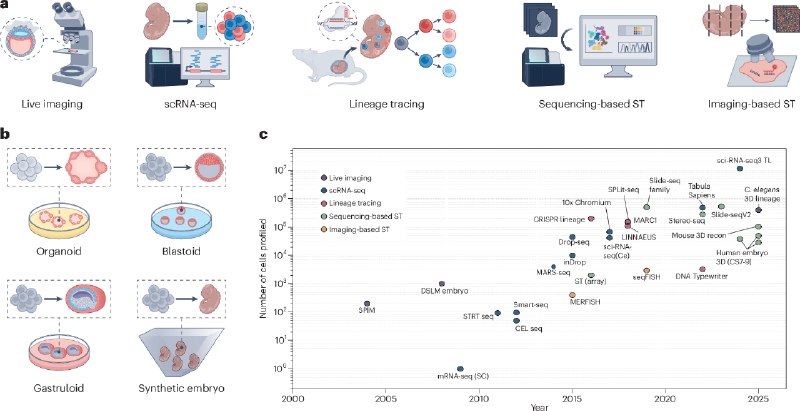
Stanford proposed a bold new vision for biology: Virtual Embryos
By integrating single-cell and spatial genomics with AI, researchers can build digital twins of embryogenesis—moving beyond virtual cells to predict cell growth, division, migration, state transitions, and morphogenesis, from genes → cells → organs -> organ systems and whole embryo, in a fully 4D spatiotemporal framework.
This approach could enable truly predictive biology and in silico experimentation to diagnose, prevent, and treat developmental diseases transforming medicine and improving outcomes for future generations.
Post #4093
740