TGViewer
Channel Public Channel
AI, Python, Cognitive Neuroscience

AI, Python, Cognitive Neuroscience

@ai_python_en

Subscribers
3.44K
Photos
1.1K
Videos
47
Links
891

Showing posts older than #1627 · Back to latest

Older Posts 20 shown
Post #1626 744
When marketing researchers use the term "analytics," they are usually broadly referring to predictive analytics, or perhaps text mining and other types of analyses they associate with machine learning and AI.

Back in the '90s, though, "advanced analytics" could refer to econometrics and time series analysis, conjoint analysis and choice modeling, new forms of segmentation, and other non-standard types of multivariate analysis.

Whether or not you call them advanced analytics, in reality, the data source does not matter. People working in marketing research, psychology, sociology, political science, economics and many other fields have been conducting quite sophisticated analyses of survey data, for example, for a very long time.

Predictive analytics, text mining, machine learning and AI also have much longer history in MR than many may realize. They just weren't getting the buzz they now do.

Another area of confusion is that many marketing researchers are under the impression that the "bigger" the data, the more sophisticated the analytics.

In fact, the reverse is often true. Moreover, very familiar methods such as linear regression, binary logistic regression, principle components ("factor") analysis and K-means are widely-used in "big data" analytics.

In the business world, sophisticated analytics of any kind historically have faced several challenges. An obvious one is that most business people aren't statisticians or computer scientists and may find it confusing.

Part of this stems from the way they are sold and, by sold, I mean internally as well. I've learned over the years not to sell technique but to sell the concrete benefits of advanced methods to decision makers. I avoid mention of anything technical unless it is absolutely essential, which is rare. Advanced analytics should not be used as sales gimmicks, IMO, especially by people who do not understand them.

A lot of important decisions can be made without any fancy stuff.

✴️ @AI_Python_EN
Post #1624 628
When ImageNet: A large-scale hierarchical image database was published in 2009, it showed how large-scale datasets could transform neural network algorithms. Now, its author & HAI co-director Dr Fei-Fei li has won the #cvpr2019 award for the retrospective most impactful paper. #AI

✴️ @AI_Python_EN
Post #1622 513
Presenting some work today on how humans and machines perform when doing collaborative visual search at #CVPR2019! A topic of interest for radiologists, surveillance operators and potentially semi-autonomous driving!

✴️ @AI_Python_EN
Post #1618 512
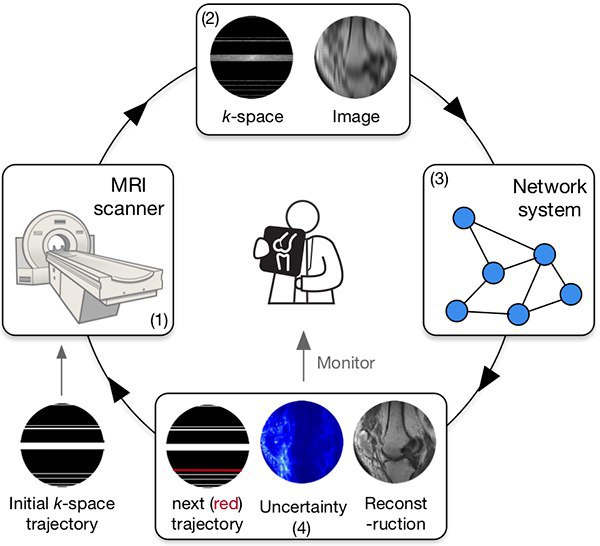
AI, Python, Cognitive Neuroscience Researchers from Facebook AI and NYU Langone Health propose a new approach to MRI reconstruction that restores a high fidelity image from partially observed measurements in less time and with fewer errors. #CVPR2019 https://ai.facebook.com/blog/accelerating…
Best paper award at #CVPR2019 main idea: seeing around the corner at non-line-of-sight (NLOS) objects by using Fermat paths, which is a new theory of how NLOS photons follow specific geometric paths.
http://imaging.cs.cmu.edu/fermat_paths/assets/cvpr2019.pdf

✴️ @AI_Python_EN
Post #1614 1.33K
AI, Python, Cognitive Neuroscience use graph neural networks on assembly code and memory states to predict program behavior https://arxiv.org/abs/1906.07181 ✴️ @AI_Python_EN
why a neural fake news generator, like our Grover model, is the best defense against neural fake news. Among other results, Grover detects GPT-2 generated fake news with over 96% accuracy in a zero-shot setting.
https://medium.com/ai2-blog/counteracting-neural-disinformation-with-grover-6cf6690d463b

✴️ @AI_Python_EN
Post #1612 648
Privacy-Preserving Deep Visual Recognition: An Adversarial Learning Framework and A New Dataset

We have recently introduced PA-HMDB51 (https://github.com/htwang14/PA-HMDB51), the very first human action video dataset with potential privacy leak attributes annotated. This dataset is collected and maintained by the VITA group at the CSE department of Texas A&M University.

The dataset contains 592 videos selected from the HMDB51 dataset [2]. For each video, we provide with frame-level annotation of five privacy attributes: skin color, gender, face, nudity, and relationship. The annotations are all provided in JSON format. Visualized examples can be found in the attachment.

The dataset aims to support and promote research on protecting visual privacy information in smart camera-based applications. A manuscript [1] introduces the dataset and related algorithms that we have developed for this topic.

We hope you will find this dataset useful,

Haotao Wang,
Texas A&M University
Post #1607 690
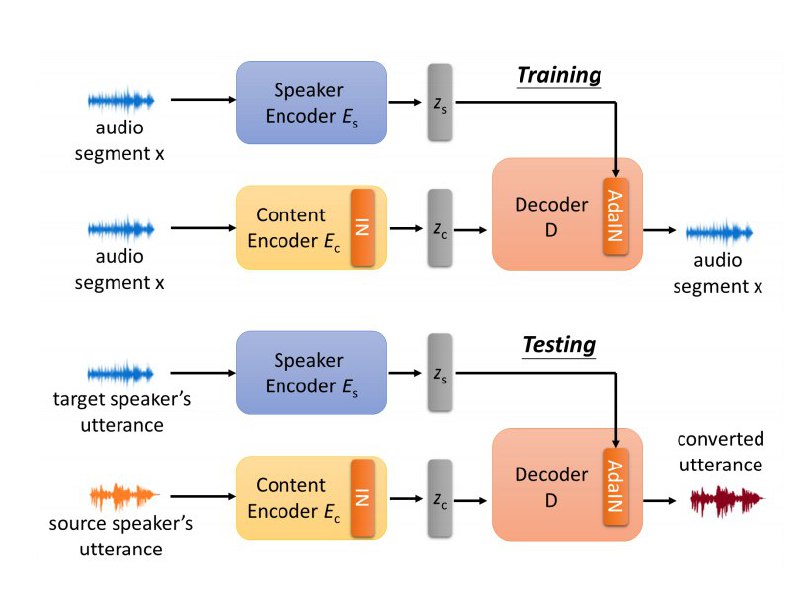
One-shot Voice Conversion by Separating Speaker and Content Representations with Instance Normalization is accepted to Interspeech 2019.
By combining VAE and adaIN, our model is able to do one-shot VC by a reference source utterance and a target utterance.

✴️ @AI_Python_EN
Older posts →
Threads Profile ViewerView any public Threads profile without an account.Open ThreadLook →Writing with AI? Make it sound human.Metric37 rewrites AI drafts so they read naturally. Free AI detector, 1,500 words free.Try Metric37 →